Gulveer Singh's Asian Games 2026 medal treble: 'Wanted national anthem played'
Synopsis
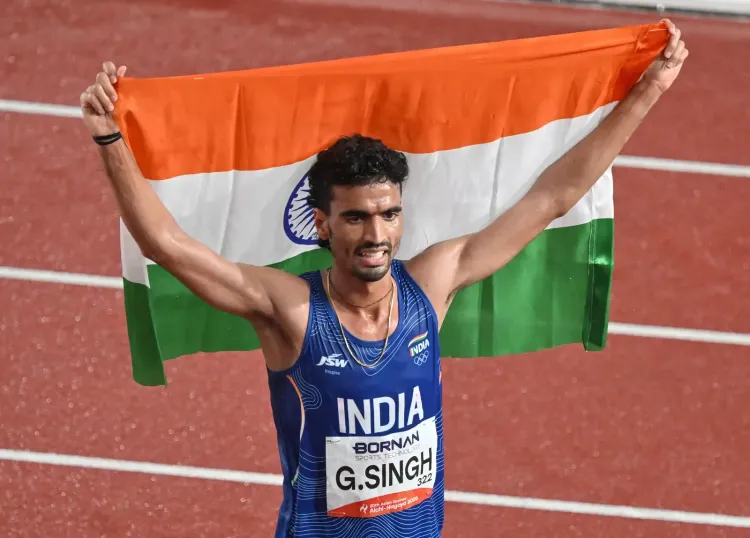
Gulveer Singh became the first Indian track athlete in 40 years to win three medals at a single Asian Games — yet walked away unsatisfied. His candid admission that he came to Nagoya for gold, not bronze and silvers, reveals the hunger of a runner who has outgrown the milestone and is already targeting the next one.
Key Takeaways
Gulveer Singh won three medals — one bronze (5000m) and two silvers (10,000m and 1500m) — at the Asian Games 2026 in Nagoya on 29 September .
He is the first Indian athlete in 40 years to win three medals at a single Asian Games edition.
His 1500m silver was clocked in a personal best of 3:36.72 ; his 5000m bronze in 13:32.75 .
Bahrain's Birhanu Balew denied him gold in both the 5000m and 10,000m events.
Gulveer credited the Athletics Federation of India (AFI) and his overseas training programme for his performance.
He came from an army background , initially running for military recruitment before turning to competitive athletics.
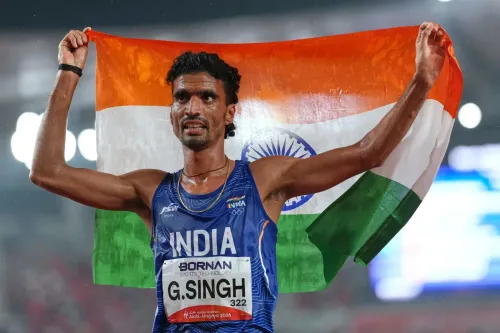
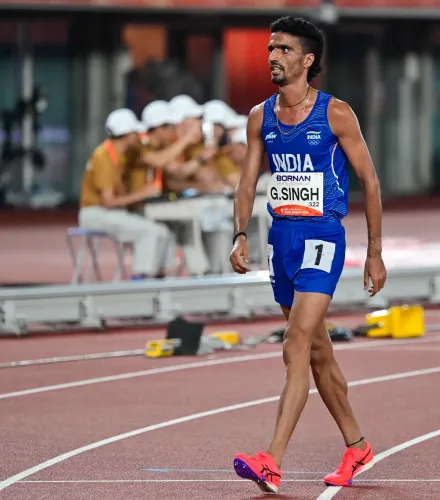
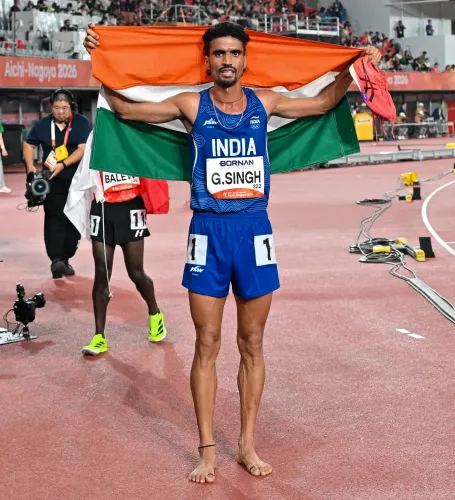
Gulveer Singh scripted history at the Asian Games 2026 in Nagoya on 29 September, becoming the first Indian athlete in 40 years to win three medals at a single edition of the Games — yet the 27-year-old distance runner left the Mizuho Park Athletic Stadium with a sense of unfinished business, his dream of hearing the Indian National Anthem from the podium still unrealised.
The Historic Medal Treble
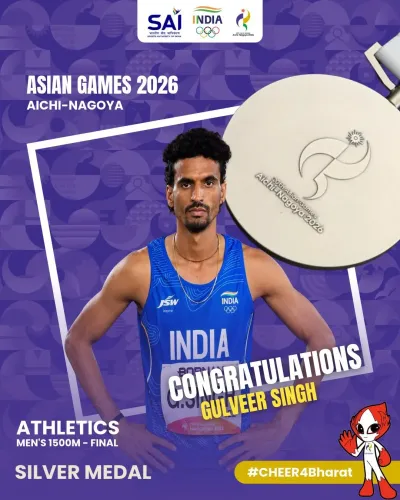
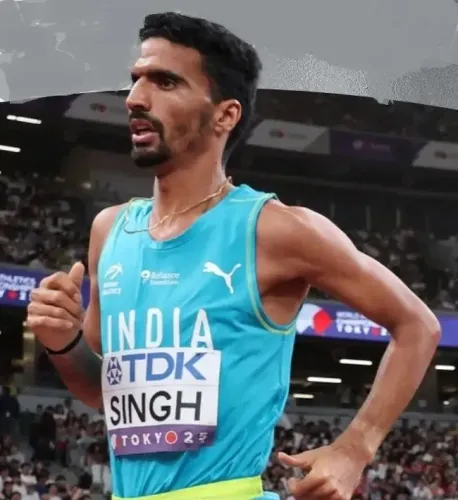
Gulveer claimed bronze in the men's 5000m final, clocking 13:32.75 to complete a remarkable three-medal campaign. He had earlier secured silver in the 10,000m with a time of 28:29.38, and another silver in the 1500m — the latter in a personal best of 3:36.72. The 5000m gold went to Bahrain's Birhanu Balew in 13:30.79, with Japan's Yamaguchi Tomonori taking silver in 13:31.43. In the 1500m, Japan's Kazuto Iizawa won gold in an Asian Games record of 3:36.35, while compatriot Nagiya Mori claimed bronze.
Gulveer's Candid Reaction
Despite the landmark achievement, Gulveer was forthright about his dissatisfaction. 'One thing is that I am not satisfied because I had come here thinking that my national anthem would be played. My only dream was to stand on the podium and have the National Anthem played. That did not happen. We will see next time and come back after working even harder,' he said after the race.
The admission underscores the ambition driving one of India's most promising distance runners — a man who arrived in Nagoya not for medals, but for gold. Notably, Balew denied Gulveer on two separate occasions, edging him in both the 5000m and the 10,000m.
A Record That Spans Four Decades
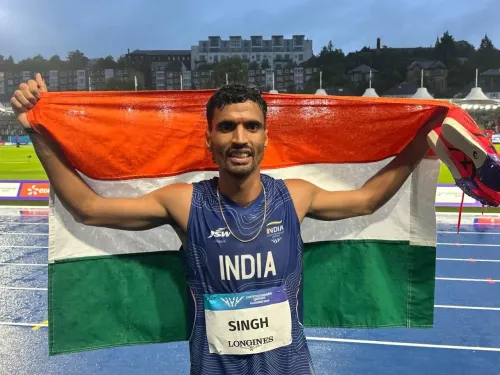
Gulveer's triple haul is the first of its kind for an Indian track athlete at a single Asian Games in 40 years. His 10,000m silver also makes him the first Indian to win two Asian Games medals in that event — he had previously taken bronze at the 2023 Hangzhou Games. This is a generational leap for Indian middle and long-distance running, a discipline where the country has historically struggled to compete at the continental level.
The Role of AFI and Overseas Training
Gulveer credited the Athletics Federation of India (AFI) and his overseas training programme for his performances, noting that the support structure helped him acclimatise and peak at the right time. 'It turned out to be good because of the way we trained and came here. We had good weather for training, good support and a good coach. AFI has continuously supported us,' he said.
He elaborated that AFI had advised him to continue training abroad following the Commonwealth Games and ahead of the World Cross Country Championships in January, a strategy he credited as a key factor in his improvement. 'That has benefited me,' he said.
From Army Recruit to Asian Games Medallist
Gulveer's journey to the podium is rooted in an unlikely origin. Coming from an army background, he initially took up running to prepare for military recruitment rather than to pursue international athletics. 'I was preparing for recruitment. I did not have much knowledge about athletics. Then I joined the Army, and after joining the Army, things developed from there,' he said.
Characteristically forward-looking, Gulveer declined to dwell on the milestone when asked about his earliest medal aspirations. 'What happened today is over, so leave it. Now we will think about what to do next. We have to keep climbing the steps and forget what we have done in the past,' he said. He also used the platform to urge young athletes to prioritise clean nutrition and professional guidance, stressing: 'Check twice, check 10 times, and then ask your coach whether something is good or bad.'
With the next major cycle of competitions on the horizon, Gulveer Singh's Nagoya campaign — historic as it is — appears to be only the beginning of a larger ambition.
Point of View
Who beat Gulveer twice, represents the ceiling India's distance runners must now target — not the podium itself. If AFI sustains the overseas training model and the sports science backing Gulveer credits, the national anthem question he left unanswered in Nagoya could well be resolved at the next major Games.
NationPress
29 Sept 2026
Frequently Asked Questions
How many medals did Gulveer Singh win at Asian Games 2026?
Gulveer Singh won three medals at the Asian Games 2026 in Nagoya — a silver in the 10,000m, a silver in the 1500m, and a bronze in the 5000m. This makes him the first Indian athlete in 40 years to win three medals at a single edition of the Asian Games.
Why was Gulveer Singh unsatisfied despite winning three medals?
Gulveer had arrived in Nagoya targeting gold and specifically wanted the Indian National Anthem to be played from the podium. Since all three of his medals were silver or bronze, that dream remained unfulfilled, prompting his candid post-race admission.
What records did Gulveer Singh set at Asian Games 2026?
Gulveer became the first Indian in 40 years to win three medals at a single Asian Games. His 1500m silver was clocked in a personal best of 3:36.72, and his 10,000m silver made him the first Indian to win two Asian Games medals in that event, having previously taken bronze at the 2023 Hangzhou Games.
Who beat Gulveer Singh to gold at the Asian Games 2026?
Bahrain's Birhanu Balew won gold in both the 5000m (13:30.79) and the 10,000m, denying Gulveer on two occasions. Japan's Kazuto Iizawa won the 1500m gold in an Asian Games record of 3:36.35.
What is Gulveer Singh's background?
Gulveer Singh comes from an army background and initially took up running to prepare for military recruitment, with limited knowledge of competitive athletics at the time. After joining the Army, he developed as a runner and eventually rose to become one of India's top distance athletes.