Jammu youth arrested for spying for Pakistan's ISI after honeytrap

Synopsis
A youth from Jammu's Makwal village — metres from the International Border — has been arrested for allegedly feeding intelligence to Pakistan's ISI after being ensnared in a social media honeytrap. It is the latest in a string of ISI-linked espionage busts, following a Pathankot arrest where a handler operated from Dubai and paid an informant ₹40,000 to livestream army movements on NH-44.
Key Takeaways
A youth from Makwal village, Jammu , near the International Border , was arrested for allegedly spying for Pakistan's ISI via a social media honeytrap.
SSP Jammu Joginder Singh said Pakistan uses social media to honeytrap, radicalise, and push youth toward drugs, targeting even 0.01% of the population.
In a linked case on 22 May , Punjab Police arrested Baljit Singh of Pathankot for spying — he was paid ₹40,000 and directed by a handler based in Dubai .
Baljit Singh had installed a CCTV camera on National Highway 44 in January to livestream army and paramilitary movements to Pakistan-based operatives.
The Pathankot arrest was the third trans-border espionage module busted in less than a month; investigations are ongoing in both cases.
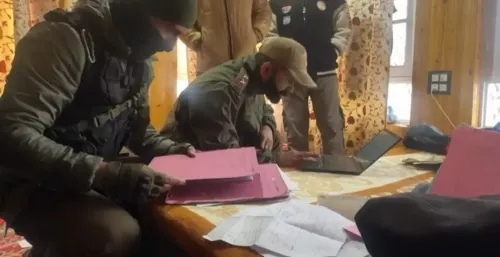
A youth from Makwal village in Jammu, located near the International Border, has been arrested for allegedly spying for Pakistan's Inter-Services Intelligence (ISI) after being lured through a honeytrap operation conducted via social media. The arrest is the latest in a series of trans-border espionage cases uncovered in the Jammu and Kashmir region in recent weeks.
How the Honeytrap Unfolded
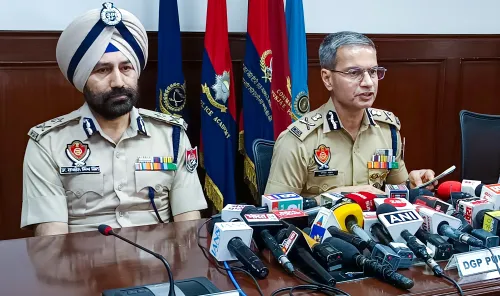
According to Senior Superintendent of Police (SSP) Jammu, Joginder Singh, Pakistan-linked operatives routinely exploit social media platforms to target Indian youth — pushing them toward drugs, radicalisation, and espionage through honeytrap tactics. 'Their efforts have always been to disrupt peace in Jammu and Kashmir,' Singh said, referring to the Pakistan Army, ISI, and their broader influence network.
Singh noted that while only a fraction of youth — 'as low as 0.01 per cent' — fall prey to such tactics, the threat is persistent and evolving. 'Boundaries between nations do not matter in the world of social media. Therefore, the online platforms are an easy access (to influence the youth),' he said.
Investigation Underway, Network Being Mapped
Authorities confirmed that further investigation is underway to identify other individuals connected to the accused's espionage network. The accused's mother, speaking to reporters, said her son spent considerable time on his mobile phone but she was unaware of how he allegedly came under Pakistan's influence or passed sensitive information to handlers.
Singh added that security agencies are actively monitoring such activities. 'We are identifying them and keeping an eye on them. We trace them and try to counsel them to mend their ways,' he said.
Pattern: Third Espionage Module Busted in a Month
This arrest follows a similar case on 22 May, when Punjab Police arrested Baljit Singh, a resident of Chakk Dhariwal village in Pathankot, on charges of spying for Pakistan-based handlers. According to officials, the entire operation was being directed by a handler operating from Dubai, and Baljit Singh was paid ₹40,000 for his role.
Baljit Singh had allegedly installed an internet-connected CCTV camera at a shop along National Highway 44 in January to monitor the movement of army and paramilitary forces, transmitting the live feed to Pakistan-based operatives. During questioning, he confessed to the crime, police said. That case was the third trans-border espionage module busted by police in less than a month.
The Broader Security Context
The recurring pattern of honeytrap-based recruitment along India's western border points to a systematic ISI strategy of exploiting social media to compromise Indian civilians with access to sensitive locations or information. Security analysts have long flagged the vulnerability of border-area youth — often economically marginalised — to such targeted influence operations. Notably, the Dubai-based handler angle in the Pathankot case suggests a layered operational structure designed to obscure direct Pakistan links.
With investigations ongoing in both cases, security agencies are expected to widen their probe to identify the full extent of these networks. The cases are also likely to prompt a renewed push for digital literacy and counter-radicalisation outreach in border districts.
Point of View
Deploy honeytrap or financial bait via social media, and route operations through third-country handlers — in this case, Dubai — to maintain plausible deniability. What is striking is the operational simplicity: a ₹40,000 payment and a consumer CCTV camera were enough to surveil a national highway. India's counter-espionage response remains largely reactive — arrests after damage is done. The harder question is whether border-district outreach, digital literacy programmes, and economic opportunity can reduce the recruitment pool before the next module is activated.
NationPress
21 Sept 2026
Frequently Asked Questions
Why was the Jammu youth arrested?
The youth was arrested for allegedly spying for Pakistan's ISI after being lured through a honeytrap operation conducted via social media. He is accused of passing sensitive information to Pakistan-based handlers.
Where is Makwal village and why is its location significant?
Makwal village is located in Jammu, near the International Border with Pakistan. Its proximity to the border makes it a strategically sensitive area and a target for cross-border intelligence operations.
Who is Baljit Singh and how is his case connected?
Baljit Singh is a resident of Chakk Dhariwal village in Pathankot, arrested by Punjab Police on 22 May for spying for Pakistan. He was paid ₹40,000 and directed by a handler in Dubai to install a CCTV camera on National Highway 44 to monitor army and paramilitary movements.
How does Pakistan's ISI reportedly recruit Indian youth?
According to SSP Jammu Joginder Singh, the ISI uses social media platforms to honeytrap, radicalise, and push youth toward drugs. He noted that online platforms provide easy access to influence youth, as national boundaries are irrelevant in the digital space.
How many espionage modules have been busted recently?
At least three trans-border espionage modules were busted in less than a month leading up to the Pathankot arrest on 22 May. The Jammu arrest adds to this pattern, indicating sustained ISI activity along India's western border.