Rajasthan becomes ISI spy hub as Pakistan uses family pressure to recruit
Synopsis
Pakistan's ISI has quietly shifted its espionage focus from Jammu and Kashmir — where security has tightened — to Rajasthan's border belt, using a chilling new retention tool: threatening the safety of recruits' relatives living in Pakistan. The arrest of Mushtaq Ali in Jaisalmer has exposed the mechanics of this coercion network in detail for the first time.
Key Takeaways
The ISI is reportedly coercing Indian nationals in Rajasthan and Jammu and Kashmir into espionage by threatening Pakistan-based relatives.
Espionage activity is concentrated in the border districts of Barmer , Bikaner , and Sri Ganganagar , near military installations.
Officials say Rajasthan has overtaken Jammu and Kashmir as the ISI's primary recruitment zone due to increased security scrutiny in the latter.
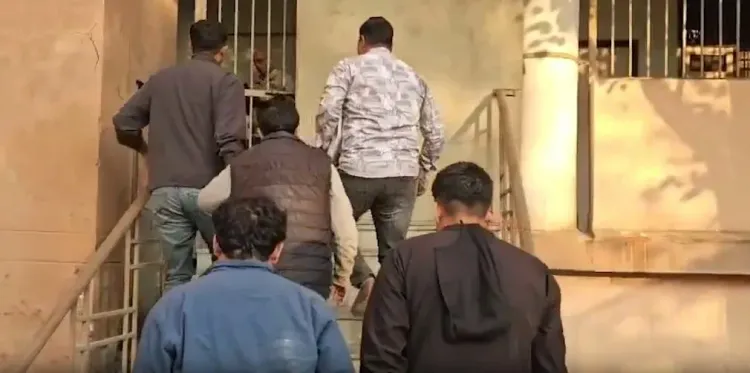
Mushtaq Ali was arrested in Jaisalmer district on Friday on allegations of spying for the ISI and helping build a local espionage network.
Recruits who attempt to disengage are allegedly told the Pakistani establishment cannot guarantee their relatives' safety if they refuse to continue.
Intelligence Bureau officials describe the tactic as a systematic form of blackmail and coercion targeting vulnerable cross-border families.
Rajasthan's border districts have emerged as a primary target for Pakistan's Inter-Services Intelligence (ISI), which is reportedly coercing Indian nationals into espionage networks by leveraging the safety of their relatives living in Pakistan, intelligence officials have revealed. The strategy, increasingly concentrated in Barmer, Bikaner, and Sri Ganganagar, is designed to extract sensitive information about the Indian armed forces and border infrastructure.
How the Coercion Network Operates
According to intelligence officials, the ISI has identified Pakistan-based relatives of Indian citizens as a key vulnerability to exploit. When Indian recruits attempt to disengage from espionage activities — often after drawing the attention of Indian security agencies — the ISI reportedly turns to those relatives as leverage.
'The relatives themselves are often under pressure. For their own safety and security in Pakistan, they are forced to cooperate with the ISI and assist in influencing or recruiting their family members in India,' an Intelligence Bureau official said.
Recruits are allegedly warned that the Pakistani establishment cannot guarantee the safety of their family members if they refuse to continue their activities. Officials described this as a systematic pattern of blackmail, with families in Pakistan facing threats of harassment, social ostracism, or expulsion if they fail to comply.
Why Rajasthan Has Overtaken Jammu and Kashmir
While both Rajasthan and Jammu and Kashmir remain targets, investigators say the ISI's operational focus has shifted decisively toward Rajasthan in recent years. The reason, according to a senior official, is straightforward: heightened security scrutiny in Jammu and Kashmir has made operations there significantly harder to sustain.
'The emphasis on Rajasthan is greater today than on Jammu and Kashmir. Security scrutiny in Jammu and Kashmir has increased significantly, making operations there difficult. Rajasthan has, therefore, emerged as a major area of interest for the ISI,' the official said.
The border districts of Barmer, Bikaner, and Sri Ganganagar are considered strategically valuable because of their proximity to military installations and frontier infrastructure. Officials say the ISI is working to establish a larger and more organised espionage network across this belt.
The Jaisalmer Arrest: A Case Study
The pattern came into sharp relief on Friday with the arrest of Mushtaq Ali in Jaisalmer district, Rajasthan, on allegations of spying for the ISI. During interrogation, Ali allegedly told investigators that his handlers had directed him to help construct an espionage network in Rajasthan and to collect information from border areas, with particular focus on military installations and activities.
Ali reportedly described how relatives in Pakistan were being used as recruitment tools and recounted the pressure and threats that compelled family members to participate. He also allegedly stated that although he had initially sought to withdraw from the network due to growing risks, he resumed contact after relatives in Pakistan urged him to continue.
The Broader Pattern and What It Signals
This is not an isolated tactic. Officials note that not all recruits participate willingly — several have reportedly declined initial recruitment approaches, while others agreed and later tried to disengage. It is at precisely this withdrawal stage, investigators say, that the family-pressure mechanism becomes most critical to the ISI's retention strategy.
A senior official said Pakistan is willing to deploy every available method to strengthen its espionage presence in India. 'The intention is to gather as much information as possible about the Indian armed forces,' the official said. Security agencies are now treating the border districts of Rajasthan as a high-priority surveillance zone, with the Jaisalmer arrest expected to yield further leads into the network's structure and reach.
Frequently Asked Questions
How is the ISI recruiting Indian spies in Rajasthan?
According to intelligence officials, the ISI is exploiting the Pakistan-based relatives of Indian nationals to coerce them into espionage. When recruits attempt to withdraw, their family members in Pakistan are allegedly threatened with harassment or expulsion unless they pressure the recruit to continue.
Why has the ISI shifted focus from Jammu and Kashmir to Rajasthan?
Officials say increased security scrutiny in Jammu and Kashmir has made ISI operations there significantly more difficult. Rajasthan's border districts — particularly Barmer, Bikaner, and Sri Ganganagar — offer proximity to military installations with comparatively lower counter-intelligence pressure, making them a more attractive target.
Who is Mushtaq Ali and why was he arrested?
Mushtaq Ali is an individual arrested in Jaisalmer district, Rajasthan, on allegations of spying for the ISI. During interrogation, he allegedly revealed that his handlers had tasked him with building an espionage network in Rajasthan and collecting information on military installations and border activities.
What happens to recruits who try to stop spying for the ISI?
According to investigators, recruits who attempt to disengage are warned that the Pakistani establishment cannot guarantee the safety of their relatives living in Pakistan. Family members are allegedly instructed to pressure recruits to resume activities, and are themselves threatened with adverse consequences if they fail to cooperate.
Which areas of Rajasthan are most targeted by ISI espionage?
Security agencies have identified the border districts of Barmer, Bikaner, and Sri Ganganagar as the primary zones of ISI espionage activity. These areas are considered strategically sensitive due to their proximity to Indian military installations and border infrastructure.