J&K Assembly passes TET exemption resolution for pre-2019 teachers

Synopsis
The J&K Assembly has passed a resolution exempting teachers appointed before October 2019 from clearing the TET — a test many educators with up to 25 years of experience called professionally demeaning and administratively impossible given J&K's unique pre-reorganisation history. The move gives thousands of in-service teachers legislative backing, but formal relief still awaits administrative action.
Key Takeaways
The J&K Legislative Assembly passed a resolution on 24 September 2026 exempting teachers appointed before 31 October 2019 from the mandatory TET .
Thousands of in-service educators with 10 to 25 years of teaching experience had argued the requirement was unfair and professionally demeaning.
Teachers cited J&K's distinct pre-reorganisation constitutional framework and differing application of the RTE Act, 2009 as grounds for exemption.
The TET mandate had reportedly blocked promotions and grade escalations even for teachers with fewer than 5 years left in service.
The resolution requires further administrative action before it translates into formal, legally binding relief for affected teachers.
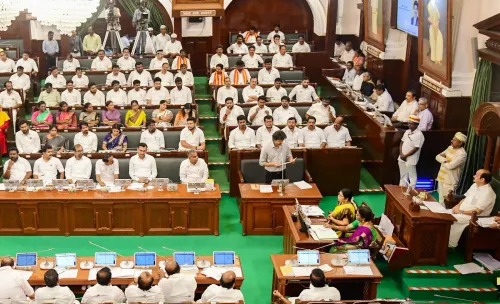
The Jammu and Kashmir Legislative Assembly on Thursday, 24 September 2026, passed a resolution exempting teachers appointed before 31 October 2019 from the mandatory requirement of clearing the Teachers' Eligibility Test (TET). The move addresses a long-standing grievance of thousands of in-service educators in the region who argued the test was unfair given the unique constitutional and administrative history of Jammu and Kashmir.
What the Resolution Says
The resolution was taken up for discussion and formal approval in the Assembly to provide relief to teachers who were recruited before the specified cut-off date. Legislators across parties highlighted the difficulties faced by these educators and pressed for exemption from the TET requirement. The passage of the resolution marks a significant procedural step, though the matter reportedly requires further action at the appropriate administrative level before it takes legal effect.
Why Teachers Said the TET Was Unjust
Teachers with between 10 and 25 years of classroom experience argued that compelling them to sit an entry-level eligibility test undermines their professional dignity and disregards their established track record. Many said the requirement was causing mental pressure, career uncertainty, and anxiety — factors they claimed were already affecting the quality of classroom instruction.
Educators also pointed out that they were simultaneously burdened with non-teaching assignments including election duties, census work, and government welfare programmes, making dedicated TET preparation practically difficult.
The Constitutional and Historical Argument
A central argument forwarded by the teachers concerns J&K's distinct pre-reorganisation constitutional framework. Prior to the J&K Reorganisation Act, the provisions of the Right to Education (RTE) Act, 2009 were applied differently to the region. Because recruitment rules were entirely different at the time of their appointment, local in-service teachers were, according to their submissions, never provided the systemic opportunities, periodic testing intervals, or administrative infrastructure needed to qualify for the TET during their years of service.
Teachers also flagged concerns about parity, arguing that regulations were being enforced on educators appointed long before national education laws were formally extended to the region — a situation they described as inequitable compared to their counterparts in other states.
Impact on Promotions and Career Progression
Beyond basic job security, the TET mandate had reportedly created a bureaucratic bottleneck for promotions and grade escalations. Even teachers exempted from forced retirement — such as those with fewer than 5 years left in service — were required to pass the TET to access long-overdue career advances. Veteran educators holding advanced qualifications such as M.Ed. or PhD degrees described it as both impractical and professionally demeaning to prepare for a rote-memorisation entry-level exam.
What Happens Next
The resolution's passage through the Assembly lends legislative weight to the teachers' case, but further administrative and possibly legal steps are expected before the exemption is formally operationalised. All eyes will now be on the administration's response and the timeline for translating the resolution into concrete relief for affected educators across Jammu and Kashmir.
Point of View
And the gap between symbolic approval and actual relief has historically been wide in J&K. The administration's willingness to act swiftly will determine whether this is a turning point or simply a pressure valve. Critically, the broader question of TET quality and its role in assuring teacher competence remains unaddressed — exemptions ease immediate distress but do not resolve the systemic gap in teacher accountability that the test was, in principle, designed to fill.
NationPress
24 Sept 2026
Frequently Asked Questions
What is the TET exemption resolution passed by the J&K Assembly?
The J&K Legislative Assembly passed a resolution on 24 September 2026 exempting teachers appointed before 31 October 2019 from the mandatory requirement of passing the Teachers' Eligibility Test (TET). The resolution provides legislative backing for relief to thousands of in-service educators who argued the test was inequitable given J&K's distinct administrative history.
Why were J&K teachers opposed to the TET requirement?
Teachers with 10 to 25 years of experience argued the TET was an entry-level exam that undermined their professional dignity and ignored their decades of classroom service. They also cited J&K's unique pre-reorganisation constitutional framework, under which the RTE Act, 2009 was applied differently and no systemic infrastructure for TET preparation was provided during their years of service.
Who is affected by the J&K Assembly's TET exemption resolution?
The resolution covers teachers appointed before 31 October 2019 who were being required to clear the TET to retain their jobs, receive promotions, or secure grade escalations. Even teachers close to retirement and those holding advanced degrees such as M.Ed. or PhD were affected by the mandate.
Does the Assembly resolution mean teachers are immediately exempted from TET?
Not immediately. The passage of the resolution is a significant procedural step, but it reportedly requires further action at the appropriate administrative level before it becomes formally operative and binding for affected teachers.
How did J&K's constitutional history factor into the TET debate?
Prior to the J&K Reorganisation Act, the region operated under a distinct constitutional framework in which the Right to Education Act, 2009 was applied differently. Teachers argued that because their recruitment rules were entirely different, they were never given the systemic opportunities or administrative support to qualify for the TET — making retrospective enforcement unfair compared to teachers in other states.