J&K HC: Domestic violence victims can seek interim residence order without trial

Synopsis
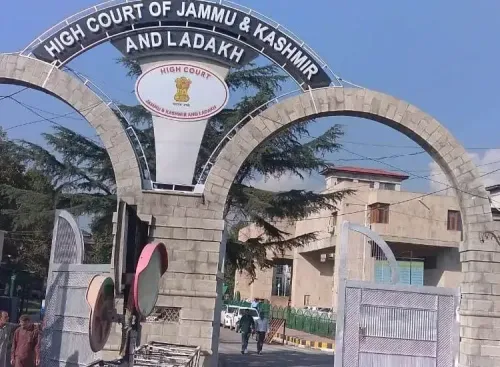
The J&K and Ladakh High Court has ruled that domestic violence survivors can obtain interim residence protection at any stage of proceedings — without waiting for trial to conclude. Justice Sanjay Dhar's ruling overturns a Sessions Court order from Kupwara and clarifies Section 23 of the DV Act, strengthening immediate shelter rights for women in a region where domestic violence is critically underreported.
Key Takeaways
The J&K and Ladakh High Court ruled on 24 August that domestic violence victims can seek interim residence protection without awaiting trial conclusion.
Justice Sanjay Dhar clarified that Section 23 of the Protection of Women from Domestic Violence Act, 2005 empowers Magistrates to grant interim residence orders during pendency of proceedings.
A Magistrate need only be satisfied on a prima facie basis — a full-fledged trial is not required before granting interim shelter relief.
The ruling set aside an order by the Principal Sessions Judge, Kupwara , which had denied interim accommodation to the petitioner.
According to the National Family Health Survey , roughly 10–11% of married women in J&K experience spousal violence, with advocates noting actual numbers are likely higher.
The Jammu and Kashmir and Ladakh High Court ruled on Monday, 24 August that women aggrieved by domestic violence are entitled to interim residence protection without waiting for the conclusion of trial proceedings. The ruling clarifies a critical procedural question under the Protection of Women from Domestic Violence Act, 2005, and directly overturns a lower court order that had denied such relief.
Background and the Case Before the Court
Justice Sanjay Dhar was hearing a petition filed by a woman from Kupwara who challenged an order of the Principal Sessions Judge, Kupwara. That court had set aside a trial court direction requiring her husband to provide her with safe and secure accommodation in the shared household. The High Court took up the matter to examine the correct interpretation of Section 23 of the DV Act.
What the High Court Ruled
The Court clarified that Section 23 of the DV Act empowers a Magistrate to grant interim relief — including an interim residence order — during the pendency of proceedings initiated under Section 12 of the Act. A final residence order under Section 19 may be passed at the conclusion of proceedings, but an interim order can be granted at a far earlier stage.
Justice Dhar held that a Magistrate is not required to conduct a full-fledged trial before granting interim residential protection. The Magistrate need only be satisfied, on the basis of material placed before the court, that the application prima facie discloses an act of domestic violence or a likelihood of such violence. 'Full-fledged trial is not required for interim relief,' the Court observed.
Why Residence Protection Is Urgent Relief
Justice Dhar stressed the protective objective of the DV Act, noting that residence protection constitutes an 'urgent relief' aimed at ensuring that an aggrieved woman is not left without shelter during the pendency of legal proceedings. The ruling reinforces that protective relief under the Act is intended to be immediate and preventive — not contingent on the completion of a prolonged trial.
The High Court held that the Sessions Court's view — that residence relief could only be granted after conclusion of trial — was inconsistent with Section 23 and the legislative purpose of the DV Act. It accordingly set aside the Sessions Court order and restored the interim accommodation direction in favour of the petitioner.
Domestic Violence in J&K: The Wider Context
Domestic violence remains a critical and underreported issue in Jammu and Kashmir, shaped by a combination of patriarchal social norms, economic stress, and decades of regional conflict. According to the National Family Health Survey, roughly 10 to 11 per cent of married women in the region experience physical or sexual spousal violence. Local advocates, however, argue that actual figures are likely significantly higher due to intense social stigma that discourages reporting.
This ruling is particularly significant in that context, as delays in trial proceedings have historically been used — whether by design or default — to deny aggrieved women timely shelter. By affirming that interim residence orders need not await trial conclusion, the High Court has strengthened a key protective mechanism for survivors.
What Happens Next
The ruling sets a binding precedent for Magistrates across J&K and Ladakh, requiring them to consider interim residence applications on their merits at the earliest stage of DV proceedings. Women's rights groups are expected to cite this judgment in pending cases where interim shelter relief has been deferred pending trial.
Point of View
Where deliberation precedes relief. That tendency defeats the DV Act's core design, which is preventive, not punitive. Justice Dhar's ruling is a corrective, but its real test will be in implementation: whether Magistrates across J&K now treat interim shelter applications with the urgency the statute demands, or continue to schedule them into an already overburdened docket. In a region where domestic violence is critically underreported and social stigma is high, procedural delay is itself a form of denial. This judgment matters — but only if it changes courtroom behaviour, not just legal doctrine.
NationPress
8 Oct 2026
Frequently Asked Questions
What did the J&K High Court rule on domestic violence interim residence orders?
The J&K and Ladakh High Court ruled on 24 August that domestic violence victims are entitled to seek interim residence protection without waiting for the conclusion of trial. Justice Sanjay Dhar held that a Magistrate need only be satisfied on a prima facie basis that domestic violence has occurred or is likely, before granting such relief under Section 23 of the DV Act.
What is Section 23 of the Protection of Women from Domestic Violence Act?
Section 23 of the DV Act, 2005 empowers a Magistrate to grant interim relief — including interim residence orders — during the pendency of proceedings under Section 12 of the Act. The High Court clarified that this provision allows shelter protection to be granted well before a final order is passed under Section 19.
Why was the Kupwara Sessions Court order set aside?
The Principal Sessions Judge, Kupwara had set aside a trial court direction requiring a husband to provide safe accommodation to his wife, holding that residence relief could only be granted after conclusion of trial. The High Court found this interpretation inconsistent with Section 23 of the DV Act and its legislative purpose of providing immediate protection to victims.
Who is affected by this ruling?
The ruling is binding on Magistrates across J&K and Ladakh and directly benefits women who have filed domestic violence applications and are seeking interim shelter while their cases are pending. It prevents courts in the region from deferring residence relief until trial is complete.
How widespread is domestic violence in Jammu and Kashmir?
According to the National Family Health Survey, roughly 10 to 11 per cent of married women in J&K report experiencing physical or sexual spousal violence. Local advocates argue actual figures are considerably higher due to social stigma and underreporting, making timely legal protections like interim residence orders especially critical in the region.