NCW chief urges survivor-centric justice in sexual offence cases

Synopsis
After the Patna High Court acquitted a man of attempted rape — ruling that pressing a woman's breasts and trying to remove her salwar did not meet the legal threshold — the Supreme Court struck back with a rebuke and a landmark handbook on survivor-centric judicial conduct. NCW chief Vijaya Rahatkar's endorsement signals that women's commissions and the apex court are now aligned in pushing for a fundamental shift in how India's courts handle sexual offence cases.
Key Takeaways
NCW Chairperson Vijaya Rahatkar on 15 July urged the judiciary to adopt a survivor-centric approach in sexual offence cases.
The Patna High Court acquitted a man of attempted rape after an 18-year trial , ruling the acts did not meet the legal threshold for the charge.
The Supreme Court , led by CJI Surya Kant , criticised the ruling and issued a handbook on survivor-centric judicial conduct .
Rahatkar said justice must encompass dignity, consent, fear, and psychological trauma — not just the physical act.
She warned that inadequate punishment after prolonged trials can erode women's faith in the justice system.
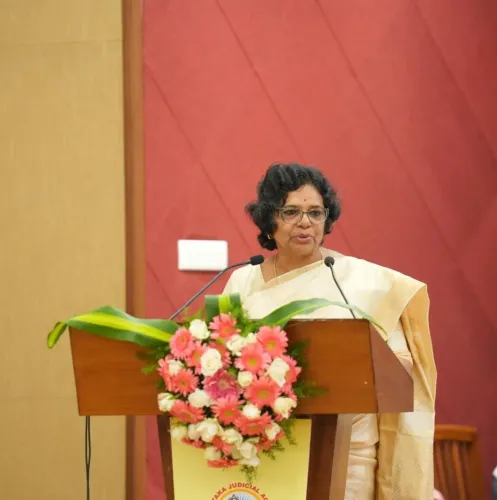
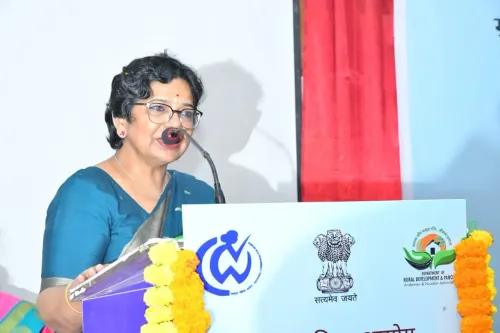
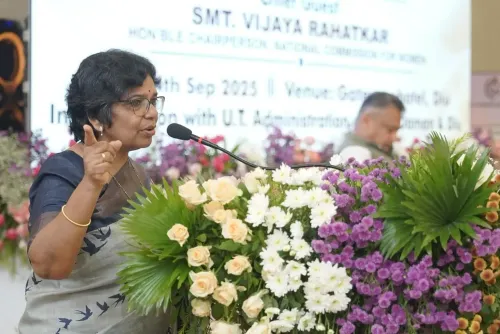
National Commission for Women (NCW) Chairperson Vijaya Rahatkar on 15 July called on the Indian judiciary to adopt a more survivor-centric and sensitive framework when adjudicating sexual offence cases, stressing that justice must extend beyond the physical act to encompass dignity, consent, fear, and psychological trauma. Her remarks came in direct response to a controversial ruling by the Patna High Court that drew nationwide criticism.
The Patna High Court Ruling That Sparked the Debate
The Patna High Court recently acquitted a man charged with attempted rape, holding that pressing a woman's breasts and attempting to remove her salwar did not constitute an attempt to rape but amounted only to outraging modesty. The ruling, delivered after an 18-year-long trial, triggered sharp public and legal backlash, with critics arguing that the court had applied an excessively narrow, technical reading of the law that failed to account for the survivor's lived experience.
Supreme Court Steps In
The Supreme Court of India, led by Chief Justice of India (CJI) Surya Kant, swiftly criticised the Patna High Court's reasoning, emphasising that courts must exercise far greater sensitivity in cases involving sexual offences. The apex court also issued a handbook on survivor-centric judicial conduct, signalling an institutional push to reshape how such cases are approached across the judicial hierarchy.
What the NCW Chairperson Said
Rahatkar welcomed the Supreme Court's intervention, praising what she described as the 'clear, sensitive and survivor-centric approach' adopted by Chief Justice Surya Kant. She cautioned that when judicial processes become detached from the spirit of the law and the reality of a survivor's experience, public confidence in the justice delivery system is at risk of being eroded.
'The dignity, bodily autonomy and constitutional rights of women must remain the highest priority of our justice system,' Rahatkar said. She added that the absence of a sense of complete justice — particularly after a prolonged trial spanning nearly two decades — and inadequate punishment for serious sexual offences can deeply undermine women's faith in both themselves and the institutions meant to protect them.
Broader Significance for Gender Justice
Rahatkar expressed cautious optimism, saying India's justice system is 'steadily moving towards a more gender-just framework that upholds women's rights and dignity.' Notably, the Supreme Court's handbook represents one of the most concrete institutional steps in recent years to standardise survivor-sensitive conduct across courts. This comes amid a broader national conversation about how sexual offence laws are interpreted — a debate that has intensified following several high-profile acquittals that critics argue trivialised serious crimes against women.
What Happens Next
The Supreme Court's handbook on survivor-centric judicial conduct is expected to inform training and guidance for judges across lower courts. Legal experts and women's rights advocates will be watching closely to see whether the directive translates into measurable changes in how sexual offence cases are reasoned and decided at the district and high court levels.
Point of View
Act-specific reading of sexual offence law that sidelines the survivor's experience entirely. The Supreme Court's handbook is a necessary corrective, but handbooks alone do not change courtroom culture; that requires sustained judicial training, accountability mechanisms, and a willingness to treat gender-sensitivity as a core competency rather than a soft add-on. The NCW's alignment with the apex court is significant, but the real test will come in how lower courts respond to the next contested case — not in the headlines this ruling generates today.
NationPress
14 Oct 2026
Frequently Asked Questions
What did the Patna High Court rule in the sexual offence case?
The Patna High Court acquitted a man of attempted rape, holding that pressing a woman's breasts and attempting to remove her salwar did not constitute an attempt to rape under the law, but only amounted to outraging modesty. The ruling came after an 18-year-long trial and drew widespread criticism from legal experts and women's rights advocates.
How did the Supreme Court respond to the Patna High Court ruling?
The Supreme Court, led by Chief Justice of India Surya Kant, criticised the Patna High Court's reasoning and stressed that courts must adopt greater sensitivity in sexual offence cases. The apex court also issued a handbook on survivor-centric judicial conduct to guide courts across the hierarchy.
What did NCW Chairperson Vijaya Rahatkar say about the controversy?
Rahatkar urged the judiciary to move beyond a technical reading of the law and adopt an approach that accounts for the survivor's dignity, consent, fear, and psychological trauma. She welcomed the Supreme Court's intervention and praised CJI Surya Kant's 'clear, sensitive and survivor-centric approach.'
Why does this case matter for women's rights in India?
The case highlights a broader debate about how sexual offence laws are interpreted by Indian courts, particularly at the high court level. Critics argue that overly narrow legal readings trivialise serious crimes and erode women's confidence in the justice system, making the Supreme Court's corrective intervention especially significant.
What is the Supreme Court's handbook on survivor-centric judicial conduct?
It is a guidance document issued by the Supreme Court of India, under Chief Justice Surya Kant, aimed at standardising how courts handle sexual offence cases with greater sensitivity to survivors' experiences. It is expected to inform judicial training and conduct across lower courts in India.