NCW seeks Delhi Police report in 7 days on Dalit woman's alleged forced conversion
Synopsis
The NCW has invoked suo motu powers in two back-to-back cases of extreme violence against women — a Dalit woman's alleged gang-rape and forced conversion in Jamia Nagar, and an acid attack in Pune. Both Delhi Police and Maharashtra Police have been given seven days to respond, putting institutional accountability squarely in the spotlight.
Key Takeaways
The NCW took suo motu cognizance of the alleged abduction, gang-rape, and forced religious conversion of a Dalit woman in Jamia Nagar, New Delhi .
NCW Chairperson Vijaya Rahatkar wrote to Delhi Police Commissioner Satish Golcha demanding an Action Taken Report within seven days .
The ATR must cover the FIR , provisions under BNS and SC/ST Act , arrests made, forensic examination, and survivor rehabilitation measures.
In a separate case, the NCW flagged an alleged acid attack by a husband on his wife in Pune , writing to the DGP Maharashtra with the same seven-day deadline.
The Commission stated that crimes involving sexual violence, caste-based targeting, and religious coercion are 'extremely grave' and demand the strictest legal action.
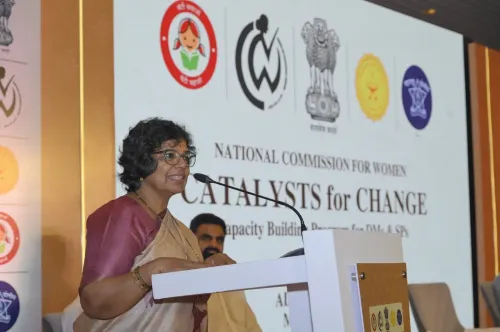
The National Commission for Women (NCW) has sought a detailed Action Taken Report from the Delhi Police Commissioner within seven days over the alleged abduction, gang-rape, and forced religious conversion of a Dalit woman in Jamia Nagar, New Delhi. NCW Chairperson Vijaya Rahatkar took suo motu cognizance of media reports on the incident and wrote directly to Delhi Police Commissioner Satish Golcha, directing immediate and time-bound action.
What the Survivor Alleged
The survivor has alleged that she was held captive for several days and subjected to repeated sexual assault by multiple individuals. The alleged offences include gang-rape, caste-based violence, and forced religious coercion — a combination the Commission described as 'extremely grave in nature'.
What the NCW Has Demanded
The Commission's Action Taken Report (ATR) covers several specific points: the FIR registered in the matter, the provisions invoked under the Bharatiya Nyaya Sanhita (BNS) and the SC/ST Act, the arrest of all accused persons, medical and forensic examination records, recording of the survivor's statement before a Magistrate, and measures taken to ensure her safety, confidentiality, protection, counselling, and rehabilitation.
Rahatkar directed 'immediate, stringent, and time-bound action' in the matter. The NCW condemned the alleged incident, stating that crimes involving sexual violence, coercion, and intimidation are unacceptable and must attract the strictest action under law.
Separate Pune Acid Attack Case Also Flagged
In a separate development, the NCW also took suo motu cognizance of what it termed 'deeply disturbing' media reports of an alleged acid attack and extreme domestic cruelty against a woman in Pune, Maharashtra. According to the Commission, a man allegedly poured floor-cleaning acid on his wife's private parts over suspicion of an extramarital affair, confined her inside the house for several days, and denied her medical treatment.
Rahatkar wrote to the Director General of Police, Maharashtra, similarly directing immediate action and seeking an ATR within seven days.
Broader Context
Both cases reflect a pattern of extreme gender-based violence that has prompted the NCW to act on its own initiative rather than wait for formal complaints. Notably, the Jamia Nagar case involves intersecting vulnerabilities — caste identity and religious coercion — that place it under multiple legal frameworks simultaneously. This is not the first time the Commission has invoked suo motu powers in cases involving Dalit women; rights groups have long argued that such cases require faster police response and stronger institutional oversight. How swiftly Delhi Police and Maharashtra Police respond to the ATR demands will be closely watched.
Point of View
But suo motu cognizance is only as effective as the compliance it compels. Delhi Police has faced repeated criticism for delayed response in cases involving Dalit survivors — the seven-day ATR deadline is a public accountability mechanism, but there is no formal sanction if it is missed. The simultaneous flagging of the Pune acid attack case in a single communication signals that the Commission is tracking a wider pattern of institutional inaction, not just isolated incidents. The real test is whether these letters produce arrests and survivor support, or join a long record of unanswered commission notices.
NationPress
19 Sept 2026
Frequently Asked Questions
What is the NCW's action in the Jamia Nagar Dalit woman case?
The National Commission for Women took suo motu cognizance of media reports and wrote to Delhi Police Commissioner Satish Golcha, seeking a detailed Action Taken Report within seven days. The Commission directed immediate, stringent, and time-bound action in the alleged abduction, gang-rape, and forced religious conversion case.
What does the NCW's Action Taken Report demand cover?
The ATR must detail the FIR registered, provisions invoked under the Bharatiya Nyaya Sanhita and the SC/ST Act, arrests of all accused, medical and forensic examination conducted, the survivor's statement before a Magistrate, and steps taken for her safety, counselling, and rehabilitation.
What is the Pune case flagged by the NCW?
The NCW took suo motu cognizance of an alleged acid attack in Pune, where a man reportedly poured floor-cleaning acid on his wife's private parts over suspicion of infidelity, confined her at home for several days, and denied her medical treatment. The NCW has written to the DGP Maharashtra seeking an ATR within seven days.
Who is the NCW Chairperson who wrote the letters?
NCW Chairperson Vijaya Rahatkar authored both letters — one to Delhi Police Commissioner Satish Golcha regarding the Jamia Nagar case, and another to the Director General of Police, Maharashtra, regarding the Pune acid attack.
Why did the NCW act suo motu in these cases?
Suo motu cognizance means the Commission acted on its own initiative based on media reports, without waiting for a formal complaint. The NCW invoked this power because the alleged crimes — involving sexual violence, caste-based targeting, and religious coercion — were deemed extremely grave and requiring urgent institutional attention.