J&K High Court sets aside magistrate's show cause notice to Shopian Collector
Synopsis
The J&K and Ladakh High Court has ruled that a Shopian judicial magistrate overstepped CrPC limits by issuing a show-cause notice to the District Collector over a maintenance recovery dispute — and then compounded the error with an impermissible second levy warrant. The court has reset the process, ordering a fresh warrant under land revenue recovery rules to ensure a ₹18,000/month maintenance award actually reaches the wife and daughter it was meant for.
Key Takeaways
The J&K and Ladakh High Court on 7 August set aside a show-cause notice issued by the Judicial Magistrate First Class, Shopian to District Collector Shishir Gupta .
Justice Rahul Bharti held the magistrate had exceeded jurisdiction under the Code of Criminal Procedure .
The underlying maintenance order directed ₹18,000 per month — ₹10,000 for the wife and ₹8,000 for the daughter — from 4 December 2025 .
The magistrate had issued an impermissible second levy warrant on 4 July , which the court found had frustrated the earlier warrant issued to the Collector.
The High Court directed the magistrate to issue a fresh levy warrant and proceed with attachment and sale of identified property under Section 91 of the J&K Land Revenue Act .
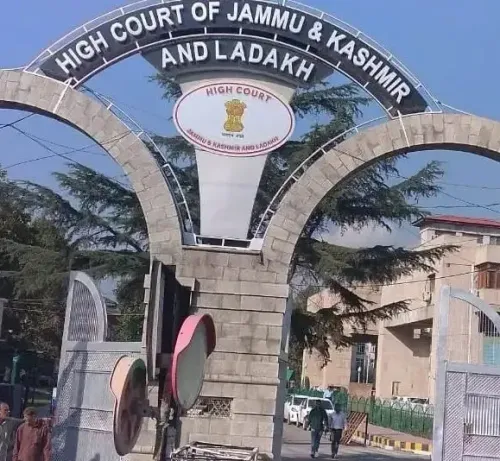
The Jammu and Kashmir and Ladakh High Court has set aside a show-cause notice issued by a Judicial Magistrate First Class, Shopian, to the District Collector, Shopian, ruling that the magistrate had exceeded the jurisdiction available under the Code of Criminal Procedure (CrPC). The order was passed on 7 August by Justice Rahul Bharti while hearing a petition filed by IAS officer Shishir Gupta, currently posted as the Shopian Collector.
Background: A Maintenance Case Gone Into Execution
The matter traces back to maintenance proceedings initiated on 20 April 2023 by the wife and daughter of a respondent under Section 125 of the CrPC. The Judicial Magistrate disposed of the case on 4 December 2025, directing monthly maintenance of ₹18,000 — comprising ₹10,000 for the wife and ₹8,000 for the daughter — effective from the date of institution of the proceedings.
When the respondent failed to pay both recurring maintenance and accumulated arrears, the wife and daughter filed an execution application on 9 December 2025. Execution proceedings, however, remained stalled as notices issued to the respondent repeatedly went unserved.
How the Magistrate Exceeded Powers
Rather than resorting to the legally available mechanism of issuing bailable or non-bailable warrants to secure the respondent's appearance, the Judicial Magistrate on 20 February 2026 issued a levy warrant to the District Collector, Shopian for recovery of the maintenance amount — a step that is legally permissible under the CrPC.
The matter took a contentious turn when the magistrate subsequently directed the Collector to furnish details of the respondent's movable and immovable properties. The Assistant Commissioner Revenue, Shopian, submitted a detailed report on 4 June identifying immovable property belonging to the defaulter. The magistrate, however, took exception to the report for not identifying movable assets, and on 10 July issued a show-cause notice to the Collector — prompting Shishir Gupta to approach the High Court.
Notably, the High Court found that the magistrate had also issued a second levy warrant on 4 July for service upon the defaulter through the SHO, Police Station Shopian. Justice Bharti held that no such second levy warrant was permissible under the relevant CrPC provisions, and that this action had effectively frustrated the earlier warrant already issued to the Collector.
High Court's Ruling
The court declared the 10 July show-cause notice illegal and set it aside, holding that the Judicial Magistrate had acted beyond the jurisdiction conferred by the Code of Criminal Procedure. The bench made clear that once a levy warrant is issued to the Collector, recovery proceedings shift to the Collector, who is empowered to proceed against the defaulter's movable or immovable property.
What Happens Next
Rather than terminating the recovery proceedings, the High Court directed the Judicial Magistrate to issue a fresh levy warrant addressed to the District Collector, Shopian. The warrant is to be executed under the mode prescribed for recovery of arrears of land revenue under Section 91 of the Jammu and Kashmir Land Revenue Act.
Authorities have been directed to proceed with attachment and sale of the identified immovable property of the maintenance defaulter, with the recovered amount to be placed at the disposal of the Judicial Magistrate for disbursement to the wife and daughter. The order effectively restores the recovery process to its statutory track, ensuring the maintenance award is pursued through the legally prescribed mechanism.
Point of View
But issuing a show-cause notice to a District Collector — and then floating a second levy warrant — reflects a misreading of the CrPC's carefully sequenced recovery mechanism. What the case also surfaces is a structural problem: maintenance awards under Section 125 frequently become paper decrees because execution machinery is slow and uncoordinated. The High Court's direction to use land revenue recovery rules is the right corrective, but it raises the question of why this pathway was not invoked from the outset. For the wife and daughter who have waited since April 2023, the legal clarity is welcome — the practical relief is still pending.
NationPress
27 Sept 2026
Frequently Asked Questions
Why did the J&K High Court set aside the show-cause notice to the Shopian Collector?
The High Court set aside the notice because the Judicial Magistrate First Class, Shopian, had exceeded the jurisdiction available under the Code of Criminal Procedure. The magistrate issued a show-cause notice to District Collector Shishir Gupta over an incomplete property report, and also issued an impermissible second levy warrant — both steps found to be beyond the magistrate's legal authority.
What is the maintenance amount at the centre of this case?
The Judicial Magistrate had directed monthly maintenance of ₹18,000 — ₹10,000 for the wife and ₹8,000 for the daughter — payable from the date the proceedings were instituted on 20 April 2023. The respondent's failure to pay led to execution proceedings and eventually the disputed show-cause notice.
What has the High Court directed now?
The High Court has directed the Judicial Magistrate to issue a fresh levy warrant to the District Collector, Shopian, to be executed under Section 91 of the Jammu and Kashmir Land Revenue Act. Authorities are to proceed with attachment and sale of the defaulter's identified immovable property, with recovered funds disbursed to the wife and daughter.
Who is Shishir Gupta in this case?
Shishir Gupta is an IAS officer currently posted as the District Collector, Shopian. He filed the petition before the J&K and Ladakh High Court challenging the show-cause notice issued to him by the Judicial Magistrate, which the court subsequently declared illegal and set aside.
What went wrong in the execution proceedings?
Execution proceedings stalled because notices to the maintenance defaulter repeatedly went unserved. Instead of issuing bailable or non-bailable warrants to secure the respondent's appearance — the standard legal remedy — the magistrate took a series of steps outside the prescribed CrPC framework, culminating in the show-cause notice to the Collector that the High Court has now struck down.