J&K: Forest dept razes ~12 illegal huts occupied by Rohingyas in Jammu

Synopsis
In the second Rohingya eviction drive in Jammu within a month, forest authorities demolished nearly a dozen illegal huts on Raika Forest land, even as affected residents dispute receiving prior notice. Government data shows 7,656 Rohingyas have been identified across J&K — 6,737 of them in the Jammu region alone — raising broader questions about policy, due process, and the pace of administrative action following a Central committee visit.
Key Takeaways
Jammu authorities demolished nearly 12 illegal huts at Rahim Nagar, Raika Forest on 3 October 2025 , mostly occupied by Rohingya immigrants .
This is the second major eviction drive targeting the community in Jammu within a month; the first cleared a settlement at Karyani Talab .
A resident named Stephen alleged no prior notice was given; officials say occupants were warned twice within a fortnight .
Government data presented to a Central committee identified 7,656 Rohingyas in J&K — 6,737 in the Jammu region, 919 in the Kashmir Valley.
The Central committee on demographic changes , constituted on 26 May under retired Justice Prakash Prabhakar Navalkar , visited Jammu from 10–12 August ahead of the drives.
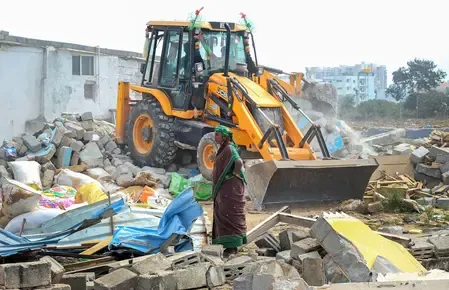
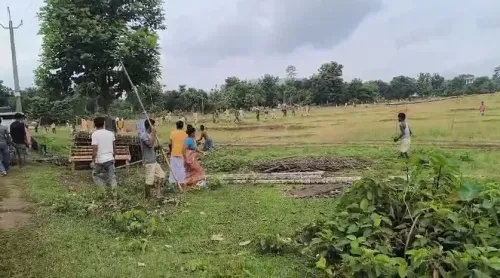
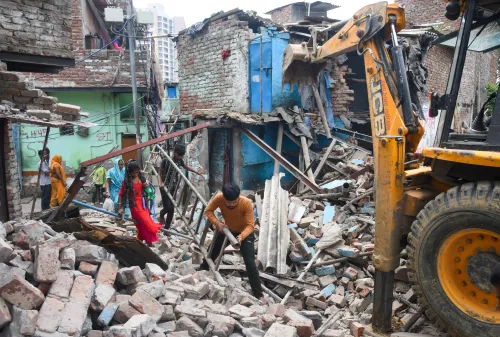
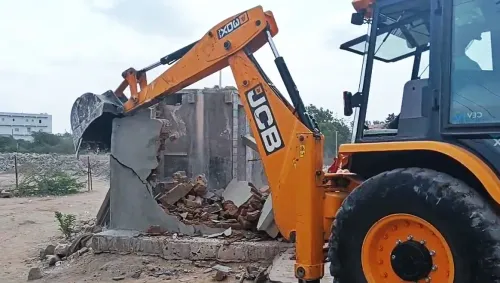
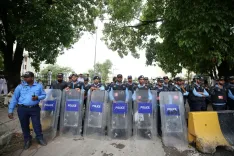
Authorities in Jammu on Saturday, 3 October demolished nearly a dozen illegally constructed huts on forest land at Rahim Nagar within the Raika Forest on the outskirts of the city, in what officials described as a routine anti-encroachment drive. The structures were mostly occupied by Rohingya immigrants, marking the second major eviction action targeting the community in Jammu within a single month.
How the Operation Was Carried Out
The drive was a joint effort by the Forest Department, the Forest Protection Force, the Revenue Department, and the Police. According to officials, the area in question spans roughly five hectares, and the department had compiled detailed data on encroachments before proceeding. Officials said video recordings of the entire operation were maintained, and only structures formally identified as illegal were razed.
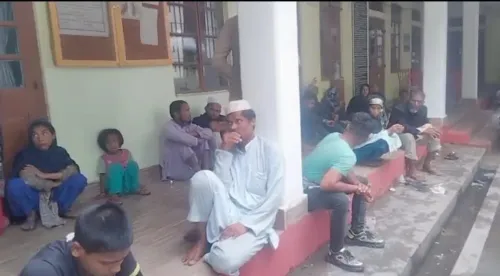
A forest official stated that women and children were moved outside with the assistance of women police personnel, and that occupants were given time to remove their belongings before structures were brought down.
Residents Dispute Prior Notice
Among those affected was Stephen, a native of Jammu, who alleged that the demolition team arrived early in the morning and gave residents little time to retrieve their belongings. He claimed he had not received any prior eviction notice and had been living in the area for the past 10 to 12 years, adding that he had nowhere to go with his children.
The forest official, however, contested this account, stating that occupants had been warned twice within a fortnight before the demolition was carried out. 'The action was not directed against any particular community or group, but was solely aimed at removing encroachments from forest land. The forest rules are the same for everyone,' the official said.
Second Such Drive in a Month
Last month, a Rohingya settlement in the Karyani Talab area of Jammu was cleared after authorities served eviction notices to landowners who had rented plots to immigrants. The back-to-back drives come in the wake of a visit by a Central committee on demographic changes, which was in Jammu from 10 to 12 August to gather data on illegal immigration and related demographic shifts.
Notably, the committee also visited the Rohingya settlement at Karyani Talab during its tour, and its findings are understood to have informed subsequent administrative actions.
Scale of Rohingya Presence in J&K
Government data placed before the committee in August identified 7,656 Rohingyas across Jammu and Kashmir. Of these, 6,737 were concentrated across the 10 districts of the Jammu region, while 919 were identified across the 10 districts of the Kashmir Valley.
The committee was constituted on 26 May under the chairmanship of retired judge Justice Prakash Prabhakar Navalkar to examine demographic changes and recommend administrative and legal measures.
What Comes Next
With the Central committee's report still awaited, further administrative action in Jammu's encroached forest zones cannot be ruled out. The parallel legal and humanitarian questions around displaced residents — including those who claim long-term residency — are expected to draw continued scrutiny from civil society groups and courts.
Point of View
Not a routine anti-encroachment cycle. The timing, coming weeks after a Central committee tour on demographic changes, suggests political intent is shaping operational priority, even if officials frame it in purely legal terms. The contested notice question matters: if due process was not followed, the drives are legally vulnerable, regardless of whether the encroachments were real. Meanwhile, the scale of the problem — over 7,600 Rohingyas identified, most without legal status — means individual demolitions address symptoms, not the underlying policy vacuum around stateless populations in India.
NationPress
3 Oct 2026
Frequently Asked Questions
Why were the huts demolished in Jammu's Raika Forest?
The Forest Department, acting with police and revenue officials, demolished the structures because they were built illegally on forest land. Officials said the action was not community-specific and that forest encroachment rules apply equally to all.
Were residents given prior notice before the demolition?
Officials claim occupants were warned twice within a fortnight before the drive. However, at least one resident, Stephen, alleged the team arrived early in the morning with little time given to remove belongings and that no prior notice was served.
How many Rohingyas have been identified in Jammu and Kashmir?
Government data placed before a Central committee in August identified 7,656 Rohingyas across J&K — 6,737 in the Jammu region across 10 districts, and 919 in the Kashmir Valley across 10 districts.
What is the Central committee on demographic changes?
It is a committee constituted on 26 May under retired Justice Prakash Prabhakar Navalkar to examine demographic changes in J&K and recommend administrative and legal measures. It visited Jammu from 10 to 12 August, including the Karyani Talab Rohingya settlement.
Is this the first eviction drive against Rohingyas in Jammu recently?
No. Last month, a Rohingya settlement in the Karyani Talab area of Jammu was cleared after authorities served eviction notices to landowners who had rented plots to immigrants. The 3 October demolition is the second such drive within a month.