Assam Forest Minister defends Lutumari eviction drive, cites Supreme Court orders

Synopsis
Assam Forest Minister Jayanta Mallabaruah has gone on the offensive — defending the Lutumari Reserve Forest eviction of 563 families across 314 hectares by invoking Supreme Court orders and rejecting Bangladesh's claim that the drive targeted a religious community. With a February 2026 apex court order and dismissed SLPs cited as legal cover, the operation has quietly escalated into a diplomatic flashpoint.
Key Takeaways
Assam Forest Minister Jayanta Mallabaruah defended the Lutumari Reserve Forest eviction drive in Nagaon district on 26 October 2026 .
The operation, carried out on 17 and 18 October , covered 314 hectares of notified forest land and displaced 563 families .
The minister cited a Supreme Court order dated 10 February 2026 and the disposal of Special Leave Petitions on 2 September 2026 as legal basis for the drive.
Bangladesh raised concerns, allegedly characterising the eviction as targeting a religious community — a claim the Assam government has rejected.
Reclaimed land is to be restored with indigenous tree plantations to revive elephant habitats and reduce human-elephant conflict.
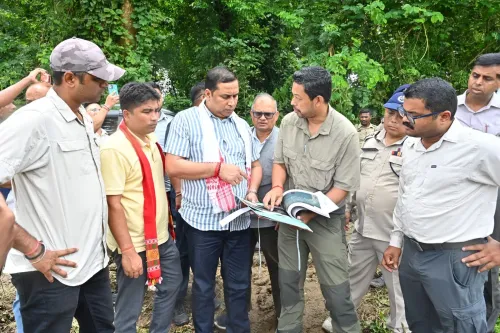
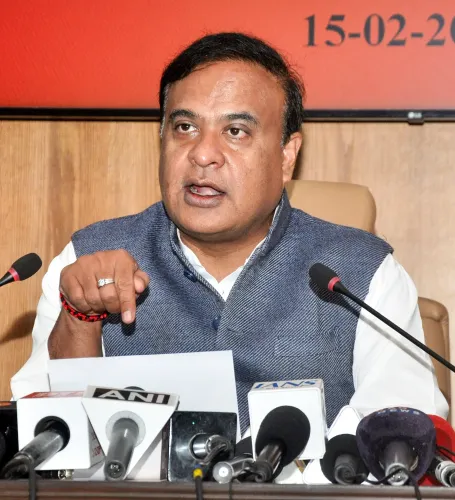
Assam Forest Minister Jayanta Mallabaruah on Monday, 26 October 2026, defended the eviction drive carried out at Lutumari Reserve Forest in Nagaon district, rejecting allegations raised by Bangladesh and asserting that the operation was fully compliant with the law and Supreme Court directives. The minister said the eviction covered 314 hectares of notified forest land and displaced 563 families on 17 and 18 October.
What the Minister Said
In a detailed post on X, Mallabaruah said the allegations presented a misleading account of the eviction exercise. He maintained that the government's action was aimed at reclaiming notified forest land and protecting ecological balance, and was not directed at any religious or social community.
Citing judicial proceedings, the minister referred to a Supreme Court order dated 10 February 2026, which he said prescribed procedures for evictions from notified forest areas in Assam. He further stated that the Special Leave Petitions (Civil) filed by petitioners were disposed of by the apex court on 2 September 2026, clearing the legal path for the operation.
How the Operation Was Conducted
Mallabaruah asserted that the administration followed the prescribed legal process and gave affected families sufficient time to vacate their homes and remove their belongings before the drive commenced. He claimed the exercise was conducted outside the rainy season and proceeded peacefully, without reported resistance or use of force.
Notably, the minister emphasised that humanitarian concerns surrounding evictions could not supersede the rule of law, while also acknowledging the difficulties faced by families during such proceedings.
Environmental Rationale
Underlining the ecological purpose of the drive, the minister said the reclaimed land would be restored through plantations of indigenous tree species. The stated goal is to revive wildlife habitats — particularly elephant habitats — and help mitigate human-elephant conflict, a persistent challenge across Assam's forest districts. Mallabaruah called protecting reserve forests both a statutory responsibility and an ecological necessity.
Bangladesh's Allegations and Assam's Response
The defence came in response to concerns raised by Bangladesh over the eviction drive and the alleged demolition of homes in Assam, with the neighbouring country reportedly characterising the operation as targeting a religious community. The Assam government has categorically maintained that the drive was undertaken solely to reclaim notified forest land and was not motivated by any religious considerations.
This comes amid broader scrutiny of forest eviction drives across northeastern India, where disputed land encroachments on reserved areas have repeatedly drawn legal, political, and now diplomatic attention. The minister urged that the operation be assessed on the basis of legal records, court proceedings, and its stated environmental objectives.
Point of View
But it does not resolve the underlying tension between forest reclamation and the displacement of hundreds of families. What is new here is the diplomatic dimension: Bangladesh's intervention transforms a domestic land-management action into an international flashpoint, raising questions about India's minority optics abroad. The government's environmental framing — elephant habitats, indigenous plantations — is legitimate in principle, but the rehabilitation details for 563 displaced families remain unaddressed in the official account. Courts have cleared the procedure; accountability for resettlement is the gap that critics will keep pressing.
NationPress
26 Oct 2026
Frequently Asked Questions
Why was the eviction drive carried out at Lutumari Reserve Forest?
The Assam government conducted the eviction to reclaim 314 hectares of notified forest land that had been encroached upon, in compliance with a Supreme Court order dated 10 February 2026. The stated goal is to restore wildlife habitats, particularly for elephants, and reduce human-elephant conflict.
How many families were displaced in the Lutumari eviction?
According to Forest Minister Jayanta Mallabaruah, 563 families were displaced during the operation carried out on 17 and 18 October 2026, covering 314 hectares of notified forest land in Nagaon district.
What is Bangladesh's objection to the Assam eviction drive?
Bangladesh reportedly raised concerns that the demolition of homes in Assam during the eviction drive was targeting a religious community. The Assam government has categorically rejected this characterisation, maintaining the operation was solely aimed at reclaiming notified forest land.
What legal basis did Assam cite for the eviction?
The minister cited a Supreme Court order dated 10 February 2026 that prescribed procedures for evictions from notified forest areas in Assam, and noted that Special Leave Petitions filed by affected petitioners were dismissed by the apex court on 2 September 2026.
Was force used during the Lutumari eviction drive?
According to Minister Mallabaruah, the eviction proceeded peacefully without reported resistance or use of force. He said families were given sufficient time to vacate and remove their belongings before the operation began.