Are JeM Terrorists Concealed in Kashmir's Forests as Security Forces Race Against Time?
Synopsis
Intensified anti-terror operations in Jammu and Kashmir are targeting Jaish-e-Mohammad terrorists hiding in dense forests. With the urgency to prevent potential large-scale attacks, security forces face challenges in tracking these skilled militants. The situation is critical as Pakistan seeks to reassert its influence in the region.
Key Takeaways
Intensified security measures in Jammu and Kashmir.
Targeting Jaish-e-Mohammad terrorists hiding in forests.
Challenges posed by dense terrain for security operations.
Urgency to prevent potential large-scale attacks .
Pakistan's desperation to reassert influence in the region.
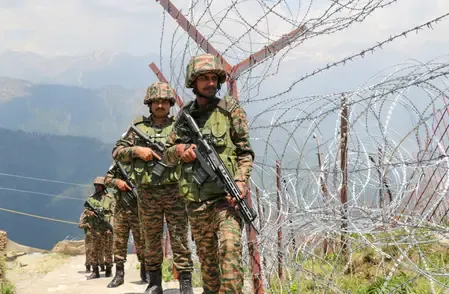
New Delhi, Jan 30 (NationPress) Anti-terrorism measures have seen a marked increase in Jammu and Kashmir due to credible intelligence regarding the concealment of Jaish-e-Mohammad militants in the area.
This initiative is part of a sustained drive to eradicate terrorism in the Kashmir Valley, with officials emphasizing the urgency of neutralizing these terrorists, who are exceptionally skilled and equipped to launch a significant attack.
This situation arises as both Lashkar-e-Taiba and Jaish-e-Mohammad face challenges in infiltrating operatives into Jammu and Kashmir.
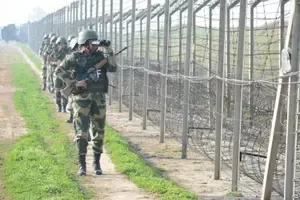
Following Operation Sindoor, infiltration attempts have nearly ceased due to stringent security and heightened border patrols with Pakistan.
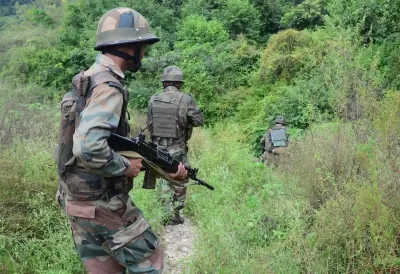
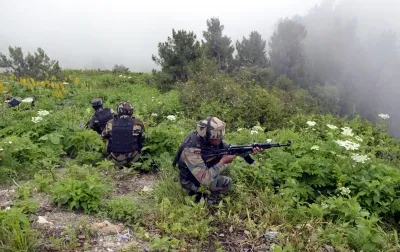
According to officials from the Intelligence Bureau, tracking down these militants within the Valley is challenging because they are taking refuge in the dense forests of Sonar and surrounding regions.
Recently, terrorists have been using thick forest cover, complicating operations for security personnel.
The current focus is on locating three key terrorists, although assessments indicate there may be additional militants at large.
Pakistan is reportedly eager to execute an attack in Jammu and Kashmir following their setbacks during Operation Sindoor. The existing militants in the Valley seem to be under pressure to orchestrate a large-scale assault to distract security forces, allowing others waiting at launch pads to infiltrate.
Both Lashkar and Jaish view this infiltration and the execution of a major strike as crucial to their operations, believing it will enhance recruitment efforts.
Intelligence Bureau reports indicate a decline in new recruits, prompting a perceived necessity for a successful attack in India. Many potential recruits are hesitating due to a lack of faith in the leadership, an official noted.
The ISI is reportedly desperate to revitalize these groups to ensure a robust strike capability against India.
While this serves their agenda in Kashmir, it also diverts attention from internal issues in Pakistan, where public confidence in the military's effectiveness has waned following Operation Sindoor. Furthermore, many potential recruits have lost faith in the terror groups' leadership.
Leaders like Hafiz Saeed and Masood Azhar had promised their followers significant victories, claiming India would not be able to counter Pakistan. However, the narrative has shifted dramatically since Operation Sindoor, which severely impacted both Jaish and Lashkar.
Given the growing urgency, officials are concerned that Jaish operatives hidden in the Valley have been ordered to execute a significant attack as soon as feasible.
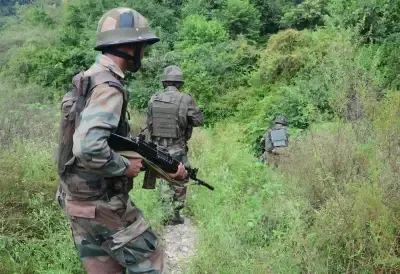
Security forces initiated a search operation on January 18, leading to a confrontation in the Sonnar forest near Mandral-Singhpora. The encounter resulted in the death of a paratrooper and injuries to seven soldiers, with the militants managing to escape due to the challenging terrain and thick vegetation.
Officials state that the search is ongoing, expressing confidence in capturing these militants. Two additional encounters occurred on January 22 and 25 at Mali Dana and Janseer-Kandiwar, but the terrorists evaded capture, retreating into the dense forest.
"This operation is ongoing, and we have intensified our efforts today," an official confirmed.
Capturing or eliminating these terrorists is critical, as intelligence reports indicate they are well-trained and pose a significant threat. If they escape, they could orchestrate a major attack, the official added.
Point of View
It is paramount to recognize the complex dynamics at play in Jammu and Kashmir. The relentless efforts of our security forces to combat terrorism must be highlighted, alongside the intricate geopolitical ramifications of these operations. The situation demands unwavering national support as we work towards ensuring the safety and security of our citizens.
NationPress
1 Oct 2026
Frequently Asked Questions
What is the current status of anti-terror operations in Jammu and Kashmir?
Anti-terror operations have been significantly intensified in Jammu and Kashmir, targeting Jaish-e-Mohammad terrorists who are hiding in dense forests.
What challenges are security forces facing?
Security forces are facing challenges due to the terrorists' concealment in dense forests, making tracking them down increasingly difficult.
Why is there urgency to locate these terrorists?
There is an urgency to locate these terrorists as they are highly trained and capable of executing significant attacks.
What is Pakistan's role in this situation?
Pakistan is reportedly keen to carry out attacks in Jammu and Kashmir, particularly after setbacks during Operation Sindoor.
How is the recruitment situation for terrorist groups?
Intelligence reports indicate that recruitment for these terrorist groups is declining, prompting a need for a major strike to boost their numbers.