ISI Expands Terror Recruitment Beyond J&K to Ignite Attacks in Kashmir
Synopsis
In a striking development, security agencies reveal that the ISI is orchestrating a recruitment drive beyond Jammu and Kashmir to fuel potential attacks, marking a concerning shift in strategy.
Key Takeaways
ISI is adapting its strategy by recruiting outside Jammu and Kashmir.
New modules are being set up in Punjab , Haryana , and Uttar Pradesh .
Heightened security in Jammu and Kashmir has made operations challenging.
Approximately a thousand operatives in Pakistan-occupied Kashmir are ready to infiltrate.
Inter-state modules will assist in logistics, recruitment, and training.
New Delhi, April 9 (NationPress) In a significant development, security agencies have uncovered that the ISI has instructed its active operatives in Jammu and Kashmir to establish networks across various states in Northern India.
The operatives currently hiding within Jammu and Kashmir have been directed to create modules in Punjab, Haryana, and Uttar Pradesh. An official from the Intelligence Bureau stated that the objective is to train new recruits to execute attacks in Jammu and Kashmir.
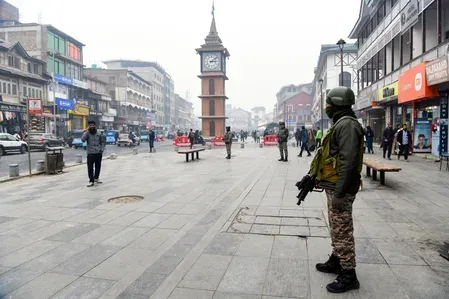
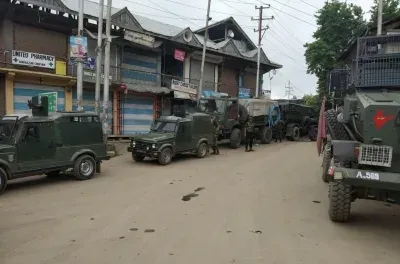
According to the official, operating within Jammu and Kashmir has turned increasingly difficult due to heightened scrutiny following the recent Pahalgam attack. Security measures have intensified, complicating the operatives' activities.
The ISI had attempted to mobilize its overground workers (OWGs), but this initiative was unsuccessful due to rigorous monitoring. Another official noted that the scarcity of trained operatives and the near-complete cessation of infiltrations have driven terrorist organizations to become desperate. This situation has led them to seek new bases outside Jammu and Kashmir.
Groups like Lashkar-e-Taiba believe that recruitment should extend beyond Jammu and Kashmir. They recognize that attempting to establish a module in the Union Territory carries a high risk of detection. These groups perceive that the level of scrutiny is lower in other states, making it a strategic move to form new networks.
The plan involves recruiting individuals into these terror modules and subsequently training them for deployment in Jammu and Kashmir. Additionally, these elements are exploiting the potential ease of infiltrating individuals from Punjab, Haryana, or Uttar Pradesh into Jammu and Kashmir.
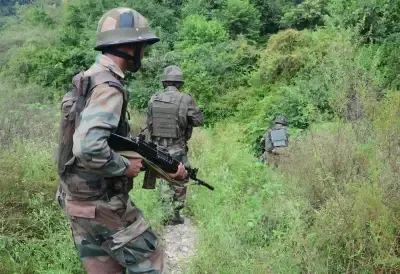
An official revealed that nearly a thousand operatives are poised in Pakistan-occupied Kashmir to infiltrate Jammu and Kashmir. These are seasoned terrorists, and their successful entry would pose significant risks.
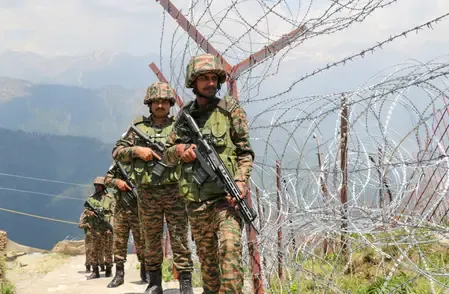
Since the Pahalgam attack, security has reached unprecedented levels, rendering infiltrations through the Line of Control (LoC) and International Border (IB) nearly impossible. The Indian armed forces are on high alert to thwart such infiltrations. Several attempts to breach Jammu and Kashmir since Operation Sindoor have failed.
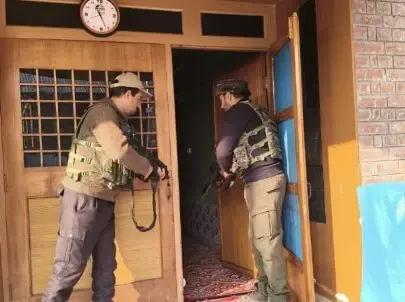
Further details regarding the establishment of modules in various states emerged after the capture of Abdullah alias Abu Hureira, a Lashkar-e-Taiba operative who eluded security for nearly 16 years. His arrest revealed that he was assigned to create inter-state modules.
The ISI is aiming to expand its operational ecosystem beyond Jammu and Kashmir, as stated by an investigating official. For terror groups like Lashkar-e-Taiba, this is part of a broader revival strategy. Jammu and Kashmir remains a pivotal point for recruitment. Even within Pakistan, recruitment has significantly waned post Operation Sindoor.
Organizations such as Lashkar-e-Taiba and Jaish-e-Mohammed are struggling to revive their ranks due to diminished recruitment. Given that Jammu and Kashmir is a critical area for their recruitment efforts, Lashkar-e-Taiba is keen to escalate its activities in the Union Territory. A significant attack in J&K would serve as a substantial boost for the organization, enabling them to attract more youth to their cause.
Another official indicated that these inter-state modules will not only focus on recruitment and training but will also assist in logistics and the movement of arms and ammunition. Agencies are coordinating efforts across states to thwart such operations, the official added.
Point of View
The recent findings highlight a troubling shift in terror strategies, with the ISI adapting to increased scrutiny by expanding its recruitment efforts beyond Jammu and Kashmir, which demands a proactive response from security agencies.
NationPress
15 Oct 2026
Frequently Asked Questions
What is the ISI's current strategy regarding recruitment?
The ISI is directing its operatives to establish recruitment modules outside Jammu and Kashmir, specifically in states like Punjab, Haryana, and Uttar Pradesh, to train recruits for potential attacks.
Why has operating in Jammu and Kashmir become challenging for terror groups?
Increased security and scrutiny following incidents like the Pahalgam attack have made it difficult for operatives to function effectively in Jammu and Kashmir.
What role do inter-state modules play in ISI's strategy?
These inter-state modules are crucial for recruitment, training, logistics, and facilitating the movement of arms and ammunition, expanding the ISI's operational capabilities.
How many operatives are waiting to infiltrate Jammu and Kashmir?
Approximately a thousand operatives are stationed in Pakistan-occupied Kashmir, poised to infiltrate Jammu and Kashmir.
What impact does this situation have on regional security?
The expansion of recruitment efforts by the ISI poses a significant threat to regional security, necessitating heightened vigilance and coordination among security forces.