Jaish-e-Mohammad shifts to crypto, mobile wallets to dodge FATF scrutiny

Synopsis
Jaish-e-Mohammad has quietly abandoned hawala and street fundraising for mobile wallets and crypto stablecoins — with wallets reportedly tied to Masood Azhar's own son. As FATF meets, intelligence officials warn that smaller, spaced-out transactions and a network of mosque-cum-training-centres across Pakistan are making the money trail harder to follow than ever.
Key Takeaways
Jaish-e-Mohammad (JeM) has shifted from hawala and donation rallies to mobile payment apps SadaPay and Easypaisa , and the stablecoin USDT .
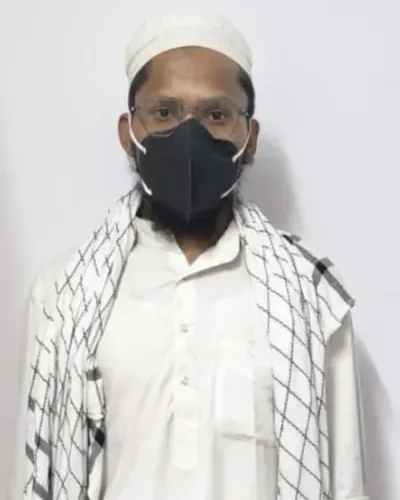
Wallets receiving JeM funds are reportedly linked to Abdullah Azhar , son of JeM founder Masood Azhar , according to officials.
Transactions are deliberately kept small and spaced five to ten days apart to create breaks in the financial chain.
JeM is reportedly building mosques and religious centres across Pakistan that double as indoctrination and training facilities.
Pakistan's ISI has allegedly set up a unified command centre to fund operations for LeT , JeM , and Hizbul Mujahideen , freeing JeM's self-raised funds for infrastructure.
The disclosures come as the FATF plenary convenes, increasing international pressure on Pakistan over terror financing compliance.
Jaish-e-Mohammad (JeM) has radically overhauled its fundraising apparatus, moving away from hawala channels and donation rallies toward mobile payment platforms and cryptocurrency — a strategic pivot, according to intelligence officials, designed to stay ahead of international monitoring as the Financial Action Task Force (FATF) holds its latest plenary meeting.
How the Funding Model Has Changed
Indian and international agencies had, over time, successfully mapped JeM's earlier funding routes — primarily charities and donations routed through hawala networks. That visibility, officials say, has forced a fundamental restructuring. Intelligence Bureau (IB) officials told reporters that the outfit has deliberately reduced individual transaction sizes and widened the gaps between transfers, operating on a cycle of roughly five to ten days between payments to create deliberate breaks in the financial chain.
'The amounts are smaller, and the transactions are spaced out, which helps the outfit enjoy a cooling period when the agencies are on their trail,' an IB official said. This makes sustained forensic tracking significantly harder for investigators attempting to follow the money.
SadaPay, Easypaisa and USDT: The New Financial Toolkit
The outfit is now reportedly relying heavily on Pakistani mobile payment platforms SadaPay and Easypaisa. Investigations have found that some wallets receiving inflows are linked to Abdullah Azhar, son of JeM founder Masood Azhar, according to officials. Beyond mobile wallets, the group has also been found using USDT — a dollar-pegged stablecoin — to move funds across channels linked to JeM operatives, adding a layer of pseudonymous traceability to an already complex trail.
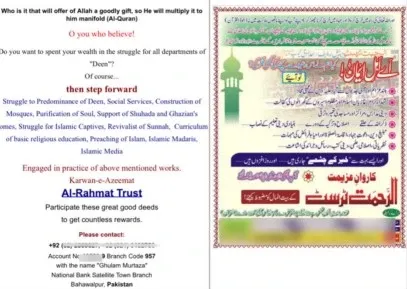
Notably, the causes cited while soliciting funds remain unchanged — Gaza and humanitarian crises, mosque construction, and religious welfare. What has changed is the delivery mechanism: open door-to-door fundraising and public rallies have been replaced by covert digital transactions. 'Earlier, JeM cadres would hold rallies or go door-to-door. Today, the issues it cites are the same, but it no longer does it openly,' an official said.
Mosques as Cover: The Infrastructure Shift
Officials highlight a second, structural change in how JeM uses the funds it collects. Money raised under the banner of humanitarian aid is reportedly being channelled into the construction of mosques and religious centres across Pakistan. To outside observers, these appear to be legitimate religious buildings. According to intelligence assessments, they function as training and indoctrination centres — part of a deliberate strategy to establish a markaz (centre) and mosque in almost every locality.
The intent, officials say, is to eliminate the need for recruits to travel long distances for training, which in turn reduces the trackable footprint of the outfit's activities. 'Lesser travelling means lesser tracking by the agencies,' one official noted. This is described as a significant structural shift aimed squarely at evading international scrutiny.
ISI's Unified Command and JeM's Narrowed Spending
A further development flagged by officials is a notable change in what JeM's own funds are spent on. The outfit is currently not using its collected money to fund operations or train cadres directly. According to officials, those functions are now handled by Pakistan's Inter-Services Intelligence (ISI), which has reportedly established a unified command centre overseeing the operations of Lashkar-e-Taiba (LeT), Jaish-e-Mohammad, and Hizbul Mujahideen. JeM's self-raised funds appear to be directed primarily at infrastructure and outreach.
The FATF Dimension
The disclosures come as FATF convenes its plenary — the primary multilateral forum through which Pakistan has faced sustained pressure over terror financing. Earlier grey-listing episodes compelled Islamabad to introduce anti-money laundering reforms, but intelligence officials suggest JeM has adapted faster than enforcement frameworks can respond. The group's practice of rotating platforms — constantly switching the digital channels it uses to receive and transfer funds — adds yet another layer of complexity to an already difficult tracking challenge. How effectively FATF's latest deliberations translate into actionable financial pressure on JeM remains to be seen.
Point of View
Since humanitarian and religious donations face lighter international scrutiny than direct terror financing. Unless FATF's current plenary produces enforceable, transaction-level accountability — rather than legislative commitments — JeM's new model is largely insulated from the pressure it was designed to generate.
NationPress
29 Oct 2026
Frequently Asked Questions
How has Jaish-e-Mohammad changed its fundraising strategy?
JeM has moved away from hawala channels and open donation drives toward mobile payment platforms such as SadaPay and Easypaisa, and the USDT stablecoin. Transactions are kept deliberately small and spaced five to ten days apart to evade detection by intelligence agencies.
What is the link between JeM's funding wallets and the Azhar family?
Investigations have found that some mobile wallets receiving JeM funds are linked to Abdullah Azhar, son of JeM founder Masood Azhar, according to intelligence officials. The finding points to continued family-level control over the outfit's financial networks.
Why is FATF relevant to JeM's fundraising changes?
FATF is the primary international body that pressures countries over terror financing, and its ongoing plenary has renewed scrutiny of Pakistan-based groups like JeM. Intelligence officials say JeM's adoption of digital platforms and decentralised transactions is a direct response to years of FATF-driven monitoring of conventional funding routes.
What role do mosques and religious centres play in JeM's new model?
JeM is reportedly funnelling collected funds into building mosques and religious centres across Pakistan that serve as covert training and indoctrination hubs. This approach reduces cadre travel — and therefore the trackable footprint of the outfit — while maintaining a legitimate public-facing appearance.
Is the ISI funding JeM operations directly?
According to intelligence officials, Pakistan's ISI has established a unified command centre that covers operational and training costs for JeM, Lashkar-e-Taiba, and Hizbul Mujahideen. This has allowed JeM to redirect its self-raised funds toward infrastructure and outreach rather than direct operational expenditure.