Jharkhand CMO launches student portal for exam reform feedback
Synopsis
The Chief Minister's Office of Jharkhand has launched a public participation campaign asking students across the state to submit suggestions for reforming the examination system via the Samvad portal, framing the drive as a collective effort to build an exam framework every student can be proud of.
Key Takeaways
The Chief Minister's Office of Jharkhand launched a student-focused janbhagidari campaign on 10 August 2026 .
Students are invited to submit examination reform suggestions at samvad.jharkhand.gov.in .
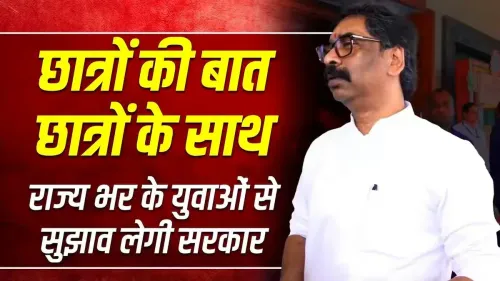
The campaign is branded under the slogan 'Chhatron ki baat... chhatron ke saath' — 'Students' voice... with students.' The initiative aligns with the National Education Policy 2020 's mandate to reduce exam stress and promote holistic assessment.
The post closed with 'Johar!' , Jharkhand's traditional greeting, signalling a culturally rooted outreach to the state's youth.
Follow-up policy action — whether portal suggestions shape revised board or competitive exam guidelines — remains the key metric to watch.
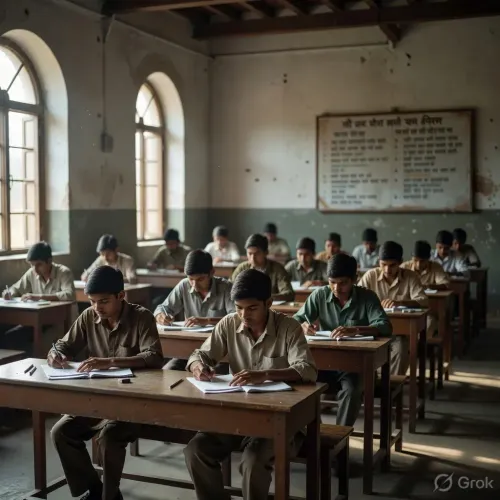
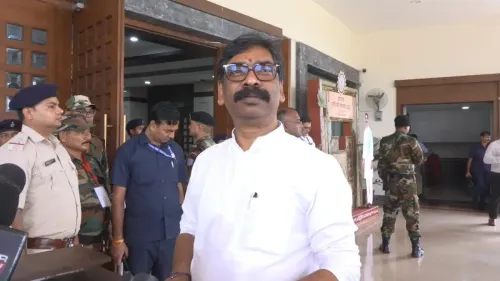
Students across Jharkhand now have a direct line to shape the state's examination system — and the government is asking them to use it. The Chief Minister's Office of Jharkhand on Monday, 10 August 2026 launched a public participation campaign inviting every young person in the state to submit suggestions on how the exam framework should be redesigned.
The post, shared in Hindi, captured the spirit of the drive in a single line: 'Chhatron ki baat... chhatron ke saath' — 'Students' voice... with students.' The CMO directed all youth to log their ideas on the official portal at samvad.jharkhand.gov.in, framing the exercise as a collective mission: 'Let us all together build an examination system every student can be proud of.'
What the Samvad portal is asking students to do
The Samvad portal — the name translates to 'dialogue' — is positioned as a janbhagidari abhiyan, a citizen-participation campaign, specifically targeting Jharkhand's student community. The call is open-ended: students are invited to record their suggestions on examination design, implying that pain points around stress, fairness, scheduling, or assessment formats are all on the table.
Jharkhand has a substantial student population spread across rural, tribal, and urban districts, many of them preparing for state board exams or competitive entrance tests. A structured feedback mechanism gives that population a formal channel that bypasses intermediaries.
NEP 2020's shadow over state-level exam reform
The move fits squarely into a pattern accelerating since India's National Education Policy 2020, which explicitly called for reducing examination stress and shifting assessments toward holistic, competency-based formats. Several state governments have since run digital consultation exercises to build public ownership of those changes — and Jharkhand's Samvad campaign follows that playbook closely.
What makes this iteration notable is the directness of the ask: not a generic feedback form, but a campaign branded around students as co-authors of policy. The closing word of the post — 'Johar!', the traditional Jharkhand greeting of respect — signals the government is consciously pitching this in the cultural register of the state's tribal identity.
The real test arrives when the portal closes: whether the suggestions feed visibly into revised board or competitive exam guidelines, or quietly disappear into a bureaucratic drawer, will determine whether this janbhagidari moment becomes a genuine policy input or a well-designed optic.
Point of View
The Jharkhand government pre-empts criticism of top-down policy while also generating political goodwill among a large, vocal demographic. It mirrors a broader post-NEP 2020 trend in which state governments use digital participation exercises to signal responsiveness without committing to specific outcomes. The campaign's credibility will hinge entirely on whether the portal's inputs surface in any formal policy document or notification — a test most similar exercises in India have struggled to pass. Jharkhand's tribal and rural student base gives this particular drive an equity dimension that the government would be wise to address explicitly in any follow-up announcement.
NationPress
10 Aug 2026
Frequently Asked Questions
What is the Jharkhand Samvad portal?
The Samvad portal at samvad.jharkhand.gov.in is an official Jharkhand government platform where students can submit suggestions on reforming the state's examination system as part of a janbhagidari abhiyan (public participation campaign).
Who can submit suggestions on the Samvad portal?
The Chief Minister's Office of Jharkhand has invited all young people and students across Jharkhand to participate and record their ideas on the portal.
What is the 'Chhatron ki baat chhatron ke saath' campaign?
It is a student-focused public consultation drive launched by the Jharkhand CMO on 10 August 2026, aimed at gathering student input to redesign the state's examination framework.
How does this relate to the National Education Policy 2020?
NEP 2020 called for reducing examination stress and making assessments more holistic. Jharkhand's Samvad campaign follows the policy's spirit by seeking student feedback before revising exam guidelines.
What happens after students submit suggestions on the Samvad portal?
The Jharkhand government has not specified a deadline or detailed process yet. The key follow-up to watch is whether the suggestions are incorporated into revised board or competitive exam guidelines in the state.