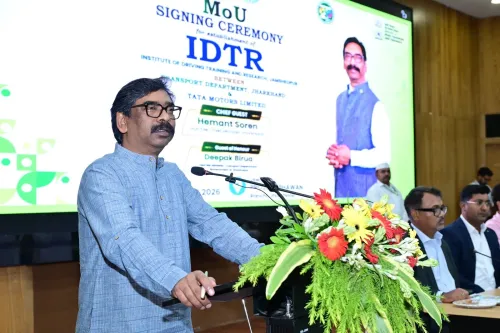
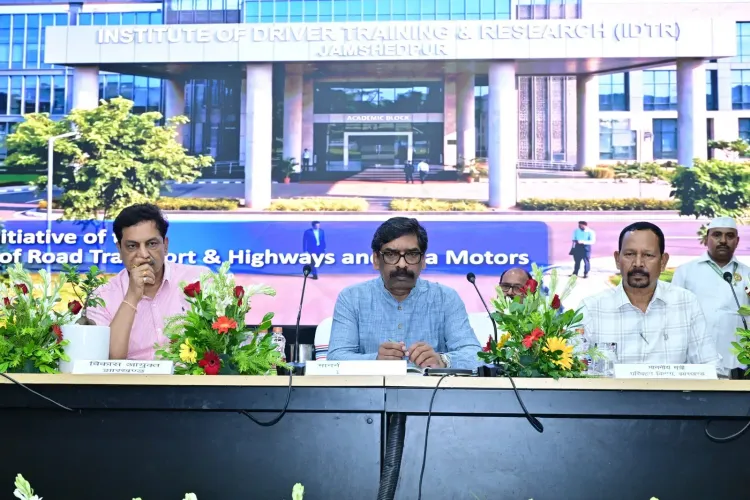
Jharkhand CMO unveils Tata Motors-run driver training centre
Synopsis
The Chief Minister's Office of Jharkhand has announced a Tata Motors-operated residential driver training centre offering 75 hostel beds, smart classrooms, driving simulators, night driving tracks, and accident response training — a public-private partnership aimed at boosting transport-sector employability and road safety.
Key Takeaways
The centre will have a 50-bed boys' hostel and a 25-bed girls' hostel , making it fully residential.
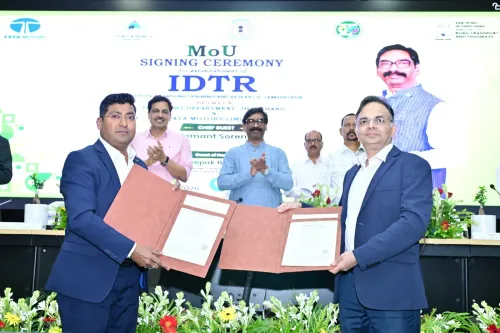
Tata Motors will operate the facility; the Jharkhand state government will administer it.
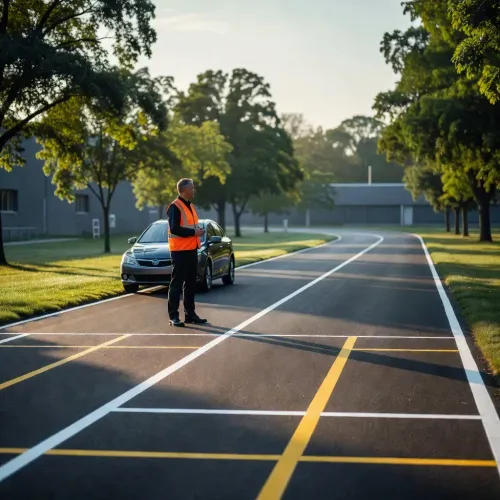
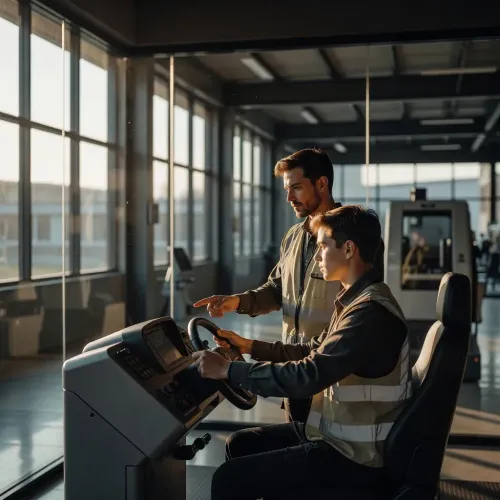
The curriculum includes smart classrooms, driving simulators, modern tracks, first aid, accident response, and night driving training .
JMM politician Deepak Birua was tagged in the announcement, indicating his role in the initiative.
The centre aligns with India's Skill India Mission PPP model linking state governments with automotive firms for vocational training.
Exact location, launch date, and first batch enrollment figures have not yet been officially confirmed.
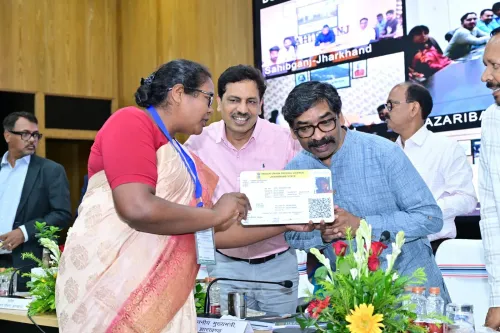
A new residential driver training centre is coming to Jharkhand — one equipped with smart classrooms, night driving tracks, accident response modules, and beds for 75 trainees at a time. The Chief Minister's Office of Jharkhand announced the facility on 28 July 2026, detailing a public-private partnership with Tata Motors to operate the centre while the state government oversees its administration.
What the centre will offer trainees
The facility will house a 50-bed boys' hostel and a 25-bed girls' hostel, making it a fully residential training campus. Beyond standard instruction, trainees will have access to smart classrooms, modern driving tracks, driving simulators, first aid training, accident response training, and dedicated night driving training — a safety-focused curriculum that goes well beyond a conventional driving school.
The announcement tagged Deepak Birua (@deepakbiruajmm), the JMM-affiliated Jharkhand politician closely associated with the state's skill and education push, signalling his role in shepherding the initiative. The post confirmed that Tata Motors will operate the centre, with the state government retaining overall control.
Tata Motors, Jharkhand, and the PPP playbook
Tata Motors has deep industrial roots in Jharkhand — its Jamshedpur plant is one of the company's oldest manufacturing anchors in India. Partnering on a driver training centre extends that presence into the vocational skilling space, a model state governments across India have pursued with automotive firms under the broader Skill India Mission framework launched in 2015.
The logic is straightforward: automobile companies bring technical expertise and equipment — simulators, modern track infrastructure, safety protocols — while the state provides land, funding, and the pipeline of trainees. The result, when it works, is a facility that private operators alone would not build and that government alone could not run efficiently.
Road safety as the real stakes
Jharkhand's emphasis on accident response and night driving modules is not incidental. India consistently records among the highest road fatality counts globally, and a significant share of those deaths involve commercial vehicle operators — precisely the demographic a residential driver training centre is designed to reach. A curriculum that bakes in emergency response and low-visibility driving from day one treats road safety as a structural problem, not an afterthought.
Specific details — the facility's location, construction timeline, and the date of the first batch's enrollment — are yet to be officially confirmed. Those numbers will determine whether this centre becomes a genuine pipeline for employment in Jharkhand's transport sector or remains a well-equipped facility running below capacity.
The blueprint is credible. The execution is the test.
Point of View
But the inclusion of girls' hostel capacity and a night-driving module signals that Jharkhand is pitching this as an equity and safety play, not just a skilling checkbox. For the Hemant Soren government, associating a marquee industrial name like Tata Motors with a grassroots employment scheme carries clear political value in a state where the Tata brand carries historical weight. The real policy test will come in the enrollment numbers and placement outcomes — metrics that have exposed the gap between well-designed residential training centres and genuinely transformative ones across India.
NationPress
28 Jul 2026
Frequently Asked Questions
What is the Jharkhand driver training centre announced by the CMO?
It is a residential driver training facility to be operated by Tata Motors and administered by the Jharkhand state government, offering 75 hostel beds, smart classrooms, driving simulators, modern tracks, first aid, accident response, and night driving training.
Who will operate the Jharkhand driver training centre?
Tata Motors will operate the centre, while the Jharkhand government will oversee its administration — a public-private partnership model.
How many hostel beds will the Jharkhand driver training centre have?
The centre will have 50 beds in a boys' hostel and 25 beds in a girls' hostel, for a total residential capacity of 75 trainees.
What courses or training will be available at the Jharkhand driver training centre?
Trainees will receive instruction in smart classrooms, practise on modern tracks and driving simulators, and complete modules in first aid, accident response, and night driving.
Is the Jharkhand driver training centre connected to Skill India?
The facility follows the public-private partnership model promoted under India's Skill India Mission, which since 2015 has encouraged state governments to partner with automotive firms on vocational driver training infrastructure.