CM Soren Launches Drive for Modern Driver Training Institute in Jharkhand
Synopsis
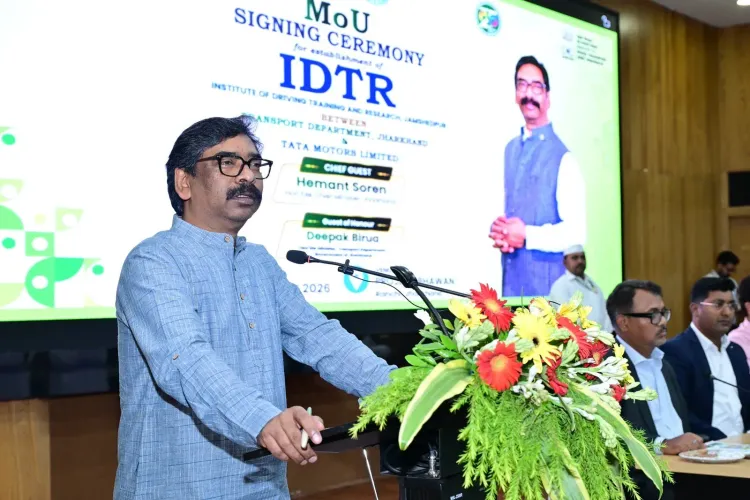
Jharkhand CM Hemant Soren announced moves to establish a Modern Driving Training and Research Institute on 28 July 2026, warning that road fatalities are rising as fast as new roads are being built, and citing sensor-based Volvo safety technology as the benchmark to match.
Key Takeaways
Jharkhand Chief Minister Hemant Soren announced steps toward a Modern Driving Training and Research Institute on 28 July 2026 .
Soren visited a Volvo training centre abroad and highlighted sensor-based automatic braking systems as a global safety standard India must adopt.
He noted that in Jharkhand, vehicles do not stop even when elephants cross roads — underscoring the state's unique wildlife-crossing hazard.
The Chief Minister flagged a direct correlation between expanding road networks and rising road accident deaths across India.
The Motor Vehicles (Amendment) Act, 2019 set national standards for driver training, but infrastructure to implement them remains inadequate in many states.
Specific details — location, funding, timeline, and international partnerships for the institute — are yet to be announced.
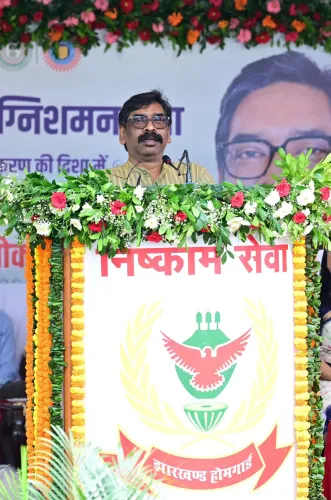
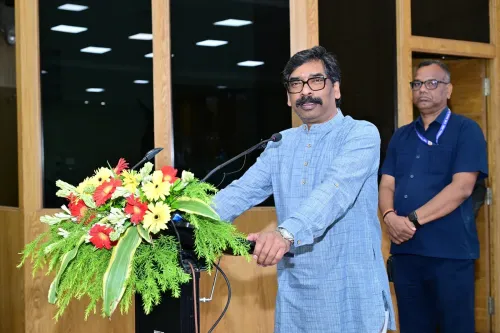
Roads are getting wider across Jharkhand — and so is the body count. Jharkhand Chief Minister Hemant Soren on Tuesday, 28 July 2026, announced steps toward establishing a Modern Driving Training and Research Institute in the state, framing it as an urgent response to a grim paradox: the faster India builds roads, the faster people are dying on them.
A Volvo visit that changed the conversation
Soren drew a sharp contrast between global safety standards and ground reality in Jharkhand. Recalling a visit to a Volvo training centre during a recent foreign trip, he described vehicles equipped with sensor-based systems that automatically brake when a human — or even an animal — steps into the road. 'There,' he said, 'if even a person or an animal comes in front, an alarm sounds and the vehicles stop on their own.'
Then came the punchline. 'Hamare yahan to sadkon par haathi bhi aa jaye, to gaadiyaan nahin ruktin' — 'Here, even if an elephant walks onto the road, vehicles don't stop.' It was equal parts dark humour and hard truth: Jharkhand, a heavily forested state with documented wildlife-crossing hazards, sits at the intersection of rapid road expansion and near-zero driver preparedness for the unexpected.
Wider roads, rising deaths — Jharkhand's infrastructure paradox
Soren's concern is not rhetorical. Across India, the aggressive rollout of national highways under programmes like Bharatmala has been shadowed by climbing road fatality numbers. Faster roads invite higher speeds; higher speeds punish untrained drivers. The Motor Vehicles (Amendment) Act, 2019 tightened penalties and set new standards for driver training nationwide, but enforcement and training infrastructure have lagged well behind the asphalt.
For Jharkhand specifically, the challenge is compounded by its terrain — dense forests, wildlife corridors, and roads that cut through habitats where animal crossings are not edge cases but everyday events. The proposed institute is positioned as a structural answer to that gap: not just a licensing checkpoint, but a research-backed facility modelled on international standards.
What the proposed institute could mean for the state
The Chief Minister did not announce a specific location, funding figure, or operational timeline on Tuesday. What he did signal is intent — and a benchmark. By invoking Volvo's research methodology, Soren set an explicit reference point for the kind of technology-transfer and curriculum design the institute should aim for. Whether that ambition translates into a formal international partnership remains the critical question to watch.
For now, the move places Jharkhand among Indian states actively seeking to close the gap between infrastructure investment and road safety outcomes — a gap that, as the Chief Minister put it, is 'a matter of serious concern for all of us.'
The roads will keep getting built. The real test is whether the drivers on them get smarter, faster, than the accidents do.
Point of View
The absence of concrete timelines or funding commitments means this sits closer to intent than to policy until those details emerge. The broader arc — states scrambling to retrofit safety culture onto infrastructure that outpaced it — is one of the defining governance tensions of India's highway expansion decade.
NationPress
27 Oct 2026
Frequently Asked Questions
What did Hemant Soren announce on 28 July 2026?
Jharkhand Chief Minister Hemant Soren announced steps toward establishing a Modern Driving Training and Research Institute in Jharkhand, aimed at improving road safety through modern technology and research-backed driver training.
Why did CM Soren mention Volvo in his road safety speech?
Soren visited a Volvo training centre during a foreign trip and cited its sensor-based systems — which automatically brake when a person or animal enters the road — as the international benchmark Jharkhand's proposed institute should aim to match.
What is the elephant remark by Hemant Soren about?
Soren used the example of elephants crossing roads in Jharkhand to highlight how vehicles in the state do not stop for obstacles, contrasting it with Volvo's automatic braking technology and underscoring the state's unique wildlife-crossing road hazard.
How does the Motor Vehicles Amendment Act 2019 relate to driver training in India?
The Motor Vehicles (Amendment) Act, 2019 strengthened national standards and penalties related to road safety and driver training, but many states — including Jharkhand — still lack the physical infrastructure to fully implement those standards.
Where will Jharkhand's new driving training institute be located?
As of 28 July 2026, the specific location, funding, and operational timeline for the proposed Modern Driving Training and Research Institute in Jharkhand have not been officially announced.