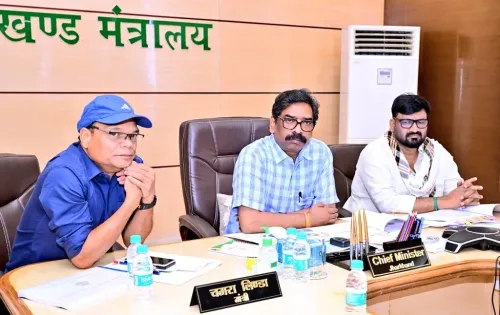
CM Hemant Soren Directs Panchayat-Level DL Camps, EV Mapping in Transport Review

Synopsis
CM Hemant Soren chaired a Jharkhand Transport Department review on 1 June 2026, directing panchayat-level driving-licence camps, EV charging-station mapping, traffic awareness drives, and an urgent MoU for the Jamshedpur Heavy Vehicle Driving Institute.
Key Takeaways
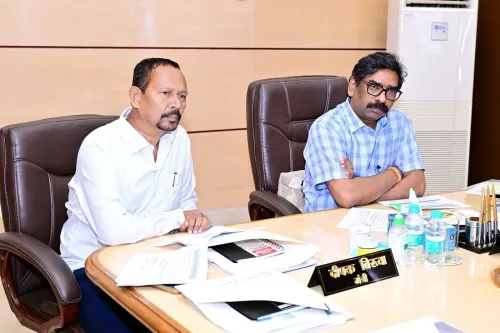
CM Hemant Soren chaired a Jharkhand Transport Department review meeting on 1 June 2026 .
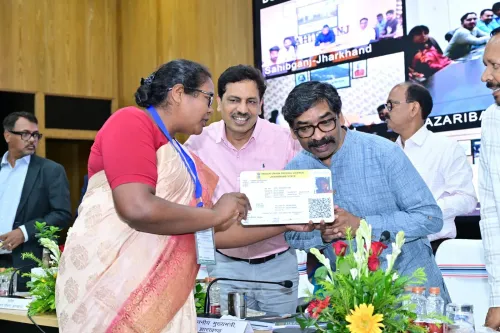
He directed that driving-licence camps be held at the panchayat level to improve last-mile access for rural residents.
The department was asked to map locations and prepare a plan for rolling out EV charging stations across the state.
Awareness campaigns are to be launched to improve traffic management and road discipline.
An urgent MoU is to be signed for the Heavy Vehicle Driving Institute being built in Jamshedpur , with a directive to complete the facility at the earliest.
The initiatives together target rural residents, commercial drivers, EV owners, and the broader logistics sector in Jharkhand.
Jharkhand Chief Minister Hemant Soren on Monday, 1 June 2026 chaired a review meeting of the state's Transport Department and issued a series of directives covering grassroots driving-licence delivery, electric-vehicle charging infrastructure, traffic management awareness, and the early commissioning of a Heavy Vehicle Driving Institute in Jamshedpur.
Context
Posting on X after the meeting, CM Soren outlined the key instructions in Hindi: 'पंचायत स्तर पर कैंप लगाकर ड्राइविंग लाइसेंस बनवाने' ['setting up camps at the panchayat level to issue driving licences'], alongside orders to map locations for EV charging stations, run awareness campaigns for smoother traffic management, and fast-track the Memorandum of Understanding (MoU) for the Jamshedpur institute so construction can be completed at the earliest.
The directives span both rural last-mile access and urban infrastructure, signalling a broad reset of the department's operational priorities for the near term.
Policy Backdrop
The push for panchayat-level driving-licence camps aligns with the framework established by the Motor Vehicles (Amendment) Act, 2019, which simplified camp-based and online licensing procedures to reduce the administrative burden on applicants in remote areas. Indian states have progressively decentralised transport services to reduce processing delays and improve rural reach.
On the electric-mobility front, the Centre's FAME-II scheme — launched in 2019 — provided funding support for state-level EV charging infrastructure. Jharkhand's mapping exercise feeds into the broader national goal of meeting 2030 electric-mobility targets by ensuring charging points are deployed where demand and road networks converge.
The proposed Heavy Vehicle Driving Institute in Jamshedpur addresses a dual need: improving road safety by certifying qualified commercial drivers, and generating skilled employment in Jharkhand's logistics and transport sector. Jamshedpur, located in East Singhbhum district, is already a major industrial hub, making it a logical anchor for such a facility.
Stakeholders and Impact
Rural residents across Jharkhand's panchayats stand to benefit most directly from the camp-based licensing drive, which is intended to eliminate the need for long-distance travel to regional transport offices. Commercial drivers and the logistics industry are the primary audience for the Jamshedpur institute, which promises a formal certification pathway for heavy-vehicle operators.
EV owners and prospective buyers in the state will watch the mapping exercise closely, as the availability of reliable charging infrastructure remains one of the biggest barriers to electric-vehicle adoption in smaller cities and towns. Traffic police and civic bodies are expected to be partners in the awareness campaigns CM Soren ordered for improving traffic discipline.
What's Next
The most time-sensitive deliverable from the meeting is the signing of the MoU for the Jamshedpur Heavy Vehicle Driving Institute, which CM Soren has asked to be completed as soon as possible so that construction and commissioning can proceed without further delay. The exact timeline and parties to the MoU have not yet been made public.
Equally, the scale and geographic spread of the panchayat-level DL camps and the scope of the EV charging-station mapping exercise will determine how meaningfully these directives translate into on-ground change. If implemented at pace, Jharkhand's transport reforms could serve as a model for other states seeking to decentralise licensing while simultaneously building out green mobility infrastructure.
Point of View
Rather than treating them as separate policy tracks. The push to fast-track the Jamshedpur Heavy Vehicle Driving Institute MoU is notable given the city's industrial profile; a certified driver-training pipeline there could have supply-chain ripple effects well beyond the state's borders. Taken together, the directives suggest the Soren administration is using departmental reviews as accountability tools, translating political intent into specific, time-bound operational instructions.
NationPress
15 Oct 2026
Frequently Asked Questions
What did CM Hemant Soren announce for driving licences in Jharkhand?
CM Soren directed the Jharkhand Transport Department to organise driving-licence camps at the panchayat level, bringing the service closer to rural residents and reducing the need to travel to regional transport offices.
What is the Heavy Vehicle Driving Institute in Jamshedpur?
It is a planned training facility in Jamshedpur, East Singhbhum, designed to certify drivers of commercial heavy vehicles. CM Soren has asked for the MoU to be signed urgently so that construction and commissioning can be completed as soon as possible.
What is Jharkhand's plan for EV charging stations?
The Jharkhand Transport Department has been directed to map potential locations for electric-vehicle charging stations and prepare a phased rollout plan, in line with national EV infrastructure goals for 2030.
Why is Jharkhand holding panchayat-level driving-licence camps?
The camps are meant to decentralise licensing services and reduce processing delays for rural applicants, consistent with the framework introduced by the Motor Vehicles (Amendment) Act, 2019.
What traffic-related steps did CM Soren order in the June 2026 review?
CM Soren directed the department to run awareness campaigns aimed at keeping traffic management smooth and improving road discipline across the state.