Is There a Need for a Comprehensive, Year-Round Strategy to Tackle Air Pollution?
Click to start listening
Synopsis
Prof Salim Engineer of JIH highlights the critical air pollution crisis in NCR and across India, calling for enduring strategies and collaborative efforts. He warns of severe health impacts and urges governments to take decisive action.
Key Takeaways
- Air quality in NCR is critical, posing health risks.
- A comprehensive, year-round strategy is essential.
- Temporary fixes are insufficient to tackle pollution.
- Government accountability and clear targets are crucial.
- Community involvement is vital for monitoring and advocacy.
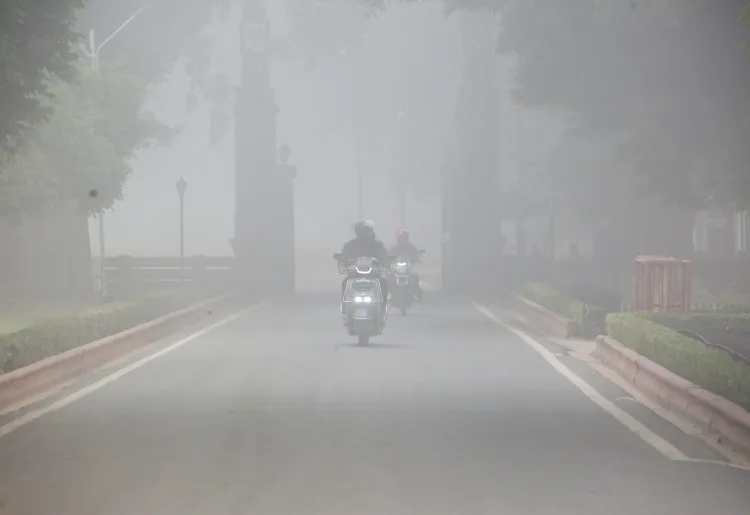
New Delhi, Dec 16 (NationPress) The Vice President of Jamaat-e-Islami Hind (JIH), Prof Salim Engineer, raised alarm over the deteriorating air quality in the National Capital Region (NCR) and numerous other cities across India. He labeled the situation as a “public health emergency” that necessitates enduring and coordinated strategies instead of temporary solutions.
In a media statement, Prof Engineer pointed out that hazardous levels of the Air Quality Index (AQI) are indicative of systemic failures in managing vehicular and industrial emissions.
He emphasized that despite official assurances, authorities have struggled to effectively manage construction dust, stubble burning, and open waste incineration, which continue to exacerbate toxic air conditions.
Prof Engineer warned that ongoing exposure to polluted air threatens public health, hinders education and daily movement, and gradually diminishes the quality of life, especially for children, the elderly, and individuals with pre-existing health issues.
Referencing recent commentary from the Supreme Court, he remarked that year-round enforcement of the Graded Response Action Plan (GRAP) is not a sustainable solution.
“Temporary interventions like construction bans, traffic restrictions, and sporadic shutdowns merely offer fleeting relief and disproportionately impact daily wage workers, migrants, and small enterprises,” he stated, highlighting the urgency for a comprehensive, scientific, and year-round clean air strategy supported by robust political will and effective inter-state collaboration.
The JIH Vice President urged both the central and state governments to act on expert recommendations by establishing clear pollution control goals, timelines, and accountability frameworks.
He advocated for stringent enforcement of industrial, thermal power, and vehicular emission standards through real-time monitoring systems.
He also underscored the necessity for sustainable, farmer-friendly methods to eliminate stubble burning, stricter oversight of construction sites, dust suppression techniques, and the complete abolition of open waste burning.
Highlighting the need for transport reforms, he proposed the expansion of clean and affordable public transport, rapid electrification of buses, improved last-mile connectivity, the promotion of non-motorized transport, and access to transparent, hyper-local air quality data.
He called on civil society organizations, resident welfare associations, environmental activists, and youth groups to vigilantly monitor violations and hold authorities accountable. In closing, he noted that Islam regards the environment as an 'amanah' (trust), compelling humanity to safeguard it for both present and future generations.
Point of View
It is imperative to recognize that air pollution poses a significant threat to public health and quality of life. Prof Salim Engineer's call for a unified, long-term strategy is essential. Addressing air quality is not just a governmental responsibility; it requires active participation from all sectors of society. The urgency of this matter cannot be overstated, and it is crucial for authorities to be held accountable for their actions.
NationPress
17/12/2025
Frequently Asked Questions
What is the current air pollution status in NCR?
The air pollution levels in the National Capital Region are alarmingly high, with hazardous Air Quality Index readings indicating severe public health risks.
What solutions are proposed by Prof Salim Engineer?
Prof Engineer advocates for a comprehensive, year-round clean air strategy, strict enforcement of emission norms, and sustainable solutions to reduce pollution.
Why are temporary measures ineffective?
Temporary measures like construction bans and traffic restrictions provide only short-lived relief and disproportionately impact vulnerable communities without addressing the root causes.
How can civil society contribute to improving air quality?
Civil society organizations can play a vital role by monitoring pollution violations, raising awareness, and holding authorities accountable for their actions.
What is the significance of the term 'amanah' in this context?
In Islam, 'amanah' signifies trust, indicating that humanity has a responsibility to protect the environment for current and future generations.