Should Jihadi-Sympathizing Speakers Face Jail Time Under Hate Speech Law?
Synopsis
Union Minister Pralhad Joshi has criticized the Karnataka Congress government for the Hate Speech Bill, arguing it targets activists and threatens free speech. He suggests jihadi-oriented speakers should be jailed first and condemns the practicality of enforcing such a law, asserting it undermines democracy and constitutional rights.
Key Takeaways
Pralhad Joshi calls for jihadi speakers to be jailed under the proposed Hate Speech Bill.
The Bill is criticized for being politically motivated and aimed at silencing dissent.
Concerns raised about the practicality and implications of enforcing the law.
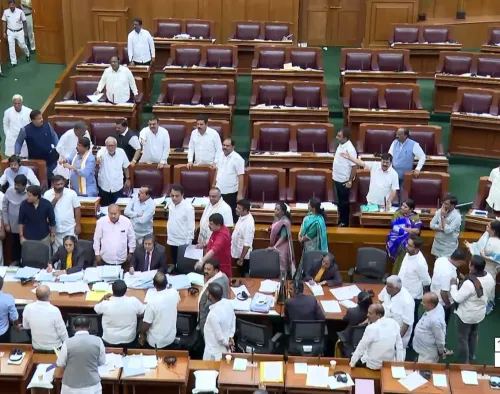
The Karnataka Assembly passed the Bill amidst chaos and protests.
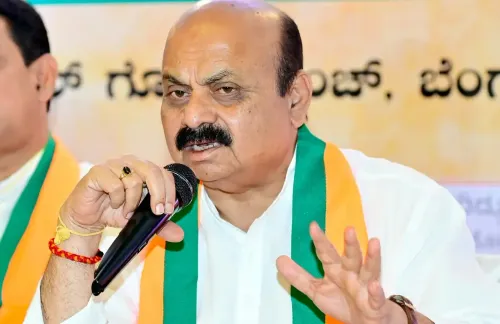
Opposition leaders are vocal against the Bill, claiming it undermines democracy.
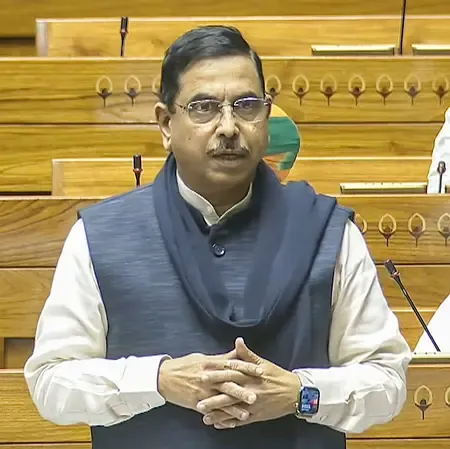
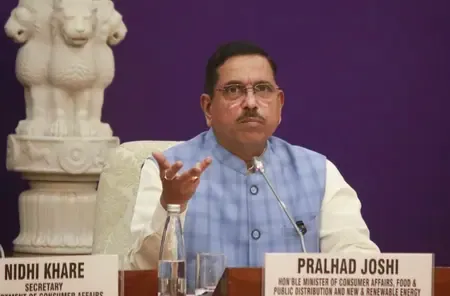
Chikkamagaluru, Dec 20 (NationPress) Union Minister for Food, Public Distribution and Consumer Affairs Pralhad Joshi stated on Saturday that if the proposed hate speech bill is enacted, the first individuals to face incarceration should be those with jihadi ideologies.
While addressing the press in Balehonnur, located in Chikkamagaluru district, the minister accused the Congress-led Karnataka government of introducing this Bill as a means of appeasement.
According to him, the government seems to believe that anyone who speaks against it ought to be imprisoned. “That’s the motive behind this law — to target activists and instill fear among the populace,” he remarked.
Joshi insisted that numerous individuals make speeches driven by jihadi motives, and it is essential for the government to prioritize action against them. He cautioned that this Bill may not see implementation in the state.
He also expressed skepticism about the practicality of the law, arguing that enforcing jail time for hate speech in Karnataka would be unfeasible. “Should the government attempt to enforce it, the judicial system will uphold justice,” he stated. He vehemently opposed the legislation, claiming it was introduced solely for political gain.
Joshi claimed that the “Hate Speech Bill” sanctioned by the Karnataka Congress administration is a directive aimed at silencing dissent.
He accused the government of infringing on the freedom of speech guaranteed under Article 19 of the Constitution, asserting that such policies threaten the survival of democracy in challenging circumstances.
Additionally, he criticized the Bill for reflecting vague colonial-era interpretations and a desire for excessive authority, alongside severe penalties intended to suppress public movements. He charged the government with wielding such laws as instruments of oppression, neglecting constitutional principles.
Union Minister of State for Labour and Employment, Shobha Karandlaje, also accused the Congress-led government of attempting to impose an undeclared Emergency in Karnataka.
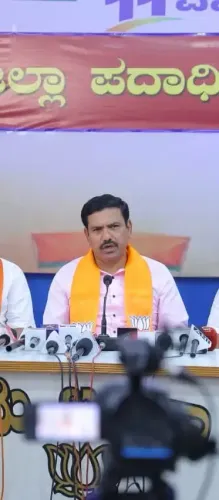
During a press conference at the BJP's state headquarters, “Jagannath Bhavan,” the Union Minister affirmed that the law governing hate speech would not be permitted to be executed under any circumstances.
The Karnataka Assembly passed the Karnataka Hate Speech and Hate Crimes (Prevention and Control) Bill, 2025, amidst chaos and without a proper debate from opposition members on Thursday.
Leader of Opposition and senior BJP figure R. Ashoka vocally protested the way the Bill was handled, even tearing a copy of it on the Assembly floor.
Amidst uproar and strong objections from BJP and JD-S MLAs, Speaker U.T. Khader called for a vote, subsequently announcing its passage.
Point of View
The concerns raised by Union Minister Pralhad Joshi regarding the Hate Speech Bill highlight a significant debate surrounding freedom of speech and government overreach. While the intent to curb hate speech is commendable, the execution and implications of such laws warrant careful scrutiny to ensure they do not infringe upon constitutional rights.
NationPress
2 Oct 2026
Frequently Asked Questions
What is the Hate Speech Bill?
The Hate Speech Bill seeks to regulate hate speech and hate crimes in Karnataka, aiming to impose penalties for those found guilty of promoting such speech.
Who is Pralhad Joshi?
Pralhad Joshi is the Union Minister for Food, Public Distribution, and Consumer Affairs, representing the Bharatiya Janata Party (BJP).
Why did Joshi criticize the Hate Speech Bill?
Joshi criticized the Bill for being politically motivated and aimed at suppressing dissent, claiming it infringes on constitutional rights.
What are the implications of the Hate Speech Bill?
The Bill could potentially limit freedom of speech and could lead to political misuse if not implemented judiciously.
What did the Opposition say about the Bill?
Opposition members, particularly from the BJP and JD-S, have expressed strong objections to the Bill's passage, claiming it was rushed and lacked proper debate.