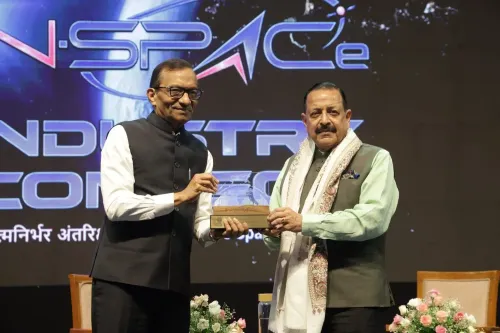
Dr. Jitendra Singh backs young researchers at Ahmedabad event
Synopsis
Union Science and Technology Minister Dr. Jitendra Singh, speaking in Ahmedabad on June 12, 2026, said young researchers have the potential to drive change. The remarks align with India's push to operationalise the National Research Foundation and expand early-career science fellowships under the INSPIRE scheme.
Key Takeaways
Jitendra Singh addressed young researchers in Ahmedabad on June 12, 2026 , emphasising their capacity to drive change.
The visit is part of ongoing ministerial outreach to academic hubs to publicise new funding mechanisms.
The proposed National Research Foundation , announced in the Union Budget 2023 , aims to coordinate multi-disciplinary research funding across India.
The INSPIRE scheme , launched in 2008 , continues to be a primary vehicle for attracting and retaining young scientific talent.
The National Education Policy 2020 provides the broader framework for strengthening India's research ecosystem.
Parliamentary passage of the NRF Bill and budget allocations for fellowships remain the key next steps to watch.
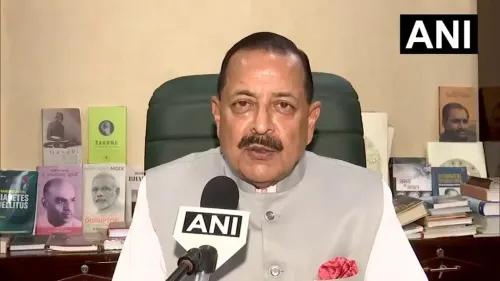
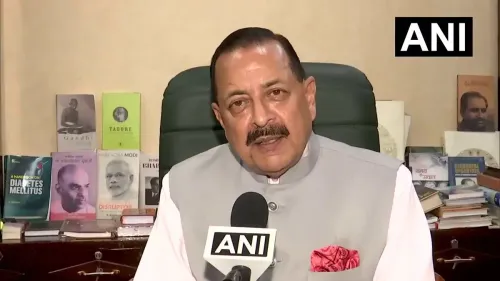
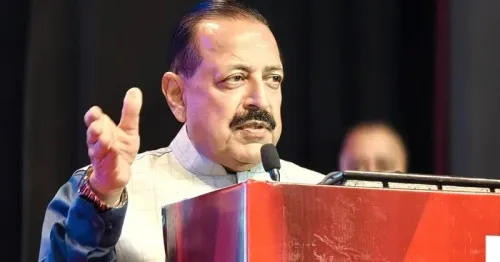
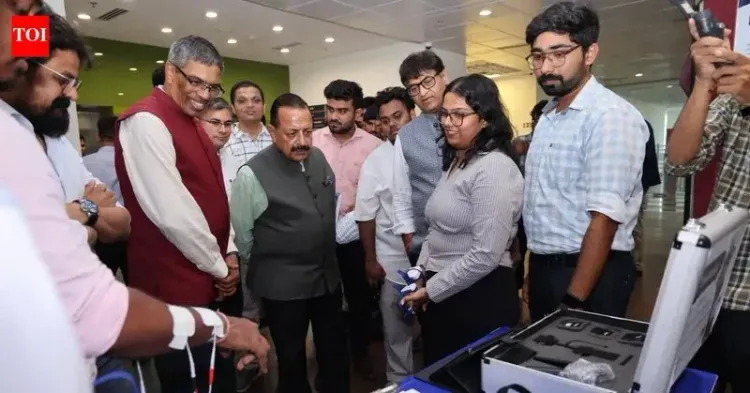
Union Science and Technology Minister Dr. Jitendra Singh on Friday, June 12, 2026, highlighted the potential of young researchers to drive meaningful change, addressing an audience in Ahmedabad as part of the government's ongoing outreach to India's early-career scientific community.
Context
The minister's remarks in Ahmedabad underline a sustained push by the Union government to energise India's research ecosystem at the grassroots level. Ahmedabad and its adjoining science corridor — home to institutions such as the Physical Research Laboratory and IIT Gandhinagar — has emerged as a key venue for ministerial engagement with early-career scientists. Dr. Singh's message centred on the capacity of young researchers to become agents of transformation in science and technology.
Such outreach events serve a dual purpose: publicising new funding mechanisms and motivating students and early-career researchers to align their work with national priorities in emerging technologies and self-reliance.
Policy Backdrop
The visit fits into a broader policy architecture that successive governments have built to raise India's research and development intensity. The INSPIRE scheme, launched in 2008, remains one of the flagship programmes designed to attract and retain young talent in science careers, offering fellowships and scholarships to students from the school level upward.
More recently, the National Education Policy 2020 laid out provisions for strengthening research ecosystems and increasing the Gross Enrolment Ratio in higher education. The proposed National Research Foundation (NRF) — announced in the Union Budget 2023 — is intended to serve as an apex body coordinating and funding multi-disciplinary research across institutions, with a particular focus on bridging the gap between academic inquiry and practical application.
Ministerial visits to academic hubs are frequently used to communicate these policy developments directly to the research community and to solicit ground-level feedback on implementation challenges.
Stakeholders and Impact
Young researchers and students at universities and autonomous scientific institutions stand to benefit most directly from the policy signals conveyed at such events. Early-career scientists in disciplines ranging from biotechnology and space sciences to clean energy are among the primary target groups for fellowship programmes under the NRF and the INSPIRE scheme.
Scientific institutions based in Gujarat and the broader western India region gain visibility and potential access to central funding when senior ministers engage directly with their faculty and student communities. Industry stakeholders in deep-tech and start-up ecosystems also watch such ministerial statements for signals on government procurement, grant availability, and regulatory priorities.
What's Next
Parliamentary consideration of the National Research Foundation Bill and subsequent budget allocations for early-career fellowships remain the most consequential near-term developments to watch. How swiftly the NRF becomes fully operational will determine whether the government's rhetorical emphasis on empowering young researchers translates into measurable increases in research output and retention of scientific talent within India.
Dr. Singh's continued outreach in academic centres suggests the ministry intends to maintain momentum ahead of the next budget cycle, where allocations for science and technology are expected to face scrutiny against India's stated goal of raising R&D spending to 2 per cent of GDP.
Point of View
Such outreach serves as both policy signalling and grassroots mobilisation. The minister's focus on youth aligns with the government's broader 'Viksit Bharat' narrative, which positions India's demographic dividend as a strategic asset in global technology competition. Whether these messages translate into concrete fellowship disbursements and R&D spending increases will be the real measure of the ministry's ambitions.
NationPress
26 Oct 2026
Frequently Asked Questions
What did Dr. Jitendra Singh say about young researchers in Ahmedabad?
Dr. Jitendra Singh said that young researchers have the potential to drive change, speaking at an event in Ahmedabad on June 12, 2026.
What is the National Research Foundation India?
The National Research Foundation (NRF) is a proposed apex body announced in the Union Budget 2023 to fund and coordinate multi-disciplinary research across Indian institutions, with a focus on bridging academic research and practical application.
What is the INSPIRE scheme for young scientists?
The INSPIRE scheme, launched in 2008, is a government programme that provides fellowships and scholarships to attract and retain young talent in science and research careers, targeting students from the school level upward.
Why does Dr. Jitendra Singh visit Ahmedabad for science events?
Ahmedabad hosts major scientific institutions including the Physical Research Laboratory and IIT Gandhinagar, making it a key venue for ministerial engagement with early-career researchers and for communicating central government science policy.
How does India plan to increase R&D spending?
India has set a goal of raising research and development expenditure to 2 per cent of GDP, with mechanisms such as the National Research Foundation and expanded fellowship schemes intended to drive this increase through both public funding and institutional reform.