Dr. Jitendra Singh Highlights Youth Aspirational Surge Under PM Modi
Synopsis
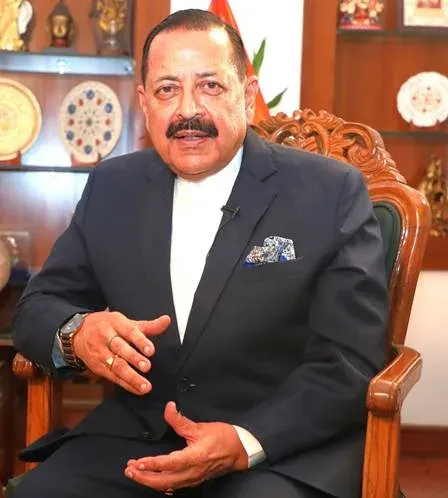
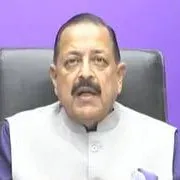
Union Minister Dr. Jitendra Singh on 25 May 2026 highlighted a reported 'aspirational surge' among Indian youth under PM Modi's leadership, citing government schemes like Skill India, Startup India, and the National Education Policy as key drivers of youth ambition and entrepreneurship.
Key Takeaways
Union Science and Technology Minister Dr.
Jitendra Singh on 25 May 2026 amplified a report describing an 'aspirational surge' among Indian youth under PM Modi .
The Skill India Mission , launched in 2015 , targeted skilling 400 million Indians by 2022 to harness the country's demographic dividend.
The Startup India initiative, launched in 2016 , aimed to foster entrepreneurship among young Indians by reducing regulatory hurdles and expanding funding access.
The National Education Policy 2020 expanded vocational training and holistic development to align education with modern economic needs.
Parliamentary debates on employment and education bills, and the next Union Budget , are expected to test the government's youth-development record.
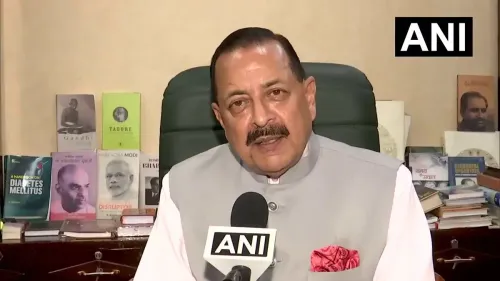
Union Science and Technology Minister Dr. Jitendra Singh on Sunday, 25 May 2026 shared a report underscoring what he described as an 'aspirational surge among youth across the country under PM Modi's leadership,' amplifying a narrative the government has consistently championed since 2014.
Context
The minister's post quoted coverage that highlighted rising ambitions among young Indians, framing the trend as a direct outcome of policy priorities set by the Narendra Modi-led government. The phrase 'aspirational surge' points to a broader official argument that India's youth are increasingly channelling their energies into education, skill-building, and entrepreneurship — aided by targeted government programmes.
Dr. Jitendra Singh, who holds independent charge of the Ministry of Science and Technology and the Ministry of Earth Sciences, has frequently used his platform to highlight the government's youth-centric policy agenda, linking scientific temper and innovation to national progress.
Policy Backdrop
The government's youth-focused policy architecture rests on three major pillars. The Skill India Mission, launched in 2015, set an ambitious target of skilling 400 million people by 2022, aiming to make India's large working-age population an economic asset rather than a liability.
The Startup India initiative, announced in 2016, was designed to cultivate an entrepreneurial culture among young Indians by easing regulatory burdens and expanding access to funding. More recently, the National Education Policy approved in 2020 introduced sweeping changes to vocational training and holistic development, seeking to align the education system with the demands of a twenty-first-century economy.
Together, these schemes represent a sustained attempt to leverage India's demographic dividend — the country's unusually large proportion of working-age citizens — as a driver of long-term economic growth.
Stakeholders and Impact
The primary beneficiaries of this policy push are Indian students, young job-seekers, and first-generation entrepreneurs, particularly those from smaller cities and rural areas who have historically had limited access to quality education and employment networks. Official messaging consistently frames these groups as the engine of India's aspirational economy.
Critics and opposition leaders have, in parliamentary debates, questioned whether on-ground outcomes — in terms of formal employment generation and income levels — match the ambition of the schemes. These debates are expected to intensify ahead of the next Union Budget, when fresh allocations for skill and education programmes will come under scrutiny.
What's Next
Parliamentary discussions on pending education and employment legislation are likely to serve as the next major arena where the government's youth-development record is tested. Any new scheme announcements in the upcoming Union Budget will be closely watched as a signal of whether the administration plans to deepen existing programmes or pivot to new instruments.
The minister's amplification of the 'aspirational surge' narrative ahead of these legislative and budgetary moments suggests the government is keen to consolidate public perception around its youth-policy credentials, even as the debate over measurable outcomes continues.
Point of View
Reinforcing the ruling party's core narrative that PM Modi's decade in power has fundamentally transformed the aspirations of India's youth. By amplifying the 'aspirational surge' language, the minister connects a range of disparate schemes — Skill India, Startup India, NEP 2020 — into a single, coherent story of youth empowerment. This kind of messaging typically intensifies in the run-up to budget cycles and legislative sessions, when the government needs public goodwill to push through policy and spending priorities. The durability of this narrative, however, will depend on whether official data on employment and income can substantiate the aspirational claims being made.
NationPress
10 Oct 2026
Frequently Asked Questions
What did Dr. Jitendra Singh say about Indian youth in May 2026?
Dr. Jitendra Singh shared a report on 25 May 2026 highlighting an 'aspirational surge among youth across the country under PM Modi's leadership,' pointing to government schemes in skill development, entrepreneurship, and education as key drivers.
What is the Skill India Mission and how does it relate to youth aspirations?
The Skill India Mission, launched in 2015, aimed to skill 400 million Indians by 2022 to equip young people with employable competencies and support India's demographic dividend.
What is the Startup India initiative?
Startup India, announced in 2016, is a government programme designed to encourage entrepreneurship among young Indians by reducing regulatory barriers and improving access to funding and mentorship.
What is the National Education Policy 2020 and its impact on youth?
The National Education Policy 2020 overhauled India's education framework to emphasise vocational training, critical thinking, and holistic development, aiming to better prepare young people for a modern economy.
Who is Dr. Jitendra Singh?
Dr. Jitendra Singh is the Union Minister of State (Independent Charge) for Science and Technology and Earth Sciences, and also holds the portfolio of Minister of State in the Prime Minister's Office and for Personnel.