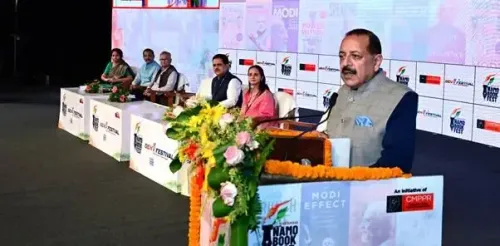
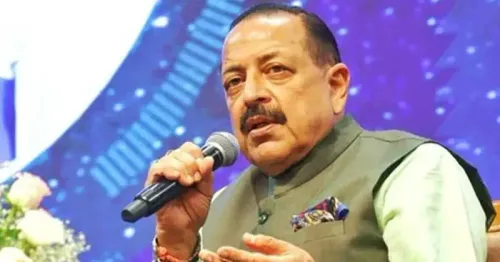
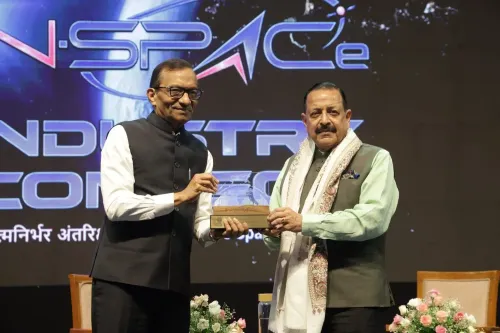
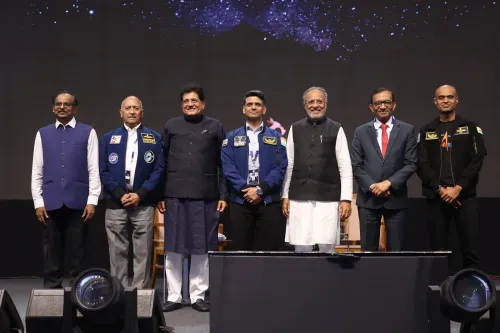
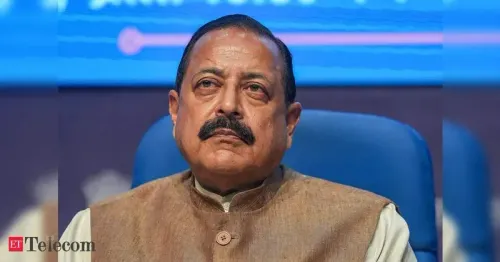
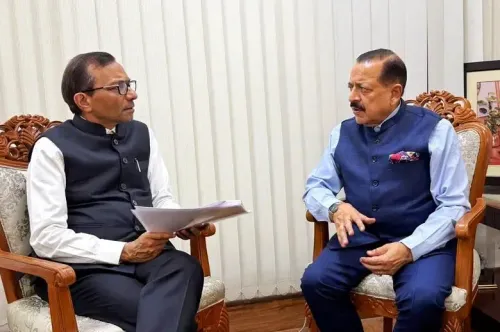
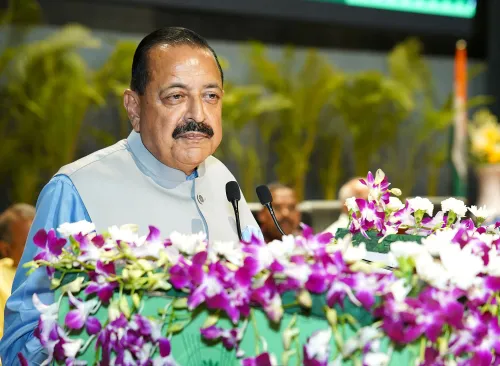
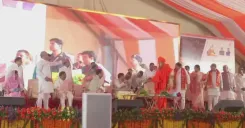
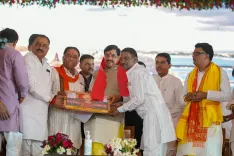
Dr. Jitendra Singh at IN-SPACe Industry Connect, Ahmedabad
Synopsis
Union Minister Dr. Jitendra Singh attended the IN-SPACe Industry Connect in Ahmedabad on 11 June 2026, calling the session lively and productive. He cited overwhelming industry enthusiasm following PM Modi's decision to open space and nuclear sectors to private players, with IN-SPACe Chairman Dr. Pawan Goenka curating the event.
Key Takeaways
Jitendra Singh attended the IN-SPACe Industry Connect in Ahmedabad on 11 June 2026 .
The event was curated by IN-SPACe Chairman Dr.
Pawan Goenka , former MD of Mahindra and Mahindra.
The minister described 'overwhelming enthusiasm' from industry participants following PM Modi 's decision to open space and nuclear sectors to private players.
India's space liberalisation began in June 2020 under the Atmanirbhar Bharat initiative, allowing private firms to build launch vehicles and deploy satellites.
The session yielded 'valuable and doable suggestions' that are expected to inform ongoing policy consultations.
Both the space and nuclear sectors are now part of India's broader strategic technology liberalisation agenda.
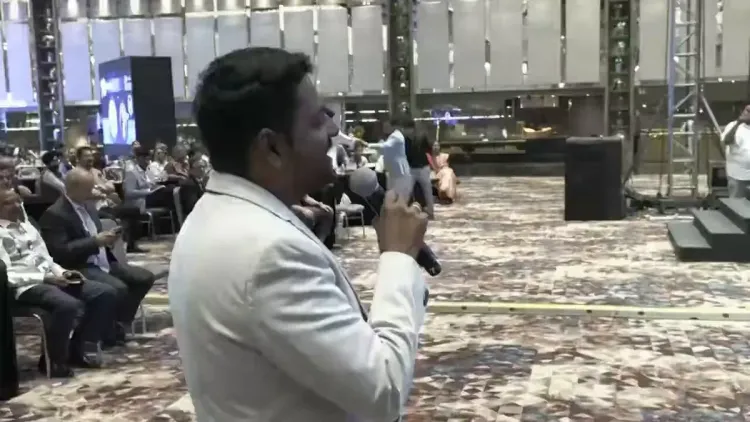
Union Science and Technology Minister Dr. Jitendra Singh on Thursday, 11 June 2026, attended the IN-SPACe Industry Connect event in Ahmedabad, describing it as a lively exchange of ideas between the government and private sector stakeholders in India's space industry, curated by IN-SPACe Chairman Dr. Pawan Goenka.
Context
The minister noted 'some valuable and doable suggestions, some thought-provoking ideas to carry home' from the session, signalling that industry inputs are being actively considered at the policy level. He also highlighted 'overwhelming enthusiasm in the room' following Prime Minister Narendra Modi's decision to open the space and nuclear sectors to private players.
The IN-SPACe Industry Connect series is designed to create a structured dialogue between India's emerging private space ecosystem and the nodal regulatory body, Indian National Space Promotion and Authorisation Centre (IN-SPACe), which operates under the Department of Space.
Policy Backdrop
India's space liberalisation journey began in June 2020, when the government announced sweeping reforms under the Atmanirbhar Bharat initiative, permitting private companies to build launch vehicles, deploy satellites, and offer space-based services — all under IN-SPACe oversight. The move ended decades of near-exclusive public-sector dominance led by ISRO.
Dr. Pawan Goenka, the former Managing Director of Mahindra and Mahindra, was appointed IN-SPACe Chairman to drive private-sector engagement. His industrial background was seen as a deliberate signal that the government intended to treat the space sector as a commercial opportunity, not just a strategic programme. The parallel opening of elements of the nuclear sector to private participation represents the next frontier in this liberalisation arc.
Stakeholders and Impact
India's private space startup ecosystem has grown substantially since the 2020 reforms, with dozens of firms working on launch vehicles, satellite platforms, and ground-segment services. Events like the IN-SPACe Industry Connect in Ahmedabad serve as a critical feedback loop, allowing startups and established aerospace firms to surface regulatory bottlenecks and investment concerns directly to policymakers.
Ahmedabad, home to aerospace institutions and a growing technology corridor in Gujarat, is an increasingly prominent venue for such high-stakes industry consultations. The minister's presence underscores the political priority placed on making India a competitive player in the global commercial space economy, which is projected to be worth hundreds of billions of dollars in the coming decade.
What's Next
The suggestions gathered at the Ahmedabad connect are expected to feed into ongoing inter-ministerial consultations on expanding private participation norms, particularly as the government weighs formal notifications on nuclear-sector involvement. Follow-on IN-SPACe Industry Connect events in other cities are anticipated as the agency seeks wider industry input before finalising updated regulatory frameworks.
With both space and nuclear sectors now on the liberalisation table, India's strategic technology policy is entering a new phase — one where private capital and entrepreneurial innovation are positioned as co-drivers alongside state institutions.
Point of View
Positioning the reforms as a break from risk-averse precedent. This fits a broader pattern in which the government uses high-profile minister engagements to sustain momentum for strategic-sector reforms that face institutional inertia. The parallel mention of nuclear-sector opening alongside space suggests an intent to normalise private participation across all high-technology domains, not just the relatively more advanced space ecosystem.
NationPress
26 Oct 2026
Frequently Asked Questions
What is IN-SPACe and what does it do?
IN-SPACe, or the Indian National Space Promotion and Authorisation Centre, is a nodal agency under the Department of Space that regulates and promotes private sector participation in India's space activities, including satellite launches and launch vehicle development.
Who is Dr. Pawan Goenka and why is he heading IN-SPACe?
Dr. Pawan Goenka is the Chairman of IN-SPACe and a former Managing Director of Mahindra and Mahindra. His appointment was intended to bring an industry-first perspective to India's space regulatory body as the government opened the sector to private players.
When did India open its space sector to private companies?
India announced space sector liberalisation in June 2020 as part of the Atmanirbhar Bharat initiative, allowing private firms to build launch vehicles, deploy satellites, and offer space-based services under IN-SPACe oversight.
What happened at the IN-SPACe Industry Connect in Ahmedabad?
The IN-SPACe Industry Connect held in Ahmedabad on 11 June 2026 was a structured dialogue between private space industry stakeholders and the government, curated by IN-SPACe Chairman Dr. Pawan Goenka, with Union Minister Dr. Jitendra Singh in attendance.
Is India also opening its nuclear sector to private players?
Union Minister Dr. Jitendra Singh referenced PM Modi's decision to open both the space and nuclear sectors to private players, though the precise statutory details of nuclear-sector liberalisation are subject to ongoing inter-ministerial consultations.