Minister Jitendra Singh Advances BioE3 Vision and Nuclear Medicine Partnership
Synopsis
In a pivotal move towards a bio-driven economy, MoS Jitendra Singh unveiled the BioE3 Policy, positioning biotechnology as a cornerstone of India's future growth. This strategic framework aims to enhance research collaboration and advance nuclear medicine, marking a significant step for India's scientific community.
Key Takeaways
BioE3 Policy is central to India's biotechnology strategy.
Focus on interdisciplinary collaborations between public and private sectors.
New cGMP facility aims to improve access to advanced therapies.
India is a pioneer in implementing a dedicated biotechnology framework .
Significant emphasis on nuclear medicine research following policy reforms.
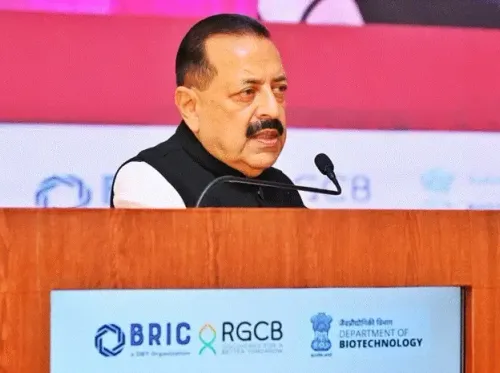
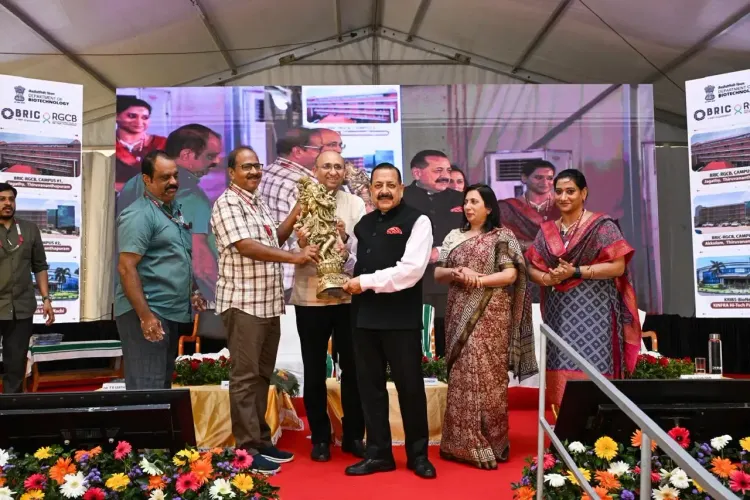
Thiruvananthapuram, Feb 28 (NationPress) Highlighting a clear transition towards a bio-driven economic framework, Minister of State (MoS) Jitendra Singh announced on Saturday that the government's BioE3 Policy embodies a visionary approach that places biotechnology at the core of India's economic advancement.
During his speech at the foundation laying ceremony for a cutting-edge current Good Manufacturing Practice (cGMP) facility at the Akkulam campus of BRIC-Rajiv Gandhi Centre for Biotechnology (RGCB), the MoS emphasized the growing potential of nuclear medicine research due to recent policy changes by the Union government.
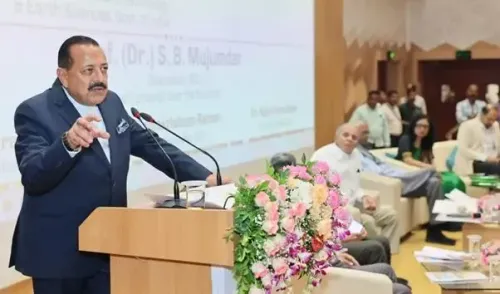
He encouraged national research and development institutions to engage in interdisciplinary partnerships, especially with the private sector, stating that the liberalization of the nuclear medical mission opens new avenues for collaborative research and practical applications.
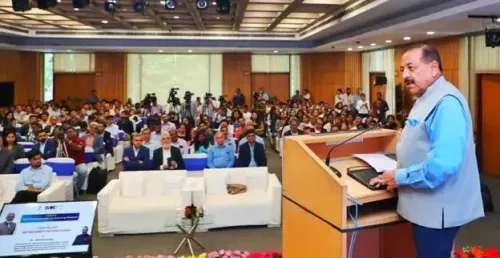
Additionally, Minister Singh inaugurated the National Facility for Recombinant Cells and Sensors and launched the annual Science Day event at the campus.
He mentioned that India stands out as one of the few nations to implement a dedicated biotechnology framework, the BioE3 (Biotechnology for Economy, Environment and Employment) Policy, which aligns scientific developments with economic viability, sustainable practices, and circular economy initiatives.
Referring to the newly unveiled Biopharma SHAKTI Mission, Minister Singh acknowledged that policymakers are aware of the increasing bio-centric nature of the global economy.
Over the last decade, he pointed out, fields like biotechnology have witnessed unmatched prioritization.
In discussing institutional milestones, he noted that researchers at BRIC-RGCB have developed robust expertise in molecular biology, genomics, disease biology, and cancer research, drawing scholars from across the country specializing in sequencing, bioinformatics, and interdisciplinary sciences.
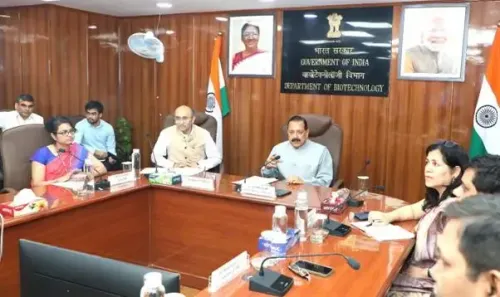
Rajesh Gokhale, Secretary of the Department of Biotechnology and Director General of BRIC, emphasized that biotechnology systems are crucial for national development and mentioned that the BioE3 Policy 2024 encompasses six key sectors, including bio-manufacturing.
He added that government-supported human papillomavirus (HPV) vaccination efforts have utilized data generated by the institute.
T.R. Santhosh Kumar, BRIC-RGCB Director (Additional Charge), noted that the Recombinant Cells and Sensors facility currently maintains 600 to 700 stable cell lines aimed at various cancer pathways, positioning the center as a vital global resource.
Kumar stated that the forthcoming cGMP facility will facilitate affordable cell and gene therapy models, thereby broadening access to next-generation treatment options.
Point of View
The announcement by Minister Jitendra Singh regarding the BioE3 Policy is a significant indication of India's commitment to integrating biotechnology into its economic framework. This strategic initiative not only positions India as a leader in scientific innovation but also promotes partnerships that can yield substantial benefits in healthcare and environmental sustainability.
NationPress
29 Sept 2026
Frequently Asked Questions
What is the BioE3 Policy?
The BioE3 Policy stands for Biotechnology for Economy, Environment, and Employment, designed to align scientific innovation with economic sustainability.
Why is nuclear medicine research significant?
Nuclear medicine research is crucial as it offers new diagnostic and therapeutic options, particularly in cancer treatment, and is being expanded due to recent policy liberalizations.
What facilities are being established at BRIC-RGCB?
A state-of-the-art cGMP facility is being developed, along with the National Facility for Recombinant Cells and Sensors to enhance research capabilities.
How does the BioE3 Policy support the economy?
The policy is designed to create sustainable economic growth through innovation in biotechnology, addressing environmental concerns and job creation.
What is the Biopharma SHAKTI Mission?
The Biopharma SHAKTI Mission focuses on advancing biopharmaceutical research and development to enhance healthcare solutions in India.