JKNC holds Mehbooba Mufti responsible for Article 370 abrogation after 'dimagi Naxal' remark
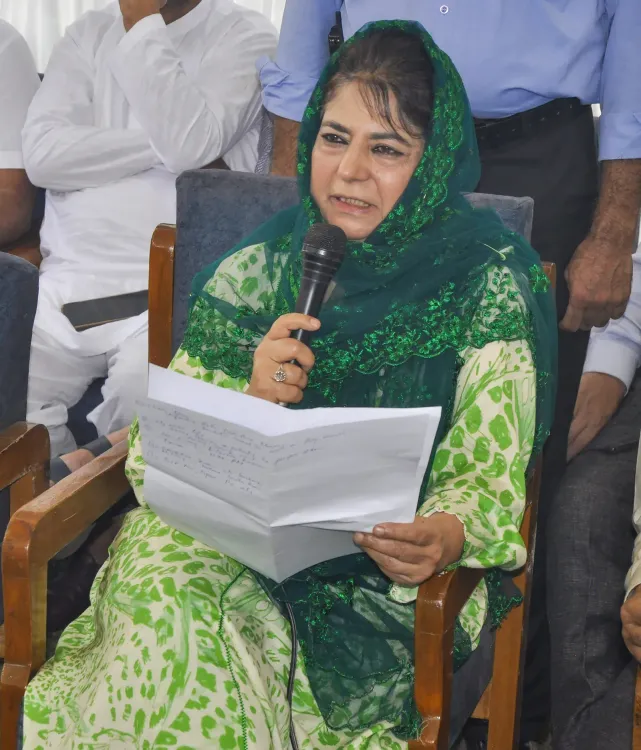
Synopsis
The JKNC has turned Mehbooba Mufti's 'dimagi Naxal' self-branding into a liability, arguing that the PDP's own 2014 decision to ally with the BJP — despite explicit warnings from Omar Abdullah — is what made the 2019 abrogation of Article 370 possible. It is a rare case of a political opponent being indicted by the very cause they now champion.
Key Takeaways
The JKNC on 17 August accused Mehbooba Mufti and the PDP of bearing direct responsibility for the abrogation of Article 370 in 2019 .
The charge centres on the PDP's decision to ally with the BJP after the 2014 Assembly elections , despite warnings from then CM Omar Abdullah .
JKNC Chief Spokesperson Tanvir Sadiq called Mufti's Article 370 advocacy 'crocodile tears', naming her 'the first person responsible for 2019'.
The controversy was triggered by PM Narendra Modi's Independence Day address , in which he warned of a covert ideological strain of Naxalism, prompting Mufti to self-identify as a 'dimagi Naxal' .
The exchange signals intensifying competition between the JKNC and PDP over ownership of the Article 370 narrative ahead of future elections in Jammu and Kashmir .
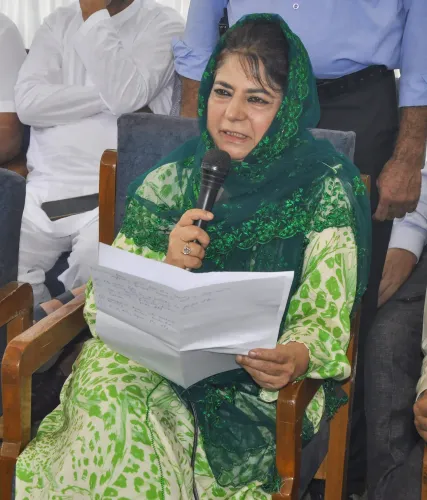
The Jammu and Kashmir National Conference (JKNC) on Monday, 17 August launched a pointed counter-attack on former Chief Minister Mehbooba Mufti over her self-description as a 'dimagi Naxal', asserting that her party, the People's Democratic Party (PDP), bore direct responsibility for the political chain of events that culminated in the abrogation of Article 370 in 2019. The JKNC argued that the PDP's decision to ally with the Bharatiya Janata Party (BJP) after the 2014 Assembly elections made the abrogation inevitable.
Background: The 'Dimagi Naxal' Controversy
The phrase 'dimagi Naxal' entered the political conversation after Prime Minister Narendra Modi, in his Independence Day address, cautioned that while armed Naxalism had been substantially curtailed, a more covert, ideological strain of the movement continued to challenge the country. Mehbooba Mufti subsequently embraced the label, saying she considered herself a 'dimagi Naxal' because of her unwavering support for Article 370 and her opposition to its revocation.
JKNC's Charge: PDP-BJP Alliance Sealed Article 370's Fate
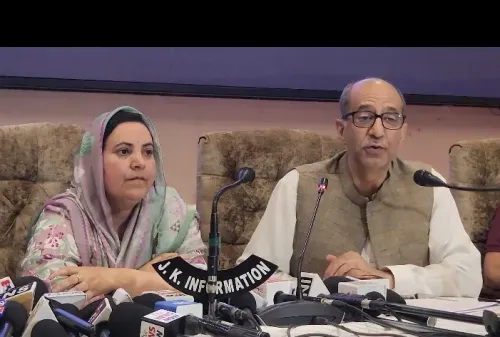
JKNC Chief Spokesperson Tanvir Sadiq said the National Conference had explicitly warned against bringing the BJP into government in Jammu and Kashmir, given the party's publicly stated manifesto position on Article 370. Sadiq recalled that then Chief Minister Omar Abdullah had offered unconditional support after the 2014 election results, urging the PDP not to partner with the BJP.
Sadiq said: 'A Chief Minister or a former Chief Minister, if she uses something that she is herself responsible for, it sounds very amusing, because if you remember that when 2014 election results had come, Chief Minister Omar Abdullah had said that we will give unconditional support to you, do not bring BJP because in their manifesto, the abrogation of Article 370 is there.'
Despite that warning, the PDP proceeded to form a coalition government with the BJP, a decision the JKNC now holds as the proximate cause of the 2019 abrogation.
Sadiq's Verdict: 'Crocodile Tears'
Sadiq was unsparing in his assessment. 'Everybody knows that what happened in 2019 was because of that alliance. Had they not formed an alliance with the BJP, 2019 would never have happened. These are just crocodile tears. Mehbooba Mufti Sahiba is the first person responsible for 2019,' he said. The charge positions the PDP's post-2014 governance choices as the decisive variable in the constitutional transformation of Jammu and Kashmir.
Political Context and What Comes Next
The exchange reflects the deepening fault lines within the regional political landscape of Jammu and Kashmir as parties jostle for credibility on the Article 370 question ahead of future electoral cycles. Notably, both the JKNC and the PDP have historically positioned themselves as defenders of the region's special status, making the blame-trading particularly significant. The JKNC, now part of the ruling dispensation in the Union Territory, appears to be using the controversy to draw a sharp distinction between its own record and that of the PDP. How the PDP responds to these charges is likely to shape the next phase of political discourse in the Valley.
Point of View
And Omar Abdullah's warning on record gives the JKNC a credible line of attack. But the deeper question — whether any regional party could have forestalled a constitutionally determined central decision — remains unanswered. By framing Mufti as 'the first person responsible for 2019', the JKNC risks reducing a complex constitutional and political episode to a single alliance choice. What mainstream coverage misses is that both parties now compete for the same electorate on the same issue, and the credibility of neither has been validated by the voters since the abrogation.
NationPress
2 Oct 2026
Frequently Asked Questions
Why is the JKNC blaming Mehbooba Mufti for the abrogation of Article 370?
The JKNC argues that the PDP's decision to form a coalition government with the BJP after the 2014 Assembly elections directly enabled the abrogation of Article 370 in 2019. JKNC spokesperson Tanvir Sadiq pointed out that the National Conference had explicitly warned the PDP against allying with the BJP, whose manifesto included the removal of Article 370.
What did Mehbooba Mufti mean by calling herself a 'dimagi Naxal'?
Mehbooba Mufti used the term 'dimagi Naxal' to describe her continued support for Article 370 and her opposition to its abrogation. She appeared to reclaim the label after Prime Minister Narendra Modi used it in his Independence Day address to warn against a covert ideological strain of Naxalism.
What did Omar Abdullah say after the 2014 election results?
According to JKNC spokesperson Tanvir Sadiq, then Chief Minister Omar Abdullah offered unconditional support to the PDP and urged it not to bring the BJP into government, specifically citing the BJP's manifesto commitment to abrogating Article 370. The PDP proceeded to form the alliance regardless.
When was Article 370 abrogated and what did it mean for Jammu and Kashmir?
Article 370 was abrogated on 5 August 2019 by the central government, stripping Jammu and Kashmir of its special constitutional status. The region was simultaneously bifurcated into two Union Territories — Jammu and Kashmir, and Ladakh.
What is the political significance of this exchange between the JKNC and PDP?
Both the JKNC and the PDP have historically claimed to be defenders of Jammu and Kashmir's special status, making the blame-trading over Article 370 particularly significant. The dispute signals intensifying competition between the two parties over political credibility on the issue ahead of future electoral cycles in the Union Territory.