Rajasthan MLA sets up 'Transfer Temple' for govt employee requests in Jodhpur
Synopsis
A Jodhpur BJP MLA has set up a ‘Transfer Temple’ — complete with a Lord Ram image and a collection box — so government employees can submit transfer requests symbolically rather than lobbying him directly. The move is a rare public acknowledgement by an elected representative that political pressure on transfers is both overwhelming and largely ineffective.
Key Takeaways
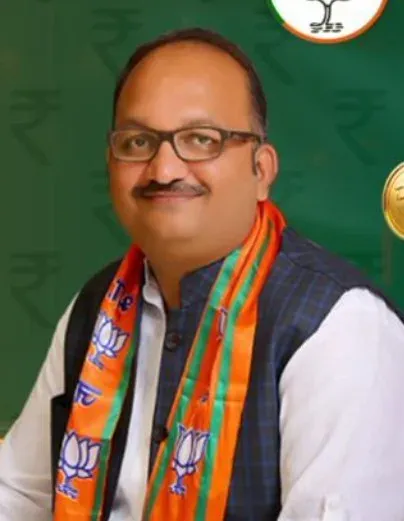
BJP MLA Atul Bhansali of Jodhpur City set up a ‘Transfer Temple’ at his office during Rajasthan’s transfer season.
Employees submit applications before an image of Lord Shri Ram via a collection box — requests are still processed under government rules.
Bhansali said MLAs are ‘merely postmen,’ not decision-makers, on transfer approvals.
The Rajasthan government opened a 16-day transfer window from 19 June to 5 July , excluding Grade III teachers and Medical and Health Department staff.
The initiative is intended to free the MLA’s time for governance and development work rather than individual requests.
Jodhpur City Bharatiya Janata Party (BJP) MLA Atul Bhansali has set up an unconventional ‘Transfer Temple’ at his office to manage the flood of transfer requests from government employees during Rajasthan’s annual transfer season. The initiative, which places a collection box alongside an image of Lord Shri Ram, allows applicants to submit their requests symbolically before the deity rather than directly to the legislator.
How the Transfer Temple Works
Employees seeking transfers can place their written applications before the image of Lord Shri Ram at the designated Transfer Temple inside Bhansali’s office. A collection box kept alongside the image serves as the submission point for these requests.
Bhansali clarified that all applications received through this channel will still be reviewed in accordance with government policies and established procedures — the temple is an organisational mechanism, not a bypass of administrative rules.
What the MLA Said
“People often believe that once a request reaches an MLA, it is guaranteed to be approved. That is not the case. We are not God; we are merely postmen,” Bhansali said.
He noted that administrative requirements, government policies, and standing rules ultimately govern transfer decisions, and that it is not feasible to accommodate every request — particularly in a city like Jodhpur, where the volume of employees seeking local postings is especially high.
Bhansali said the idea was shaped by years of observing the rising volume of recommendation requests that elected representatives receive each transfer season. He added that senior political leaders have consistently advised public representatives to avoid being consumed by individual requests and to concentrate instead on governance and development.
The Transfer Window Context
The initiative comes after the Rajasthan government lifted its ban on transfers and postings of government employees for a 16-day window running from 19 June to 5 July. The relaxation covers most departments, though Grade III teachers and employees of the Medical and Health Department remain excluded from the current exercise.
Notably, transfer seasons in Rajasthan — as in most Indian states — routinely generate intense lobbying pressure on elected representatives, often diverting their attention from constituency development work. Bhansali’s approach reflects a broader frustration among legislators who find themselves acting as intermediaries in administrative processes.
Public Reaction and Broader Significance
The Transfer Temple has drawn widespread attention for its creative, if pointed, commentary on the relationship between elected representatives and government employees during transfer season. Critics and supporters alike have noted that the initiative underscores a structural problem: the outsized role that political influence is perceived to play in routine administrative transfers.
Whether the model gains traction among other legislators remains to be seen, but Bhansali’s office has signalled that the arrangement will remain in place for the duration of the current transfer window.
Point of View
But it also inadvertently exposes a systemic failure: that government transfers in Rajasthan — and across most Indian states — are so politically mediated that employees feel compelled to approach MLAs rather than rely on transparent administrative criteria. The real fix is not a collection box before a deity but a rules-based, publicly auditable transfer policy that removes discretion at the political level altogether. Until that happens, Transfer Temples will remain a quirky workaround rather than a solution.
NationPress
22 Sept 2026
Frequently Asked Questions
What is the Transfer Temple set up by Jodhpur MLA Atul Bhansali?
It is a designated space at BJP MLA Atul Bhansali’s office in Jodhpur where government employees can place their transfer requests before an image of Lord Shri Ram, using a collection box. The initiative is meant to streamline the handling of the large volume of transfer requests Bhansali receives each transfer season, while still processing all applications under government rules.
Why did MLA Atul Bhansali set up the Transfer Temple?
Bhansali set it up to reduce the time he spends on individual transfer requests and to refocus his attention on governance and development work. He noted that years of observing the growing volume of recommendation requests, combined with advice from senior political leaders to avoid being consumed by personal requests, inspired the move.
What is Rajasthan’s current transfer window?
The Rajasthan government lifted its ban on transfers and postings for a 16-day window from 19 June to 5 July. Grade III teachers and employees of the Medical and Health Department are excluded from this transfer exercise.
Will applications submitted at the Transfer Temple actually be processed?
Yes. Bhansali has stated that all applications received through the Transfer Temple will be considered in accordance with government policies and established administrative procedures. The temple is an organisational tool, not a substitute for the formal transfer process.
Who is affected by Rajasthan’s transfer season?
Most categories of state government employees are eligible for transfers during the current window. However, Grade III teachers and Medical and Health Department employees are specifically excluded from the 19 June to 5 July transfer exercise.