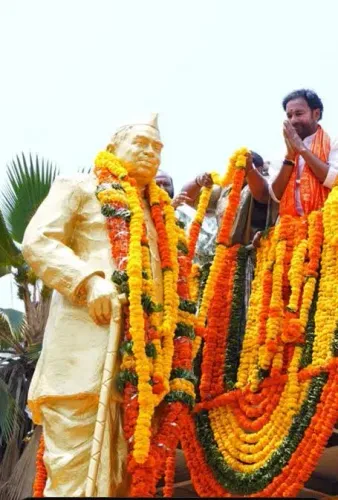
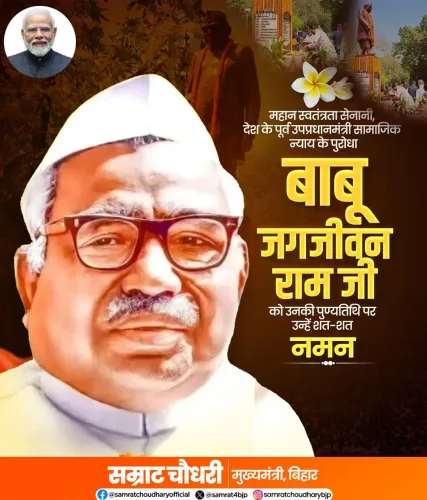
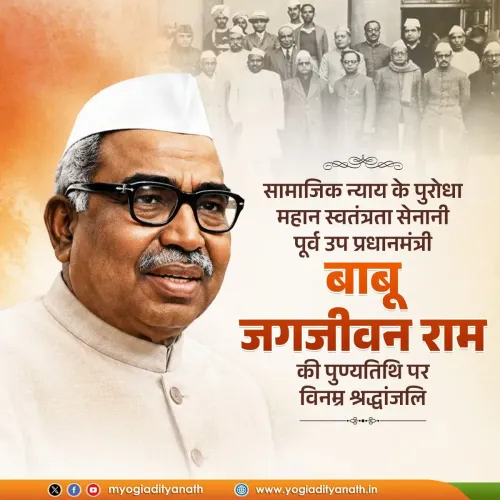
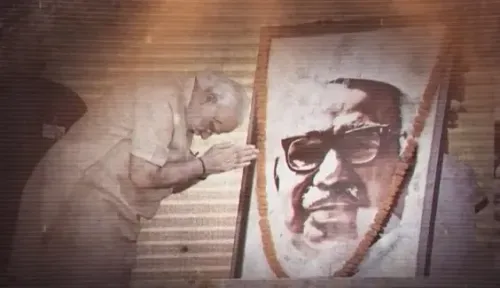
Pralhad Joshi Pays Tribute to Babu Jagjivan Ram on Death Anniversary
Synopsis
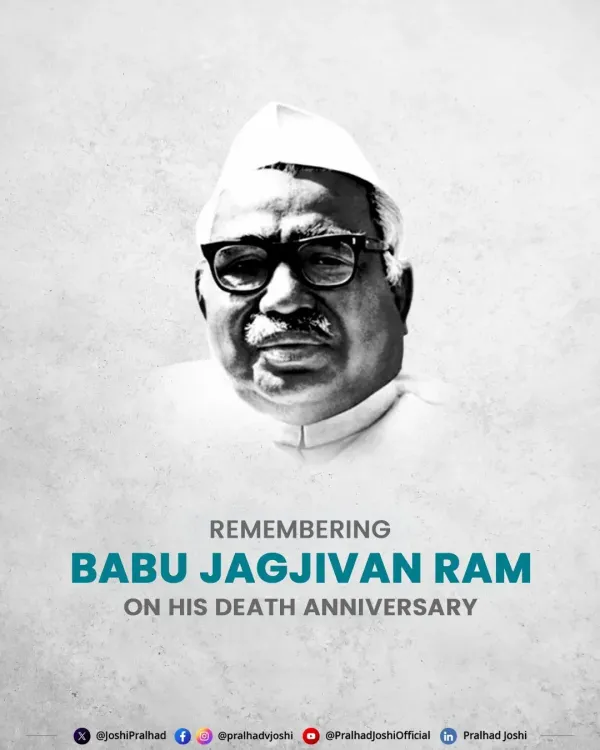
Union Minister Pralhad Joshi on 6 July 2026 paid tribute to former Deputy Prime Minister Babu Jagjivan Ram on his death anniversary, honouring his legacy of social justice, Green Revolution stewardship and decades of service across key national portfolios.
Key Takeaways
Union Consumer Affairs Minister Pralhad Joshi paid tribute to Babu Jagjivan Ram on his death anniversary on 6 July 2026 .
Jagjivan Ram served as Deputy Prime Minister of India from 1977 to 1979 and was one of the highest-ranking Dalit leaders in Indian political history.
He held portfolios including Agriculture, Defence, Railways, Food, Labour, Transport and Communications across multiple governments.
Jagjivan Ram played a pivotal role in the Green Revolution and the institutionalisation of the Food Corporation of India 's procurement system.
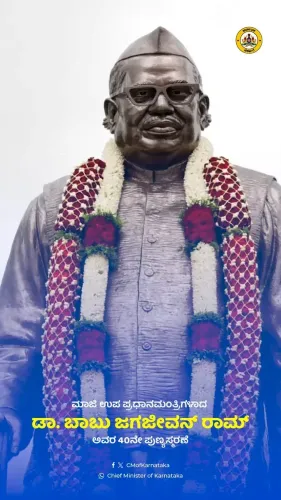
Joshi's tribute was posted in both English and Kannada , reflecting the cross-regional resonance of Jagjivan Ram's legacy.
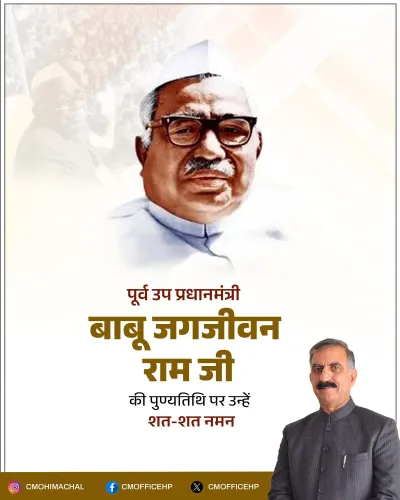
Cross-party commemorations of the 6 July anniversary have been routine since the 1990s , underlining Jagjivan Ram's enduring national stature.
Union Consumer Affairs Minister Pralhad Joshi on Monday, 6 July 2026 paid tribute to former Deputy Prime Minister Babu Jagjivan Ram on his death anniversary, honouring the Dalit leader's legacy of social justice, agrarian reform and national service.
Context
Joshi's post, shared in both English and Kannada, described Jagjivan Ram as a leader whose 'unwavering commitment to social justice, equality and the empowerment of the marginalized continues to inspire generations.' In the Kannada portion, he referred to him as 'Babuji' — the name by which the leader was widely known — and called him a 'hasiru kraantiya harikara' (pioneer of the Green Revolution) and former Deputy Prime Minister who tirelessly worked for the welfare of the exploited and the poor.
The minister specifically noted Jagjivan Ram's contributions across multiple portfolios — agriculture, railways, defence, food, labour, transport and communications — calling them unique and unparalleled in their impact on national development.
Policy Backdrop
Babu Jagjivan Ram, born on 5 April 1908 in Bihar, was one of independent India's most consequential administrators. He held the Agriculture portfolio during the critical expansion phase of the Green Revolution in the 1970s, helping institutionalise the Food Corporation of India's procurement system that underpins India's food security architecture to this day.
He also served as Defence Minister and played a role in early indigenisation efforts in military production. As Deputy Prime Minister from 1977 to 1979, he was one of the highest-ranking Dalit leaders in Indian political history. His decades in public life spanned the Nehru, Indira Gandhi and Janata Party eras.
Stakeholders and Impact
Jagjivan Ram's legacy holds particular resonance for Dalit communities, small and marginal farmers, and foodgrain producers across India, especially in Bihar and Uttar Pradesh, where his political influence was strongest. Successive governments — across party lines — have marked his 6 July death anniversary with official tributes, a practice that has grown more prominent since the 1990s Mandal-era emphasis on Scheduled Caste representation in national politics.
The cross-party nature of these commemorations reflects the broad consensus around Jagjivan Ram's contributions to institution-building and social equity, even as different political formations claim varying degrees of ideological kinship with his legacy.
What's Next
State-level commemorative events are expected in Bihar and Uttar Pradesh around the anniversary, consistent with past years. Analysts will watch whether upcoming Union Budget allocations or social-sector scheme announcements invoke Jagjivan Ram's legacy in the framing of programmes targeting marginalised communities and smallholder agriculture — a rhetorical pattern that has become increasingly common in central government communications.
Point of View
Defence and food security, the post connects the ruling party's inclusive-growth narrative to a figure who predates it by decades. Such commemorations have become a standard instrument in the BJP's broader strategy of appropriating cross-party Dalit icons to consolidate Scheduled Caste support. The timing, on the eve of potential social-sector budget announcements, suggests the tribute may also serve as rhetorical groundwork for policy framing ahead.
NationPress
5 Oct 2026
Frequently Asked Questions
Who was Babu Jagjivan Ram?
Babu Jagjivan Ram was an Indian independence activist, Dalit leader and veteran politician who served as Deputy Prime Minister of India from 1977 to 1979. He held several key cabinet portfolios including Agriculture, Defence, Railways and Food over a career spanning multiple decades.
When did Babu Jagjivan Ram die?
Babu Jagjivan Ram passed away on 6 July 1986. His death anniversary is observed annually on this date with tributes from political leaders across party lines.
What was Babu Jagjivan Ram's role in the Green Revolution?
Babu Jagjivan Ram served as Agriculture Minister during key phases of the Green Revolution in the 1970s, helping expand high-yielding variety cultivation and institutionalising the Food Corporation of India's procurement system that underpins India's food security to this day.
Why did Pralhad Joshi pay tribute to Babu Jagjivan Ram?
Union Consumer Affairs Minister Pralhad Joshi paid tribute on 6 July 2026, the death anniversary of Babu Jagjivan Ram, honouring his legacy of social justice, empowerment of marginalised communities and decades of national service across multiple ministerial portfolios.
What is Babu Jagjivan Ram's significance for Dalit politics in India?
Babu Jagjivan Ram is considered one of the most consequential Dalit leaders in Indian political history. His rise to Deputy Prime Minister remains a landmark in Scheduled Caste representation, and successive governments have invoked his legacy in the context of social equity and inclusive development.