Joshi Taunts Congress Over Zero MLC Wins, EVM Row
Synopsis
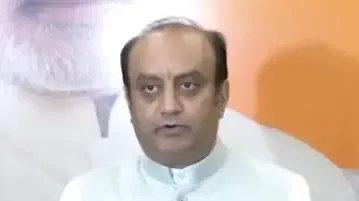
Union Minister Pralhad Joshi attacked Congress on October 28, 2026, after the party won zero of 28 MLC seats nationwide — including losing a sitting member's seat in Congress-governed Karnataka — saying paper-ballot defeats disprove the party's EVM-manipulation narrative.
Key Takeaways
Congress won zero out of 28 MLC seats in the latest round of nationwide legislative council elections.
Many MLC seats are decided by paper-ballot votes cast by sitting MLAs , undermining the EVM-tampering argument.
Congress lost a sitting member's seat in Karnataka , a state where it holds government power and controls the MLA electorate.
Union Minister Pralhad Joshi called on Rahul Gandhi and Congress leadership to introspect rather than blame the system.
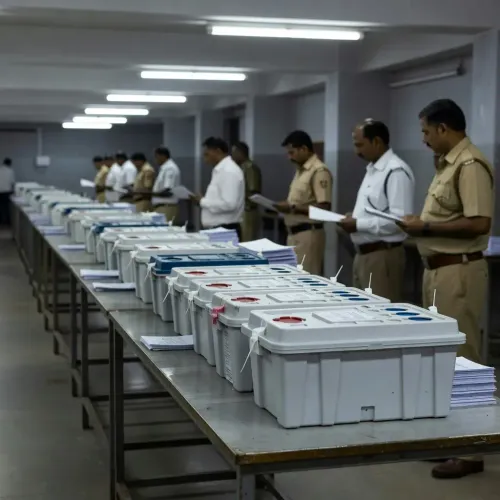
Congress has raised questions about EVM reliability after multiple election defeats since 2014 .
The Election Commission and courts have consistently upheld EVM integrity against such challenges.
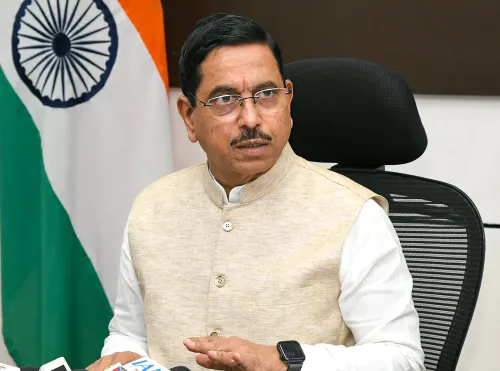
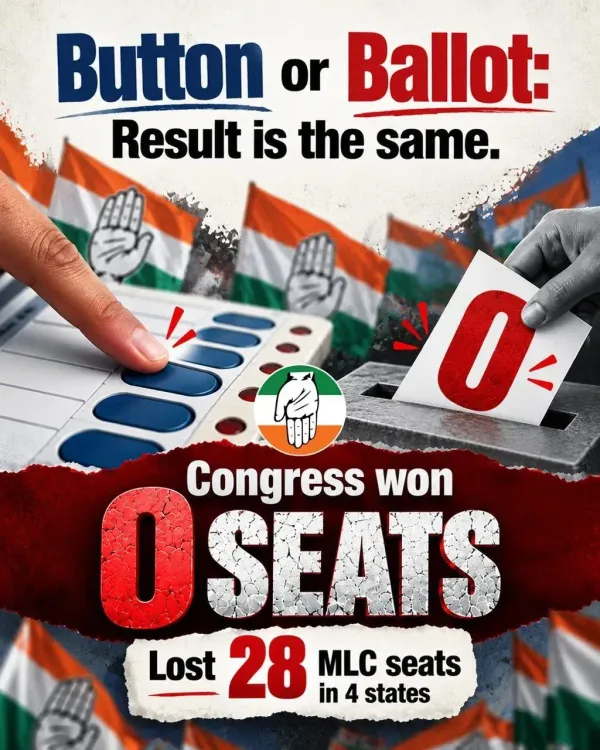
Zero. Out of 28 MLC seats contested nationwide, the Indian National Congress won not a single one — and Union Minister Pralhad Joshi wasted no time making the arithmetic sting on Wednesday, October 28, 2026. The BJP leader's post landed like a verdict: no EVMs to blame this time, because many of these seats were decided on paper ballot.
Ballot paper, same result — the EVM alibi evaporates
At the heart of Joshi's broadside is a pointed contradiction. Congress has, since at least 2014, periodically raised questions about the integrity of Electronic Voting Machines after election defeats, alleging that manipulated machines robbed the party of mandates it had earned. The MLC election format punctures that argument in a specific way: a large share of MLC seats are filled through paper-ballot votes cast by sitting MLAs — the very mechanism Congress has implicitly endorsed as the gold standard over EVMs.
Joshi framed it with deliberate economy: 'Button or Ballot: Result is the same.' When the medium changes but the outcome does not, he argued, the problem is not the machine — it is the message the party is sending to voters and legislators alike.
Losing ground in Karnataka — even at home
The Karnataka dimension sharpens the embarrassment. Congress has governed Karnataka since its decisive assembly-election victory in May 2023, giving it direct influence over the MLA bloc that casts ballots in MLC polls. Yet, according to Joshi's post, the party failed to hold even a sitting member's seat in the state — losing on home turf, with its own legislators as the electorate.
That detail matters because MLC polls in a state where your party controls the assembly are widely regarded as a formality for the ruling side. Losing one under those conditions is unusual enough to invite the kind of scrutiny Joshi is now directing at Rahul Gandhi and the broader Congress leadership.
The 'vote chori' narrative under pressure
Joshi invoked the phrase 'vote chori' — literally 'vote theft' — the Congress-aligned language that has circulated on social media and in party communications to describe alleged electoral manipulation. His argument: a party that questions the system's integrity loses credibility when it loses on the very paper-ballot system it prefers.
The broader pattern is well-established in Indian politics. Opposition parties have routinely contested EVM results in post-defeat press conferences, petitions, and social media campaigns. The Election Commission of India has consistently defended EVM security, and courts have repeatedly declined to order paper-ballot reversions. MLC results decided by legislators — away from mass public voting — offer a cleaner test case: smaller electorates, known voters, paper trails.
Joshi closed his post with a direct call: '@RahulGandhi and the Congress leadership must stop crying foul and introspect on their repeated electoral failures.' The phrasing is combative, but the underlying challenge is structural — how does an opposition recalibrate its institutional-mistrust messaging when the data stops cooperating?
Thirty-six months of Karnataka governance, a national opposition role, and now a blank scorecard on 28 MLC seats — Congress will need answers that go beyond the ballot box itself.
Point of View
Not voter preference, explain the party's losses. By spotlighting MLC results — where paper ballots are common and electorates are small and traceable — he targets the logical foundation of the EVM argument rather than just its political optics. The Karnataka sub-plot adds a second layer: losing a sitting seat in your own governed state, with your own MLAs voting, is the kind of result that internal party critics, not just BJP opponents, will cite. For Congress, the challenge is not merely to win the next election but to build a credible accountability framework that doesn't default to systemic blame every time the numbers go wrong.
NationPress
28 Oct 2026
Frequently Asked Questions
What are MLC elections in India?
MLC stands for Member of the Legislative Council — the upper house of states that have bicameral legislatures. Many MLC seats are filled by paper-ballot elections in which sitting MLAs, not the general public, cast votes, making them distinct from EVM-based assembly or parliamentary polls.
Why did Pralhad Joshi criticise Congress over MLC results?
Joshi posted that Congress won zero of 28 MLC seats nationwide, arguing this disproves the party's recurring claim that EVM manipulation causes its defeats, since MLC polls often use paper ballots.
Did Congress lose an MLC seat in Karnataka despite governing the state?
According to Joshi's post, Congress lost a sitting member's MLC seat in Karnataka, where it has held government power since May 2023 — an outcome he described as especially telling given that MLAs of the ruling party form the voting electorate for those seats.
What is the Congress party's position on EVMs?
Congress leaders have periodically questioned the reliability and security of Electronic Voting Machines following several election defeats since 2014, calling for a return to paper ballots in some instances. The Election Commission and Indian courts have consistently upheld EVM integrity.
What did Pralhad Joshi ask Rahul Gandhi to do?
Joshi directly addressed Rahul Gandhi in his post, urging him and the Congress leadership to stop blaming democratic institutions and instead introspect on what he called 'repeated electoral failures.'