Justice Subhash Vidyarthi Steps Back from Rahul Gandhi Dual Citizenship Case
Synopsis
In a pivotal legal development, Justice Subhash Vidyarthi has recused himself from a case involving Rahul Gandhi's alleged dual citizenship. The case raises questions about the political implications of citizenship laws in India.
Key Takeaways
Justice Vidyarthi's recusal highlights judicial impartiality.
The case centers on serious allegations regarding Rahul Gandhi's citizenship.
Legal frameworks such as the BNSS are critical in this matter.
The situation reflects the intersection of law and politics in India.
Future hearings will determine the next steps in the legal process.
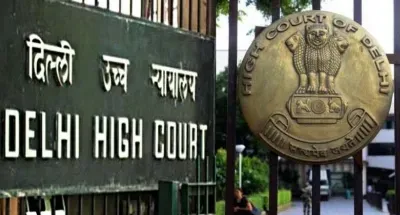
Lucknow/New Delhi, April 20 (NationPress) Justice Subhash Vidyarthi of the Allahabad High Court has stepped back from presiding over a petition that requests the filing of an FIR against Rahul Gandhi, the Leader of the Opposition in the Lok Sabha, regarding claims of dual citizenship.
This decision was influenced by the Lucknow Bench's strong disapproval of certain social media comments made by the petitioner, which were perceived as disparaging towards Justice Vidyarthi.
In light of the situation, Justice Vidyarthi has recused himself from the case, and the matter is anticipated to be referred to another Bench for consideration.
Previously, the single-judge Bench had postponed its final ruling, emphasizing that any individual facing accusations deserves a chance to present their case before an FIR is ordered.
Despite having dictated an initial ruling in court, Justice Vidyarthi remarked that the judgment could not be finalized without first providing notice to the accused party.
On April 18, Justice Vidyarthi noted that during the proceedings, all involved parties had agreed that notice to the proposed accused was unnecessary when deliberating an application under Section 528 of the Bharatiya Nagarik Suraksha Sanhita (BNSS).
However, before the ruling could be signed, the Bench discovered a Full Bench decision in the case of Jagannath Verma vs. State of U.P., which clarified that rejecting a plea for FIR registration is not merely an interlocutory matter and must allow for the prospective accused to be heard prior to any decision.
“Considering the legal framework, it is evident that the application under Section 528 BNSS should not be resolved without notifying the opposing party, specifically Rahul Gandhi,” Justice Vidyarthi stated, scheduling the case for additional hearings on Monday.
The single-judge Bench had previously instructed the Uttar Pradesh Police to investigate and evaluate the need for an FIR concerning allegations that Gandhi possesses dual citizenship, as it reviewed a challenge to a January 28 ruling by a special MP/MLA court in Lucknow that declined to initiate an FIR.
The petitioner argues that Gandhi is a British citizen and hence unqualified to run for elections or maintain his position as a Member of Parliament, citing alleged documents and communications from UK authorities.
He has demanded action under multiple legislative frameworks including the Bharatiya Nyaya Sanhita, the Official Secrets Act, the Foreigners Act, and the Passport Act.
The complaint was first presented to a special MP/MLA court in Rae Bareli before being escalated to the Allahabad High Court.
Point of View
Especially when dealing with high-profile cases that have far-reaching implications for public trust in the legal system.
NationPress
19 Sept 2026
Frequently Asked Questions
What is the basis of the allegations against Rahul Gandhi?
The allegations claim that Rahul Gandhi holds dual citizenship, specifically British citizenship, which could disqualify him from holding office in India.
Why did Justice Vidyarthi recuse himself from the case?
Justice Vidyarthi recused himself due to the controversy arising from disparaging comments made by the petitioner on social media.
What legal provisions are being invoked in this case?
The petitioner is seeking action under the Bharatiya Nyaya Sanhita, the Official Secrets Act, the Foreigners Act, and the Passport Act.
What was the previous ruling of the special MP/MLA court?
The special MP/MLA court in Lucknow had previously declined to order the registration of an FIR regarding the allegations against Gandhi.
What happens next in this legal process?
The matter is expected to be reassigned to another Bench for further hearings and considerations.