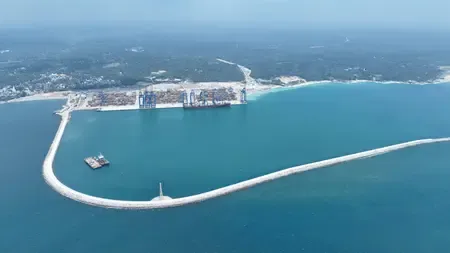
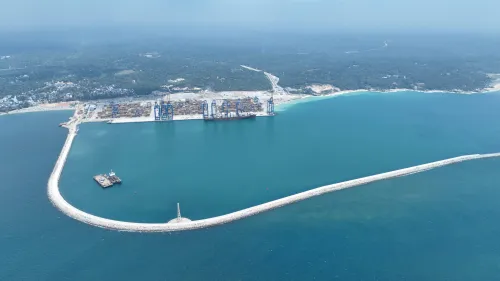
Kamarajar Port achieves 18-metre draft, India's 2nd Cape-compliant port
Synopsis
Kamarajar Port in Tamil Nadu has joined Visakhapatnam as India's only ports with an 18-metre operational draft, unlocking access for fully laden Capesize vessels of up to 1,70,000 DWT. The ₹440 crore Capital Dredging Phase VI project is a concrete step in India's push to compete with international bulk cargo hubs — and a signal that eastern seaboard logistics are being fundamentally redrawn.
Key Takeaways
Kamarajar Port Limited (KPL) in Tamil Nadu is now India's second major port with an operational draft of 18 metres , after Visakhapatnam Port .
The milestone was achieved through the Capital Dredging Phase VI project, completed at an investment of approximately ₹440 crore .
The port can now handle fully laden Capesize vessels carrying cargo parcels of up to 1,70,000 DWT .
Dredging deepened the outer approach channel from 20.0 m to 23.0 m and the inner entrance channel from 19.0 m to 22.0 m .
The upgrade is expected to lower freight costs, improve logistics efficiency, and strengthen India's EXIM trade competitiveness.
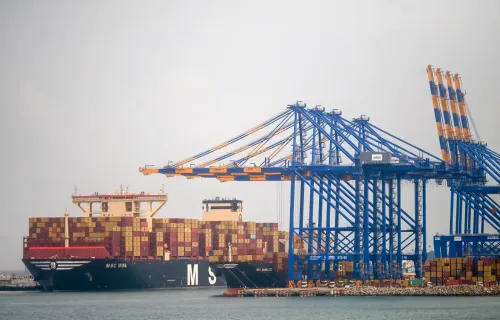
Kamarajar Port Limited (KPL) in Tamil Nadu has become India's second major port to offer an operational draft of 18 metres, enabling it to handle fully laden Capesize vessels carrying cargo parcels of up to 1,70,000 DWT. The milestone follows the successful completion of the port's Capital Dredging Phase VI project, according to an official statement issued on Tuesday, 7 July. Visakhapatnam Port remains the only other major port in India to have achieved this capability.
What the Dredging Project Involved
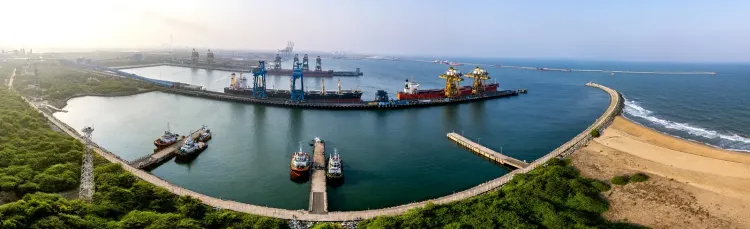
The Capital Dredging Phase VI project was undertaken at an investment of approximately ₹440 crore, with the explicit objective of making Kamarajar Port 'Cape Compliant'. The work involved deepening the outer approach channel from 20.0 m to 23.0 m and the inner entrance channel from 19.0 m to 22.0 m. Berths were also upgraded to handle an 18-metre draft, along with the harbour basin and associated navigational areas.
Kamarajar Port — formerly known as Ennore Port — is located on the Coromandel Coast along the Bay of Bengal, approximately 18 to 24 km north of Chennai Port. Its strategic position on the eastern seaboard makes it a critical node for India's bulk cargo trade.
What the Government Said
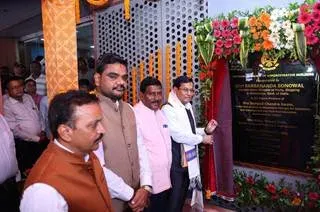
Union Minister of Ports, Shipping and Waterways Sarbananda Sonowal said: 'The successful completion of Capital Dredging Phase VI has transformed Kamarajar Port into a deep-draft, Cape Compliant port capable of handling fully laden Capesize vessels of up to 1,70,000 DWT. This achievement will significantly improve cargo-handling efficiency, reduce logistics costs, enhance ease of doing business and strengthen the port's role as a key gateway for India's EXIM trade.'
Sonowal further stated: 'Under the visionary leadership of Prime Minister Narendra Modi, India's maritime sector is undergoing a historic transformation. Guided by the vision of Maritime India Vision 2030 and Maritime Amrit Kaal Vision 2047, we are building world-class ports, strengthening logistics, enhancing global competitiveness and positioning India as a leading maritime nation.'
Impact on Trade and Logistics
The enhanced draft capability allows shipping lines to deploy larger vessels at the port, which translates into lower freight costs through economies of scale. Industry observers note that Cape-compliant depth places Kamarajar Port in the same league as leading international bulk cargo handling hubs. The development is expected to provide significant economic benefits to regional trade, improve the port's competitiveness against both domestic and international rivals, and support India's growing EXIM requirements.
What Comes Next
With the infrastructure upgrade now operational, attention will turn to how quickly shipping lines begin routing larger Capesize vessels through Kamarajar Port. The port's expanded capacity is expected to play a central role in the broader maritime infrastructure targets outlined under Maritime Amrit Kaal Vision 2047. Whether this triggers a renegotiation of freight contracts and logistics routes along the eastern coast remains to be seen.
Point of View
And Kamarajar joining Visakhapatnam at 18 metres is a meaningful — if overdue — step. The ₹440 crore investment is modest by global port standards, which raises the question of whether it is sufficient to shift meaningful bulk cargo traffic away from competing regional hubs. The real test will be whether shipping lines actually reroute Capesize deployments to Kamarajar or whether the upgraded depth simply sits underutilised, as has happened with capacity additions at several Indian ports in the past. The eastern seaboard's logistics ecosystem — rail connectivity, evacuation infrastructure, hinterland reach — must keep pace for this dredging milestone to translate into sustained trade volume growth.
NationPress
6 Oct 2026
Frequently Asked Questions
What is the significance of Kamarajar Port achieving an 18-metre draft?
An 18-metre operational draft allows Kamarajar Port to handle fully laden Capesize vessels carrying cargo parcels of up to 1,70,000 DWT, placing it among international-grade bulk cargo ports. It is only the second major port in India, after Visakhapatnam, to reach this capability.
What did the Capital Dredging Phase VI project involve?
The project involved deepening Kamarajar Port's outer approach channel from 20.0 m to 23.0 m and the inner entrance channel from 19.0 m to 22.0 m, along with upgrading berths and the harbour basin to handle an 18-metre draft. The total investment was approximately ₹440 crore.
Where is Kamarajar Port located?
Kamarajar Port, formerly known as Ennore Port, is located in Ennore on the Coromandel Coast along the Bay of Bengal in Tamil Nadu. It sits approximately 18 to 24 km north of Chennai Port.
How will this upgrade benefit India's trade?
The Cape-compliant depth enables shipping lines to deploy larger vessels, reducing freight costs through economies of scale and improving cargo-handling capacity. This is expected to boost regional trade, lower logistics costs, and strengthen India's EXIM competitiveness against domestic and international ports.
What is Maritime Amrit Kaal Vision 2047?
Maritime Amrit Kaal Vision 2047 is the Indian government's long-term framework for developing world-class port and maritime infrastructure by 2047. It complements Maritime India Vision 2030 and aims to position India as a leading global maritime nation.