Shobha Karandlaje accuses K'taka govt of shielding Bangladeshi infiltrators' votes
Synopsis
BJP's Shobha Karandlaje has accused the Karnataka government of staging a protest before the Election Commission to prevent the removal of illegal voters — including, she alleges, lakhs of Bangladeshi immigrants — from electoral rolls. With 45 lakh voters served deficiency notices under the nationwide SIR process, the row puts Karnataka at the centre of a politically charged battle over who belongs on India's voter lists.
Key Takeaways
Union Minister of State Shobha Karandlaje alleged on 5 October 2026 that the Karnataka Congress government is protecting votes of illegal Bangladeshi immigrants in electoral rolls.
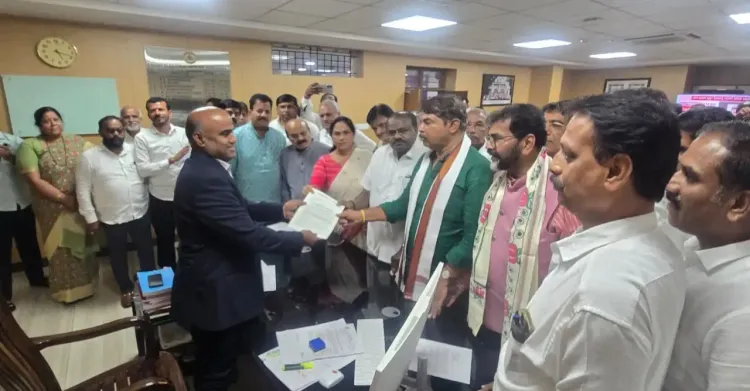
Shivakumar mobilised his entire Cabinet to protest before the Election Commission of India against the SIR-driven removal of such names.
Notices have been issued to approximately 45 lakh voters whose documents were found deficient during the Special Intensive Revision (SIR) exercise.
Karandlaje questioned FIRs filed on the basis of Congress workers' complaints during the SIR process, calling for impartial verification.
She urged the Election Commission to ensure the SIR process is conducted strictly in accordance with the law, with independent document verification.
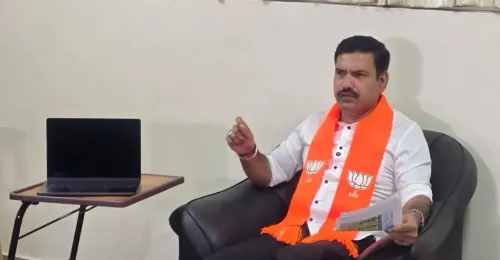
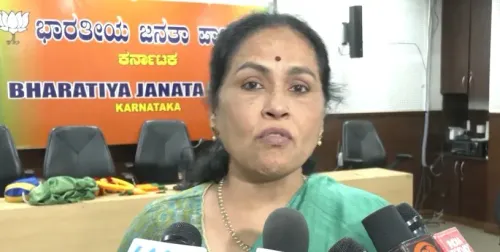
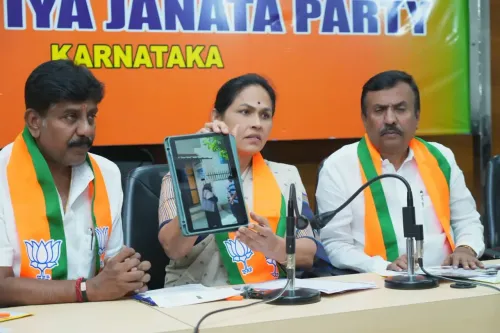
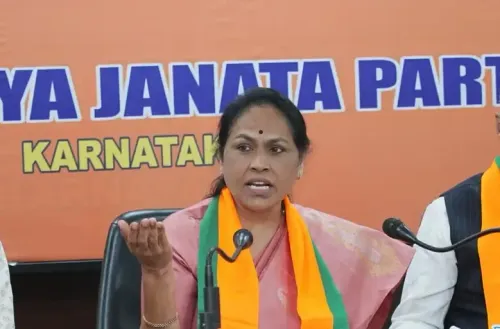
Union Minister of State Shobha Karandlaje on Monday, 5 October 2026, alleged that Karnataka Chief Minister D.K. Shivakumar and the state's Congress government were attempting to protect the votes of individuals illegally enrolled in electoral rolls, including what she described as 'lakhs of illegal Bangladeshi immigrants.' The remarks were made at a media interaction in Bengaluru.
What Karandlaje Alleged
Karandlaje, a senior Bharatiya Janata Party (BJP) leader, claimed that the Chief Minister had mobilised his entire Cabinet to stage a protest before the Election Commission of India (ECI), allegedly to resist the removal of illegally enrolled names from voter lists. She contended that the Congress government's opposition was primarily aimed at retaining the voting rights of those who had been unlawfully added to the rolls over several years.
'The Chief Minister and the government were trying to retain the votes of lakhs of illegal Bangladeshi immigrants in the electoral rolls,' she alleged, calling on the ECI to ensure the process was conducted strictly in accordance with the law.
The Special Intensive Revision Process
The controversy centres on the Special Intensive Revision (SIR) of electoral rolls, a nationwide exercise being conducted by the Election Commission. Karandlaje said the SIR was designed to weed out fraudulently included names — including duplicate entries and names of deceased persons. She noted that notices had been issued to around 45 lakh voters whose documents were found to be deficient.
'If they are genuine voters, let them submit their documents. Nobody can take away their right to vote. But illegal voters should not remain in the electoral rolls,' she said.
FIRs and Form 7 Objections
Karandlaje also questioned the registration of First Information Reports (FIRs) based on complaints allegedly filed by Congress workers in connection with the SIR process. She called for transparency on how many official complaints had been lodged during the exercise, and argued that private complaints from party workers should not form the basis of police action.
'How is it right to register FIRs based on complaints by Congress workers? Private complaints should not be accepted. Everything should be conducted fairly,' she said, urging election officials to independently verify Form 7 objections rather than acting on partisan pressure.
Congress Government's Position
The Congress-led Karnataka government's protest before the Election Commission signals deep unease with the SIR process. Critics of the revision have argued that it risks disenfranchising legitimate voters — particularly those from marginalised communities who may lack easily accessible documentation. The ruling party has not, as of this report, issued a formal response to Karandlaje's specific allegations.
Broader Context
The electoral roll revision debate in Karnataka mirrors a wider national conversation about the integrity of voter lists and the risk of both over-inclusion and wrongful exclusion. The BJP has made illegal immigration — particularly from Bangladesh — a recurring political theme nationally, and the Karnataka SIR controversy has given the party a fresh platform to press the issue at the state level. The Election Commission's handling of the 45 lakh deficient-document notices is likely to remain a flashpoint in the run-up to local body elections.
Point of View
But the charge that a state government is deliberately protecting illegal immigrants in voter rolls is an extraordinary claim requiring more than political assertion — it demands documentary evidence, which has not yet been placed in the public domain. The SIR process itself is a legitimate ECI exercise, but the BJP's framing of every deficient-document case as a potential Bangladeshi infiltrator risks creating a chilling effect on marginalised legitimate voters who lack formal paperwork. The more significant question the controversy raises is structural: if lakhs of names were fraudulently added over years, under whose administrative watch did that happen? Both parties share governance history in Karnataka, and neither has clean hands on electoral roll management.
NationPress
5 Oct 2026
Frequently Asked Questions
What did Shobha Karandlaje allege about the Karnataka government?
Karandlaje alleged that Chief Minister D.K. Shivakumar and the Congress government are trying to prevent the removal of illegally enrolled voters — including, she claimed, lakhs of Bangladeshi immigrants — from Karnataka's electoral rolls. She said the Chief Minister even mobilised his Cabinet to protest before the Election Commission of India against the ongoing Special Intensive Revision process.
What is the Special Intensive Revision (SIR) of electoral rolls?
The SIR is a nationwide exercise conducted by the Election Commission of India to clean up voter lists by removing duplicate entries, names of deceased individuals, and those whose documents are found deficient. In Karnataka's case, notices have been issued to approximately 45 lakh voters with deficient documents.
Why has the Congress government opposed the SIR process in Karnataka?
The Congress-led Karnataka government reportedly staged a protest before the Election Commission, opposing aspects of the SIR exercise. While the BJP alleges this is to protect illegal voters, the Congress and critics of the process have raised concerns that aggressive removal of names could disenfranchise legitimate voters — particularly those from marginalised communities — who may struggle to provide formal documentation.
What did Karandlaje say about FIRs filed during the SIR process?
She questioned the registration of FIRs based on complaints by Congress workers in connection with the SIR, arguing that private party complaints should not drive police action. She called for transparency on how many official complaints were filed and urged election officials to conduct independent verification rather than act on partisan pressure.
What happens to voters who received deficiency notices under the SIR?
According to Karandlaje, voters who have received notices must submit their documents to prove their eligibility. She clarified that no genuine voter's right to vote would be taken away, but stressed that individuals who cannot produce valid documentation should be removed from the electoral rolls.