Karnataka CM Office Backs Athletes with Govt Job Quotas
Synopsis
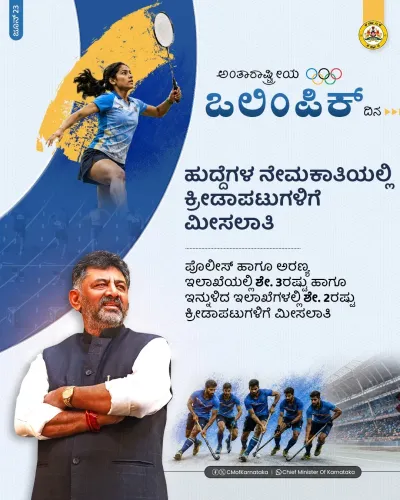
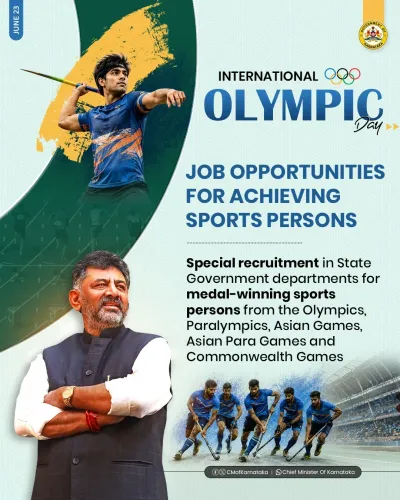
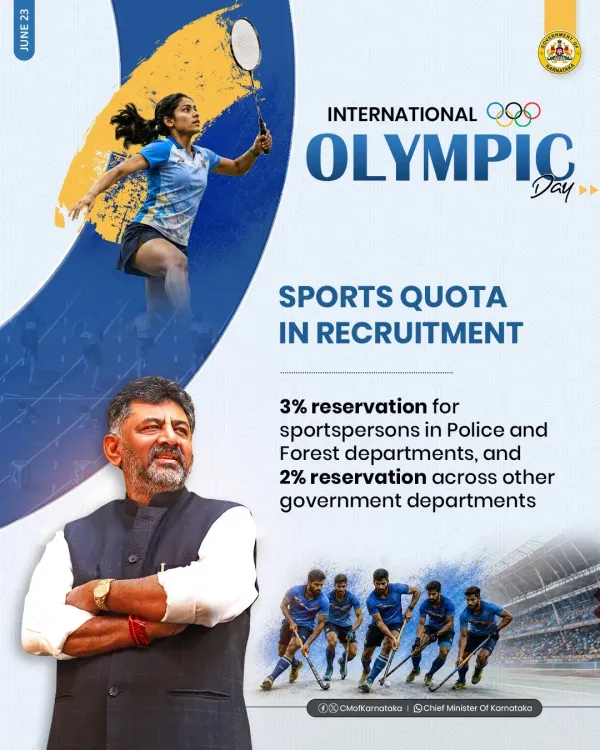
On International Olympic Day 2026, Karnataka's Chief Minister's Office confirmed the state reserves 3% of posts in Police and Forest departments and 2% in other government departments for sportspersons, reinforcing public employment as a pillar of athlete support.
Key Takeaways
International Olympic Day (23 June 2026) was the occasion for Karnataka's CMO to publicise its sports reservation policy.
Karnataka reserves 3% of posts in the Police and Forest departments for sportspersons.
A 2% reservation applies to sportspersons across all other state government departments.
The policy follows a national pattern of horizontal sports quotas that has existed in central government recruitment since the 1990s .
Uniformed services are prioritised at a higher quota percentage, reflecting the physical fitness alignment between athletes and those roles.
Eligibility criteria and vacancy notifications under these percentages remain the key details for athletes to watch.
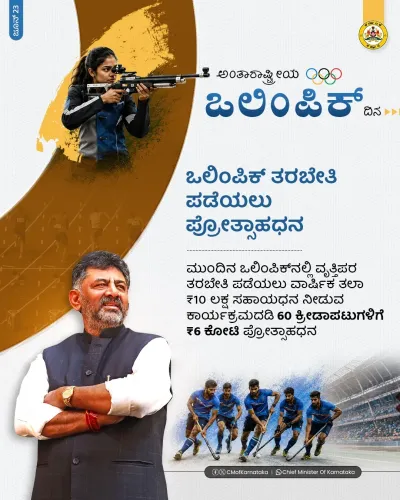
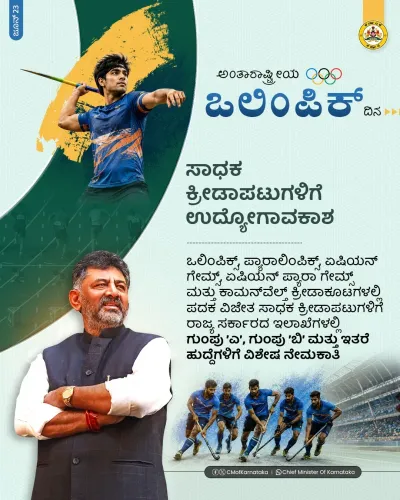
The Chief Minister's Office of Karnataka on Tuesday, 23 June 2026 — International Olympic Day — announced that the state extends reservation benefits to sportspersons across its government departments, citing a commitment to recognising athletic discipline and sacrifice.
Context
The post states that Karnataka provides a 3% reservation for sportspersons in the Police and Forest departments and a 2% reservation across other government departments. The announcement was made on International Olympic Day, observed every year on 23 June to mark the founding of the International Olympic Committee in 1894 and to promote the values of sport globally.
The CMO framed the reservation policy as the state's institutional expression of the Olympic spirit, stating: 'Every sportsperson's discipline, sacrifice and achievement deserves recognition.'
Policy Backdrop
Sports quotas in Indian government recruitment are a long-standing horizontal reservation mechanism. The Government of India has maintained such quotas in central government posts since the 1990s, allowing athletes with certified sporting achievements to compete for a reserved share of vacancies independent of other reservation categories.
Karnataka's policy follows a pattern seen across multiple Indian states, which have embedded sports quotas particularly in uniformed services such as police and forest departments — roles where physical fitness aligns with the profile of competitive athletes. The differentiated percentages — 3% for uniformed departments and 2% for others — reflect a tiered approach that prioritises physically demanding cadres.
Stakeholders and Impact
The primary beneficiaries are competitive sportspersons in Karnataka who hold recognised achievements at district, state, national, or international levels — the eligibility tiers typically used to determine qualification under such schemes. For many athletes who invest years in training without professional contracts, a government post provides financial security and social standing.
The Police and Forest departments are the largest uniformed employers in the state, making the 3% reservation in these cadres potentially the most impactful component of the policy. Recruitment cycles in these departments regularly attract hundreds of thousands of applicants, meaning even a small percentage translates to a meaningful number of reserved posts.
What's Next
Attention will now turn to the specific eligibility criteria, the sporting certificates accepted as proof of achievement, and the vacancy notifications issued under these percentages in Karnataka's recruitment calendar. Clarity on whether the 2% and 3% quotas are implemented uniformly across all recruitment rounds or selectively will determine the practical reach of the policy.
As India builds toward future Olympic cycles, state-level employment incentives of this kind form part of a broader ecosystem intended to reduce the financial risk athletes face — and Karnataka's public reaffirmation of its quota structure on International Olympic Day signals continued political will to sustain that ecosystem.
Point of View
2% elsewhere) reflects a considered policy design rather than a blanket measure, suggesting the state views athleticism as particularly congruent with roles in policing and forest management. Across India, sports quotas have evolved from welfare gestures into a structural incentive that shapes how young athletes weigh the risk of a sporting career; Karnataka's public affirmation sustains that calculus. The announcement also fits a broader pattern of state governments using symbolic occasions to remind constituents — and potential recruits — of existing entitlements that may otherwise go unclaimed.
NationPress
23 Jun 2026
Frequently Asked Questions
What is the sports reservation in Karnataka government jobs?
Karnataka reserves 3% of posts in the Police and Forest departments and 2% of posts in other state government departments for sportspersons with recognised achievements.
Who is eligible for the sports quota in Karnataka?
Sportspersons who have represented Karnataka or India at recognised competitions — typically at district, state, national, or international levels — are generally eligible, subject to the specific criteria notified in each recruitment round.
Why did Karnataka announce this on International Olympic Day?
International Olympic Day is observed on 23 June each year to celebrate the Olympic spirit. Karnataka's CMO used the occasion to highlight the state's institutional support for athletes through government job reservations.
Is sports quota a central government or state government policy in India?
Both. The Government of India has maintained horizontal sports quotas in central government recruitment since the 1990s , and individual states like Karnataka run parallel reservation policies in their own departments.
How does Karnataka's sports quota compare with other Indian states?
Multiple Indian states operate sports quotas in uniformed services and other departments. Karnataka's 3% in Police and Forest roles and 2% elsewhere is consistent with the broader national pattern, though exact percentages vary by state.