CM Shivakumar Writes to PM Modi for Drought Relief Funds
Synopsis
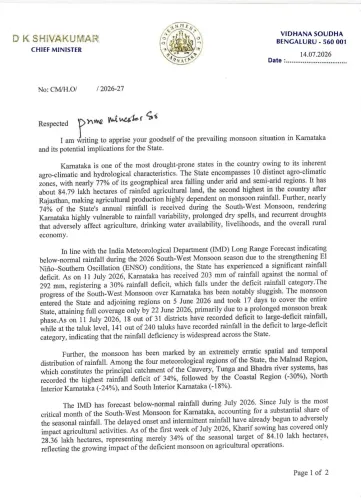
Chief Minister D.K. Shivakumar has written to Prime Minister Narendra Modi requesting 50 percent of Karnataka's drought memorandum as interim relief and an advance on the SDRF second installment, citing urgent needs around crop losses, drinking water, and livestock protection.
Key Takeaways
Shivakumar wrote to PM Narendra Modi on September 24, 2026 seeking immediate drought relief funds for Karnataka.
Karnataka has requested 50 percent of the total drought memorandum amount be released as an interim relief measure.
The state also asked for an advance release of the central government's share of the SDRF second installment .
The letter highlights three urgent crisis areas: crop losses, drinking water supply, and livestock protection .
The request operates under the Disaster Management Act, 2005 framework governing SDRF and NDRF disbursements.
The central government's response — including any inter-ministerial central team visit — is the key next development to watch.
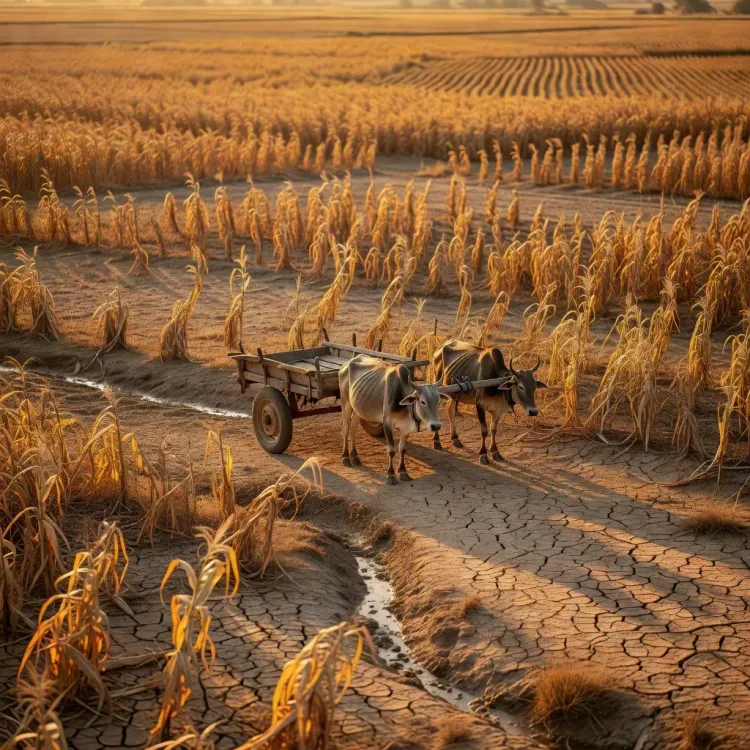
With Karnataka's farmlands parched and rural households staring down a water crisis, Chief Minister D.K. Shivakumar has written to Prime Minister Narendra Modi on Thursday, September 24, 2026, demanding immediate central financial assistance to combat the state's worsening drought emergency.
What Karnataka Is Asking From New Delhi
The Chief Minister's Office posted that Shivakumar has made two specific financial demands: the release of 50 percent of the total amount in Karnataka's submitted drought memorandum as an interim relief package, and the advance disbursement of the central government's share of the second installment of the State Disaster Response Fund (SDRF). Both asks are framed as urgent — money the state says it needs now, not after a prolonged inter-governmental back-and-forth.
The letter specifically flags three pressure points on the ground: crop losses across farming communities, a deepening drinking water supply crisis in affected districts, and the urgent need to protect livestock — the backbone of Karnataka's rural economy that rarely makes headlines until the damage is irreversible.
The SDRF Framework Behind the Request
Karnataka's ask sits within a well-established legal architecture. The Disaster Management Act, 2005 created the SDRF and National Disaster Response Fund (NDRF) framework precisely for situations like this — allowing state governments to escalate to the centre when a disaster crosses the threshold of what state budgets alone can absorb. Under this system, the Centre releases its share of SDRF in two annual installments; requesting an advance on the second installment is a recognised mechanism when a state faces an acute mid-year shock.
Karnataka has a documented history of drought cycles driven by monsoon variability, and the formal memorandum route — submitting detailed damage assessments and requesting interim releases — is the standard playbook. What follows typically is an inter-ministerial central team (IMCT) visit to assess ground conditions before New Delhi commits funds, a step that critics argue adds weeks of delay to relief that farmers cannot afford to wait for.
Farmers and Rural Karnataka in the Crosshairs
The immediate human stakes are stark. Crop loss disrupts not just household income but the entire downstream rural economy — input dealers, moneylenders, migrant labour patterns. Drinking water scarcity in drought years forces communities, particularly women, into long daily treks to fetch water, and livestock deaths compound the financial blow for small and marginal farmers who own animals as their only asset buffer. Shivakumar has urged the central government to respond sheeghravagi — swiftly — to enable emergency measures on all three fronts before the situation becomes irreversible.
The political clock is also ticking. A delayed central response risks becoming a flashpoint in Karnataka's ongoing centre-state tensions, with the Congress-led state government already navigating a demanding fiscal year. New Delhi's next move — whether it fast-tracks the SDRF advance or routes the request through the standard IMCT process — will signal how seriously it is treating the southern state's emergency.
Point of View
But it also carries a sharp political edge: a Congress-governed Karnataka pressing a BJP-led Centre for emergency funds tests the cooperative federalism framework in real time. The 50-percent-of-memorandum ask reflects Karnataka's confidence in its submitted damage assessment and signals that the state is not bracing for a lengthy negotiation. If the Centre delays through the standard IMCT route, the drought becomes as much a political story as a humanitarian one — and with farmers already under stress, that window is narrow for both sides.
NationPress
24 Sept 2026
Frequently Asked Questions
Why has Karnataka CM written to PM Modi about the drought?
CM D.K. Shivakumar wrote to PM Narendra Modi seeking immediate central financial assistance to tackle Karnataka's severe drought, including relief for crop losses, drinking water shortages, and livestock protection.
What is Karnataka asking from the Centre for drought relief?
Karnataka has requested 50 percent of the total drought memorandum amount as an interim advance and the early release of the Centre's share of the SDRF second installment.
What is the SDRF and how does it help drought-hit states?
The State Disaster Response Fund (SDRF), created under the Disaster Management Act 2005, is a jointly funded mechanism where the Centre and state share costs for disaster relief including droughts. States can request advance release of the Centre's share during acute emergencies.
Which areas of Karnataka are affected by the drought?
The post does not specify individual districts, but the letter flags crop losses, drinking water supply crises, and livestock vulnerability as the primary impacts across the state.
What happens after a state submits a drought memorandum to the Centre?
Typically, the Centre dispatches an inter-ministerial central team to assess ground conditions before releasing funds. The state can also request interim or advance releases as Karnataka has done now, which can speed up the process.