Karnataka Congress chief Hariprasad backs Rahul Gandhi's ECI questions amid poll panel row
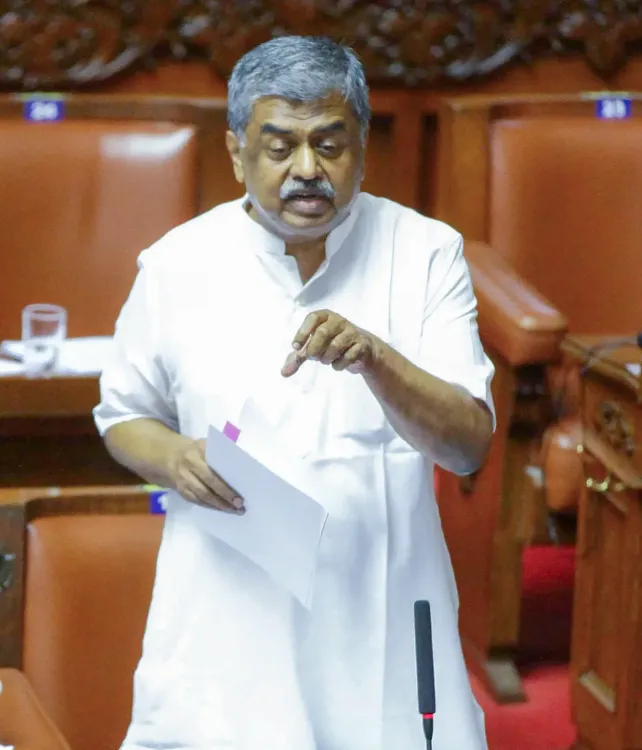
Synopsis
Two Election Commissioners reportedly raised formal objections 14 times over 10 months on voter-roll management — and Karnataka Congress chief B.K. Hariprasad is now using that to validate Rahul Gandhi's long-running demands against the ECI. The ECI denies any internal rift, setting up a credibility battle over India's electoral infrastructure.
Key Takeaways
Karnataka Congress President B.K.
Hariprasad on 23 September 2026 backed Rahul Gandhi's demands for ECI accountability over alleged voter-list irregularities.
Reports claim Election Commissioners Sukhbir Singh Sandhu and Vivek Joshi raised objections at least 14 times over 10 months on electoral-roll decisions.
The reported objections covered voter additions and deletions, changes to Form 6 , and concerns about 'gradual centralisation' of the voter database in Delhi .
Some voter-registration steps were reportedly described as 'unauthorised' and 'illegal' in those objections.
The ECI has denied internal disagreement, saying all decisions including on the Special Intensive Revision (SIR) had unanimous approval of all three commissioners.
Karnataka Congress President B.K. Hariprasad on Wednesday, 23 September backed Congress leader Rahul Gandhi's repeated demands for accountability from the Election Commission of India (ECI), invoking Gandhi's warnings after reports emerged that two Election Commissioners had raised objections at least 14 times over 10 months on issues related to electoral-roll management. The development has reignited a political controversy around voter-list integrity ahead of upcoming state polls.
What Hariprasad Said
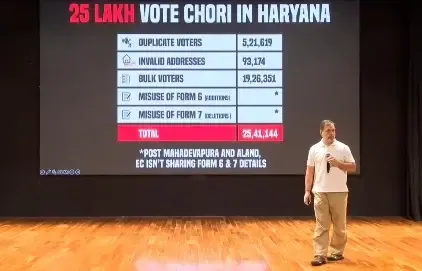
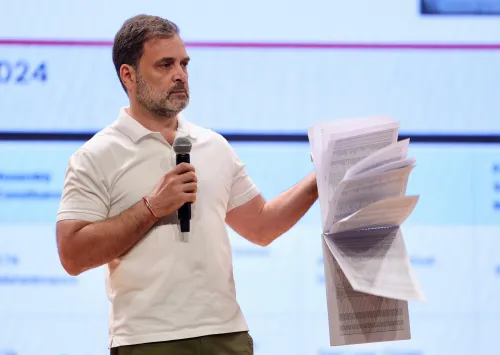
Addressing reporters in Bengaluru, Hariprasad quoted Gandhi's earlier warning to the poll panel: 'Time will come, we will catch you and you will not be spared.' He argued that Gandhi's concerns about alleged irregularities in voter lists could no longer be dismissed as partisan rhetoric.
'This is not about one party. It is about the sanctity of every Indian's vote. You may have power today, but power is temporary. Accountability is not. The time will come when every question will have to be answered,' Hariprasad said.
The Reported ECI Objections
According to media reports, Election Commissioners Sukhbir Singh Sandhu and Vivek Joshi had formally raised objections on at least 14 occasions over a period of 10 months, relating to decisions and orders on electoral-roll management. The reported objections allegedly covered the addition and deletion of voters, changes to Form 6, and the functioning and control of the voter database.
The two commissioners reportedly also flagged concerns about what they described as the 'gradual centralisation' of the electoral-roll database in Delhi, and questioned whether state-level election officials were being granted adequate access to the system. Some steps concerning new voter registration were reportedly characterised as 'unauthorised' and 'illegal' in those objections.
ECI Pushes Back on Rift Reports
The Election Commission, however, has denied reports of internal disagreement. Sources within the poll body stated that all decisions — including those pertaining to the Special Intensive Revision (SIR) — had received the approval of all three Election Commissioners. The denial effectively contests the framing that the commission is divided on electoral-roll policy.
Political Significance
Hariprasad contended that the reported internal dissent within the ECI lent fresh credibility to the questions Gandhi had been raising for months. 'Rahul Gandhi's concerns can no longer be dismissed as political rhetoric. The questions he raised have now surfaced from within the Election Commission itself. The Election Commission must answer. Indian voters need complete transparency,' he said.
Notably, the row comes as the Indian National Congress (INC) has consistently alleged that voter rolls in several states contain systematic errors — a charge the ECI has denied. With state assembly elections on the horizon, the dispute over database access and voter-list management is likely to intensify scrutiny of the commission's processes.
What Happens Next
The ECI has yet to formally respond to specific demands for a public accounting of the decisions flagged in the reported objections. Civil society organisations and opposition parties are reportedly preparing to press for parliamentary scrutiny of the electoral-roll database centralisation issue. The controversy places renewed pressure on the poll panel to clarify its internal procedures and governance structure ahead of the next election cycle.
Point of View
Transparent poll body, and competing narratives about database centralisation and access denials chip away at that. The larger question that mainstream coverage is missing: why has there been no official, detailed public response to the specific procedural objections reportedly raised by two sitting commissioners, regardless of their final voting record?
NationPress
23 Sept 2026
Frequently Asked Questions
What objections did the two Election Commissioners reportedly raise?
According to media reports, Election Commissioners Sukhbir Singh Sandhu and Vivek Joshi formally raised objections at least 14 times over 10 months on electoral-roll management decisions, covering the addition and deletion of voters, changes to Form 6, and concerns about the centralisation of the voter database in Delhi. Some steps related to new voter registration were reportedly described as 'unauthorised' and 'illegal' in those objections.
What has the Election Commission said about these reports?
The Election Commission has denied reports of internal disagreement, with sources stating that all decisions — including those concerning the Special Intensive Revision (SIR) — had the approval of all three Election Commissioners. The commission has effectively rejected the narrative of a divided poll body.
Why is the Karnataka Congress invoking this issue now?
Karnataka Congress President B.K. Hariprasad used the reports to back Rahul Gandhi's earlier warnings and demands for transparency from the ECI on voter-list integrity. The party argues that the reported internal objections validate concerns it has raised for months about alleged irregularities in voter rolls.
What did Rahul Gandhi previously say about the Election Commission?
According to Hariprasad, Rahul Gandhi had repeatedly questioned alleged irregularities in voter lists and warned the ECI: 'Time will come, we will catch you and you will not be spared.' Gandhi had challenged the commission to publicly address concerns about voter-roll management.
What happens next in this controversy?
The ECI is yet to formally address specific demands for a public accounting of the reported objections. Opposition parties and civil society groups are reportedly preparing to seek parliamentary scrutiny of the electoral-roll database centralisation issue, with the controversy likely to intensify ahead of the next state election cycle.