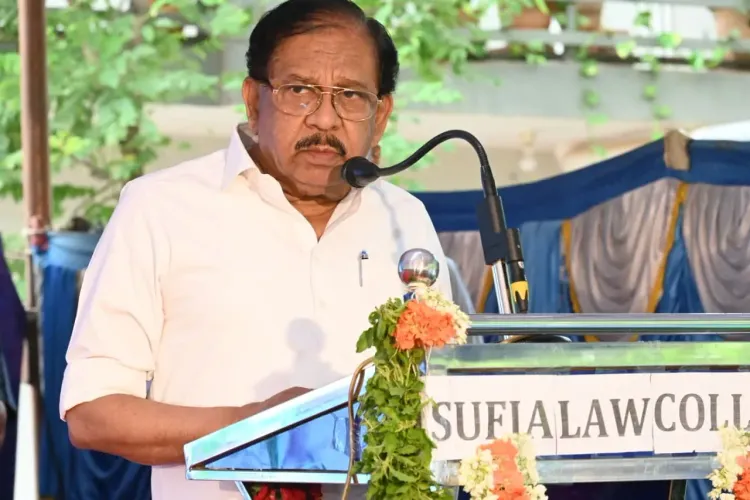
Karnataka Dy CM Parameshwara urges law graduates to champion constitutional equality
Synopsis
Karnataka's Deputy CM G. Parameshwara used a Tumakuru law college graduation to deliver a pointed message: India's Constitution promises equality, but the gap between that promise and lived reality demands honest reckoning — and it is the next generation of lawyers who must close it.
Key Takeaways
Karnataka Deputy CM G.
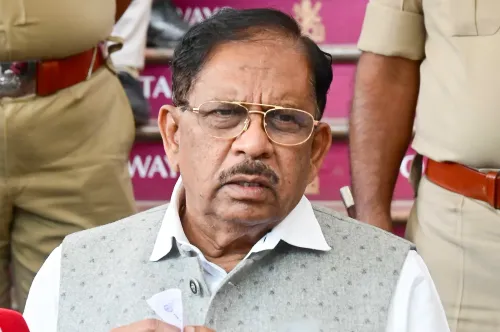
Parameshwara addressed a Law College graduation in Shettihalli, Tumakuru on 4 July .
He called for a serious assessment of how far constitutional equality has been realised in Indian society and the legal system.
India's literacy rate has risen from roughly 12 per cent at Independence to nearly 80 per cent today , yet equality gaps persist.
India has more than 1,500 law colleges , yet court pendency remains a critical challenge requiring judicial reform.
Parameshwara highlighted cybercrime as a growing legal frontier and called for stronger legislation to address it.
He urged graduates to pursue continuous learning, citing Fundamental Rights (Articles 12–35) and Fundamental Duties (Article 51A) as twin pillars of democratic citizenship.
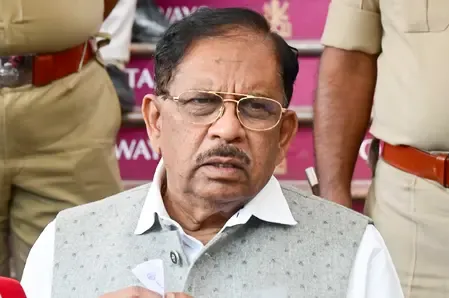
Karnataka Deputy Chief Minister G. Parameshwara on Saturday, 4 July called for a rigorous, honest assessment of how far constitutional equality has actually been achieved in Indian society and its legal institutions. Addressing the graduation ceremony at a Law College in Shettihalli, Tumakuru, he urged the new batch of lawyers to treat the profession as a civic duty rather than a career path.
Constitutional Framework at the Core
Parameshwara underscored the enduring relevance of Dr B.R. Ambedkar's constitutional architecture, describing it as the bedrock of India's democratic order. 'If the Constitution is weakened, democracy itself will be weakened. It is the responsibility of every citizen to protect the values enshrined in the Constitution,' he said. He specifically cited Articles 12 to 35, which enshrine Fundamental Rights, and Article 51A, which lays out Fundamental Duties, arguing that democracy functions well only when citizens understand both sides of that compact.
India's Legal Education Landscape
The Deputy Chief Minister pointed to a structural paradox in India's legal ecosystem: the country has more than 1,500 law colleges producing thousands of graduates annually, yet courts continue to groan under a mounting backlog of pending cases. He said this underscores the urgency of deeper judicial reforms to accelerate case disposal and improve access to justice across all levels of the judiciary.
Literacy, Progress, and Unfinished Business
Drawing a line from Independence to the present, Parameshwara noted that India's literacy rate has climbed from roughly 12 per cent at Independence to nearly 80 per cent today — a generational transformation. Yet, he argued, the gains in formal literacy have not automatically translated into an equal society, making the legal profession's role in closing that gap all the more critical.
Emerging Challenges: Cybercrime and Global Forums
Parameshwara also flagged two fronts where Indian law must evolve rapidly. On the global stage, Indian legal experts are increasingly representing the country at international forums, signalling a growing footprint. Domestically, however, cybercrime has emerged as a serious challenge, and he stressed the need to strengthen legislation to keep pace with the scale and sophistication of cyber offences.
A Call for Excellence
Encouraging the graduating students, Parameshwara observed that only a select group of lawyers commands consistent briefs at the Supreme Court and High Courts — and that distinction is earned through deep legal knowledge and persuasive advocacy, not merely a degree. 'Young lawyers must aspire to attain the same level of expertise through continuous study and dedication,' he said. The event was attended by Madhugiri MLA K.N. Rajanna, HMS Educational Institutions Chairman and former MLA Dr. Shafi Ahmed, Adichunchanagiri University scientist Dr Prashanth Kalappa, Superintendent of Police Ashok K.V., District Guarantee Implementation Committee Chairman Chandrashekar Gowda, and other dignitaries. As India's courts continue to wrestle with pendency and its law schools churn out graduates by the thousands, whether that call to excellence translates into systemic change remains the defining question.
Point of View
500 law colleges and still a courts system buckling under pendency — deserves more than a passing reference; it points to a quality-over-quantity crisis in legal education that policymakers have long deferred. His warning on cybercrime is timely, but without specifics on the legislative roadmap, it risks being rhetorical. The real test is whether such convocation addresses translate into policy pressure on judicial appointments, infrastructure, and legal aid — the unglamorous levers that actually move the needle on access to justice.
NationPress
4 Jul 2026
Frequently Asked Questions
What did Karnataka Deputy CM Parameshwara say at the Tumakuru law college event?
Parameshwara said India must honestly assess how far constitutional equality has been achieved in society and the legal system, urging law graduates to see their profession as a responsibility to uphold justice rather than merely a career. He also highlighted the importance of Fundamental Rights and Duties under the Constitution.
Why did Parameshwara stress the importance of the Constitution?
He argued that Dr B.R. Ambedkar's constitutional framework is the foundation of India's democracy, warning that weakening the Constitution would weaken democracy itself. He called on every citizen — and especially legal professionals — to protect its values.
What did Parameshwara say about India's law colleges and court pendency?
He noted that India has more than 1,500 law colleges producing thousands of graduates each year, yet a large number of cases remain pending in courts. He called for further judicial reforms to ensure the speedy disposal of cases.
What emerging legal challenges did Parameshwara flag?
He identified cybercrime as a major and growing challenge, stressing the need to strengthen laws to tackle cyber offences effectively. He also noted that Indian legal experts are increasingly representing the country at international forums.
Where and when did Parameshwara deliver this speech?
He spoke on Saturday, 4 July, at the graduation ceremony of a Law College in Shettihalli, Tumakuru, Karnataka. The event was attended by local legislators, university officials, and senior police and administrative officers.