Shekhawat Hails Rajasthan Refinery Dedication as Viksit Bharat Step
Synopsis
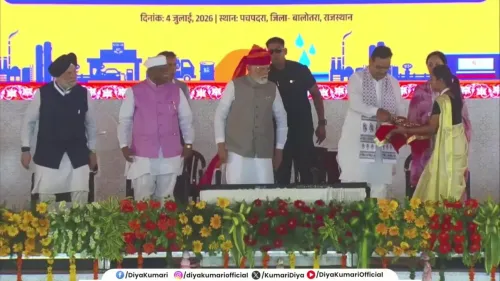
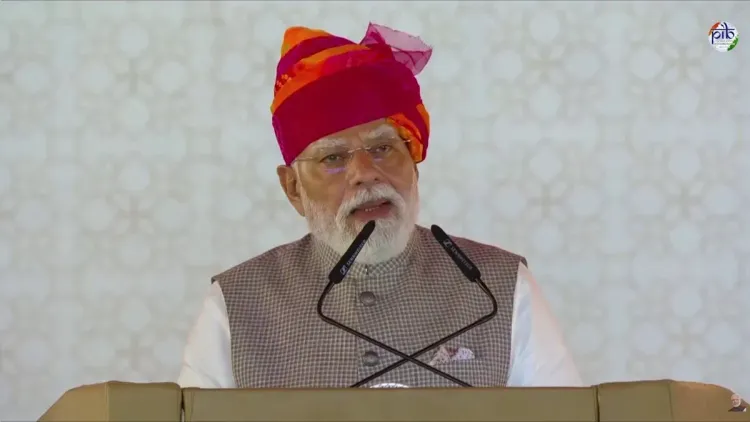
Union Minister Gajendra Singh Shekhawat amplified PM Modi's address dedicating a new petroleum refinery to the nation on 4 July 2026, emphasising thousands of jobs for Rajasthan's youth and framing the project as a landmark step toward a self-reliant, developed India.
Key Takeaways
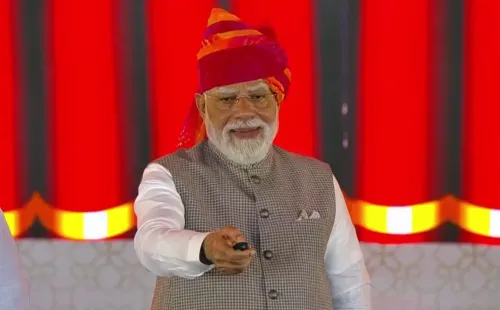
PM Modi dedicated a new petroleum refinery to the nation on 4 July 2026 , describing it as a major step toward a self-reliant and developed India.
Union Minister Gajendra Singh Shekhawat shared the PM's remarks and extended special congratulations to Rajasthan's youth .
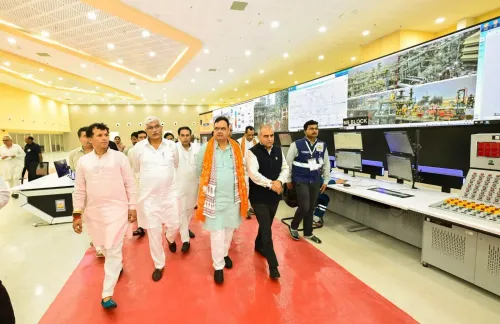
The refinery is expected to generate employment for thousands of people in the surrounding region.
The project aligns with the Atmanirbhar Bharat Abhiyan , India's national self-reliance campaign launched in May 2020 .
A refinery in Barmer district, Rajasthan , with a planned capacity of 9 MMTPA , had its foundation stone laid in January 2018 .
Downstream employment in ancillary industries and future budget allocations for Rajasthan energy infrastructure will be key indicators of the project's broader impact.
Union Culture and Tourism Minister Gajendra Singh Shekhawat on Saturday, 4 July 2026, shared remarks by Prime Minister Narendra Modi marking the dedication of a new petroleum refinery to the nation, calling it a major stride toward a self-reliant and developed India. Shekhawat, a Lok Sabha MP from Jodhpur, Rajasthan, specifically extended congratulations to the youth of Rajasthan, underscoring the project's significance for the state's employment landscape.
Context
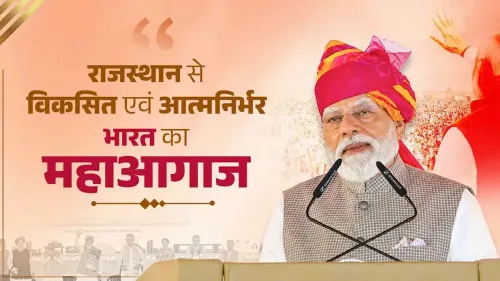
Shekhawat's post quoted Prime Minister Modi directly: 'आज भारत ने विकसित और आत्मनिर्भर बनने की दिशा में एक बहुत बड़ा कदम उठाया है' ('Today India has taken a very big step toward becoming developed and self-reliant, as this refinery is dedicated to the nation'). The Prime Minister added that the refinery would generate employment opportunities for thousands of people in the region. Shekhawat amplified the message with a special note of congratulation to Rajasthan's youth, positioning the project as a direct economic dividend for the state.
Policy Backdrop
The refinery fits squarely within India's long-running push to expand domestic petroleum refining capacity and reduce dependence on imported fuels. The Atmanirbhar Bharat Abhiyan, announced in May 2020, set the strategic framework for such investments, emphasising domestic capacity-building across energy and manufacturing sectors. A refinery project in Barmer district, Rajasthan — with a planned capacity of 9 million metric tonnes per annum (MMTPA) — had its foundation stone laid in January 2018, representing one of the most significant petroleum infrastructure commitments in western India in recent decades.
India has pursued successive expansions of its refining footprint since the 2010s, siting projects in states like Rajasthan to generate regional employment and support downstream industries such as petrochemicals, plastics, and logistics. The framing of today's dedication as a step toward Viksit Bharat (Developed India) is consistent with the central government's practice of linking infrastructure milestones to its broader macroeconomic self-reliance narrative.
Stakeholders and Impact
The most immediate beneficiaries are workers in and around the refinery's host district, with PM Modi's remarks promising thousands of direct employment opportunities. Ancillary sectors — including transport, construction, and local supply chains — are expected to see secondary job creation. For Rajasthan, a state with a large young population and historically dependent on agriculture and tourism, a large-scale industrial anchor of this kind carries considerable economic weight.
Shekhawat's decision to highlight youth employment reflects a political priority in a state where unemployment among young people has been a persistent concern. His post signals that the BJP intends to project this infrastructure event as a tangible delivery on its development promises to Rajasthan voters.
What's Next
Attention will now turn to the pace at which promised employment materialises, both in direct refinery operations and in ancillary units expected to cluster around the facility. State and central budget allocations for Rajasthan energy infrastructure in subsequent fiscal cycles will indicate whether this dedication is a standalone milestone or the first in a series of coordinated investments. Progress on downstream industrial development in the region will be a key metric for assessing the refinery's broader economic impact on western India.
Point of View
Shekhawat performs a dual function: amplifying the Centre's narrative and claiming local credit. The refinery dedication fits a well-established pattern in which large energy projects are deployed as visible proof points for the Viksit Bharat and Atmanirbhar Bharat agendas. The political calculus is straightforward — in a state where industrial employment is scarce, a refinery dedication offers a rare, tangible deliverable ahead of future electoral cycles.
NationPress
3 Oct 2026
Frequently Asked Questions
Which refinery was dedicated to the nation by PM Modi in Rajasthan in 2026?
The exact name and commissioning details of the refinery have not been officially confirmed in publicly available data, but it is linked to the long-pending petroleum refinery project in Rajasthan, associated with a planned facility in the Barmer region. PM Modi dedicated it to the nation on 4 July 2026.
What is the employment impact of the Rajasthan refinery?
PM Modi stated the refinery would create employment opportunities for thousands of people in the region, with benefits expected for both direct workers and ancillary industries such as transport and supply chains.
What is Atmanirbhar Bharat and how does this refinery relate to it?
Atmanirbhar Bharat Abhiyan is a national self-reliance campaign launched in May 2020 to reduce India's dependence on imports. Expanding domestic petroleum refining capacity is a key pillar of this initiative, and the Rajasthan refinery is framed as a concrete step toward that goal.
Why did Gajendra Singh Shekhawat congratulate Rajasthan's youth specifically?
Shekhawat, as the Lok Sabha MP from Jodhpur, Rajasthan, highlighted youth employment because the refinery is expected to generate thousands of jobs in the region, directly benefiting the state's young population.
What is the Barmer refinery project in Rajasthan?
The Barmer refinery is a planned 9 MMTPA petroleum refining facility in Rajasthan whose foundation stone was laid in January 2018. It is one of the largest petroleum infrastructure projects in western India, designed to boost domestic refining capacity and create regional employment.