Shekhawat Highlights PM Modi's Infrastructure Push: Refinery, Chip Plant, H2 Train

Synopsis
Union Minister Gajendra Singh Shekhawat quoted PM Modi citing three rapid infrastructure dedications — a major Rajasthan oil refinery, India's third semiconductor plant, and the world's most powerful green hydrogen train — as markers of India's accelerating multi-sector development push.
Key Takeaways
Union Minister Gajendra Singh Shekhawat shared PM Narendra Modi 's remarks on three back-to-back infrastructure dedications on 20 July 2026 .
A large oil refinery in Rajasthan was recently dedicated to the nation as part of India's energy infrastructure expansion.
India's third semiconductor plant was commissioned a few weeks ago under the India Semiconductor Mission launched in 2021.
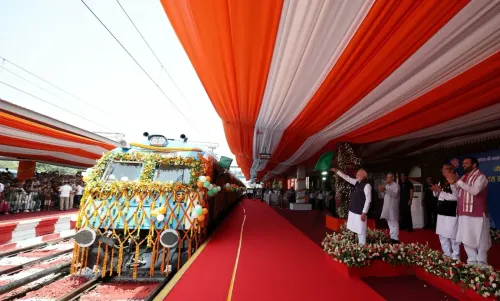
A green hydrogen-powered train — described as the most powerful and longest of its kind — was inaugurated, placing India among very few nations with this capability.
The dedications align with the National Green Hydrogen Mission (2023) and broader self-reliance frameworks across energy, deep-tech, and clean mobility.
Further hydrogen train deployments on Indian Railways routes and additional semiconductor unit timelines are the immediate next milestones to watch.
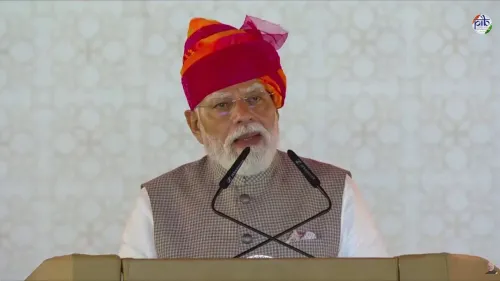
Union Culture and Tourism Minister Gajendra Singh Shekhawat on Monday, 20 July 2026, shared remarks by Prime Minister Narendra Modi highlighting three landmark infrastructure milestones delivered to the nation in quick succession — a major oil refinery in Rajasthan, India's third semiconductor plant, and the country's first green hydrogen-powered train.
Context
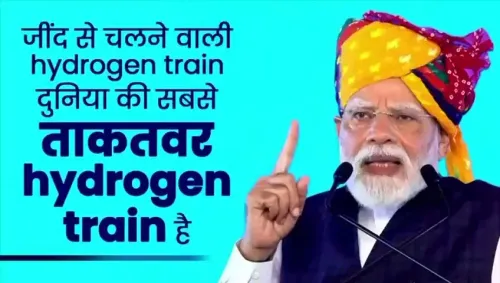
Shekhawat's post quotes PM Modi directly: 'पिछले दिनों राजस्थान में बहुत बड़ी ऑयल रिफाइनरी देश को समर्पित की गई' ('In recent days, a very large oil refinery in Rajasthan was dedicated to the nation'). The Prime Minister went on to note that India's third semiconductor plant was commissioned a few weeks earlier, followed shortly by the inauguration of a green hydrogen train. Modi underlined that very few countries in the world possess hydrogen train capability, and that India's version is the most powerful and the longest of its kind.
The post, shared by the senior BJP leader and Lok Sabha MP from Jodhpur, amplifies a government narrative of simultaneous, multi-sector infrastructure delivery — petroleum refining, advanced chip manufacturing, and green mobility — within a compressed timeframe.
Policy Backdrop
The three dedications sit within distinct but reinforcing policy frameworks. The India Semiconductor Mission, launched in 2021, was designed to build a domestic fabrication ecosystem and reduce import dependence; the commissioning of a third semiconductor plant marks a tangible step in that roadmap. The National Green Hydrogen Mission, notified in 2023, set out to scale production and end-use of green hydrogen across sectors including rail transport — making the hydrogen train a flagship proof-of-concept under that policy.
The Rajasthan oil refinery, meanwhile, addresses long-standing energy infrastructure demands in western India, a region that has seen significant industrial investment under successive central government programmes. Together, the three projects span the conventional energy, deep-tech, and clean-mobility pillars of India's self-reliance agenda.
Stakeholders and Impact
Railway passengers stand to benefit most immediately from the green hydrogen train, which — if PM Modi's characterisation holds — would place India among a very small group of nations operating such services at commercial or near-commercial scale. The semiconductor plant commissioning is of direct consequence to domestic electronics manufacturers, defence supply chains, and the broader 'Make in India' electronics ecosystem.
For Rajasthan, the large oil refinery represents both an energy-security asset and a significant source of employment and downstream industrial activity. Citizens across these sectors are the stated beneficiaries of what the government frames as a compressed infrastructure delivery cycle.
What's Next
Attention will now turn to the operational rollout of the hydrogen train on regular Indian Railways routes, and to commissioning timelines for additional semiconductor units already in the approval pipeline under the India Semiconductor Mission. The Rajasthan refinery's full production ramp-up and its integration into national fuel supply chains will also be closely watched by energy-sector stakeholders.
If the government sustains this pace of multi-sector commissioning, it could significantly alter India's positioning in global rankings on energy self-sufficiency, advanced manufacturing, and green transport — themes likely to feature prominently in the run-up to the next electoral cycle.
Point of View
Framing three distinct policy domains — energy, deep-tech, and green mobility — as a unified delivery story ahead of what are likely to be electorally significant months. The choice to highlight that 'very few countries in the world' possess hydrogen train capability is a sovereignty-and-prestige argument that has become a recurring rhetorical device in the government's infrastructure messaging. Embedding PM Modi's voice within a senior minister's social media post also reinforces top-down narrative discipline within the BJP ecosystem. Analysts will note that the absence of specific project names and dates in the original post leaves room for scrutiny, but the broader pattern of simultaneous multi-sector commissioning is consistent with the government's stated infrastructure acceleration agenda.
NationPress
20 Oct 2026
Frequently Asked Questions
What is India's green hydrogen train and where will it run?
India recently dedicated a green hydrogen-powered train described by PM Modi as the most powerful and longest of its kind globally. Specific route details are yet to be officially confirmed, but Indian Railways is expected to deploy it on select routes as part of the National Green Hydrogen Mission's rail transport component.
Which is India's third semiconductor plant and where is it located?
The third semiconductor plant commissioned under the India Semiconductor Mission was dedicated to the nation a few weeks before the post dated 20 July 2026. The exact location and name of the facility have not been confirmed in official public records available at the time of this report.
What is the Rajasthan oil refinery that was dedicated to the nation?
A large oil refinery in Rajasthan was recently inaugurated and dedicated to the nation, addressing long-standing energy infrastructure needs in western India. Specific details about the refinery's name and capacity were not cited in the minister's post.
What is the India Semiconductor Mission?
The India Semiconductor Mission was launched in 2021 to build a domestic semiconductor fabrication ecosystem, reduce import dependence, and support electronics and defence supply chains. The commissioning of a third plant marks a significant milestone in this programme.
What is the National Green Hydrogen Mission?
The National Green Hydrogen Mission was notified in 2023 with the goal of scaling green hydrogen production and its use across sectors including transport. The hydrogen train dedication is one of the early proof-of-concept outcomes under this mission.