Karnataka SIR electoral rolls: Civil society flags 1.09 crore voter deletions, urges CM Shivakumar
Synopsis
Civil society groups, led by actor Prakash Raj, have flagged what they call a crisis-level voter deletion drive in Karnataka's Special Intensive Revision — with 1.09 crore voters categorised for potential removal and deletion rates crossing 60% in around 3,000 booths. The delegation is now pressing CM Shivakumar to push the Election Commission for a three-month extension and mandatory door-to-door verification before any names are struck off.
Key Takeaways
Civil society groups met Karnataka CM D.K.
Shivakumar at Vidhana Soudha on 17 August over alleged lapses in the Special Intensive Revision (SIR) of electoral rolls.
Approximately 1.09 crore voters have been categorised as ASDDO (Already Shifted, Dead, Duplicate, or Otherwise), raising fears of mass deletion.
Deletion rates reportedly exceeded 60% in around 3,000 polling booths across Karnataka, with Bengaluru most affected.
The delegation, led by actor Prakash Raj , urged the ECI to extend the SIR by at least three months and allow one year for full completion.
Groups demanded door-to-door BLO verification before any voter in the 'Shifted', 'Absent', or 'Others' category is removed.
If the ECI refuses corrective action, organisations urged the state to raise the matter in the Legislative Assembly and, if needed, approach the Supreme Court .
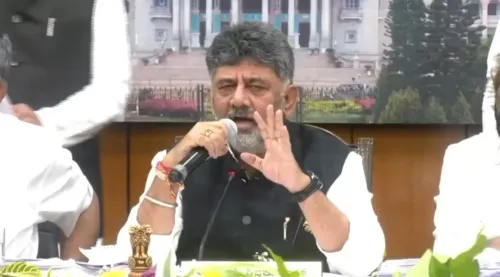
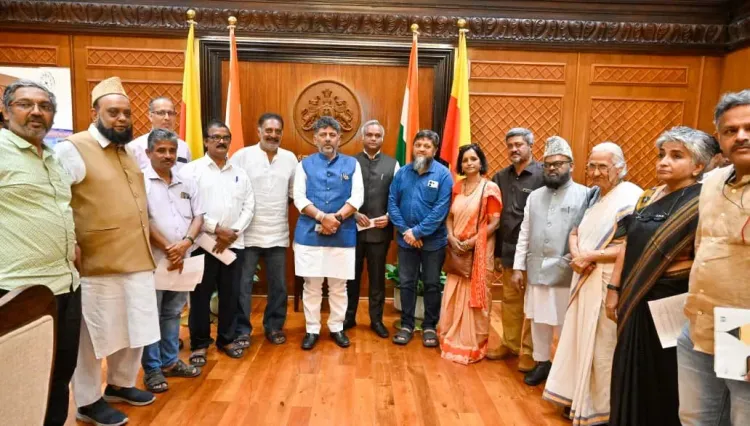
Civil society organisations on Monday, 17 August urged Karnataka Chief Minister D.K. Shivakumar to intervene in the state's ongoing Special Intensive Revision (SIR) of electoral rolls, warning that the exercise could result in large-scale, unfair removal of eligible voters from the voters' list. The delegation met Shivakumar at Vidhana Soudha in Bengaluru, submitting a formal memorandum outlining their concerns.
Key Allegations Against the SIR Process
Representatives from Eddelu Karnataka and allied civil society groups, led by actor Prakash Raj, alleged that Karnataka is recording one of the highest voter deletion rates in the country. According to the delegation, approximately 1.09 crore voters have been categorised as ASDDO — Already Shifted, Dead, Duplicate, or Otherwise — raising fears that a significant share of those names could be permanently struck off the rolls.
The groups further claimed that the deletion rate had crossed 60 per cent in around 3,000 polling booths across the state, with Bengaluru cited as a particularly affected area.
What the Delegation Demanded
The civil society representatives urged Chief Minister Shivakumar to press the Election Commission of India (ECI) to extend the SIR process by at least three months, with a full one year provided to complete the exercise comprehensively. They specifically asked that voters categorised as 'Shifted', 'Absent', or 'Others' not be deleted immediately; instead, Booth Level Officers (BLOs) should conduct door-to-door verification before any names are removed.
The groups also sought the provision of necessary forms and facilities to allow shifted voters to transfer their electoral registration, alongside dedicated channels for new eligible voters to enrol.
What the Government Should Do, Per Civil Society
'The state government itself should take the initiative to ensure that eligible voters remain on the electoral rolls. Government personnel should visit households to provide information, and helpline centres should be established to assist voters,' the delegation stated in its memorandum.
If the ECI declines to act on these concerns, the organisations urged the state government to raise the matter in the Karnataka Legislative Assembly, pass a resolution putting pressure on the Commission, and, if necessary, approach the Supreme Court to protect voters' interests.
Context and Timeline
The major phase of the SIR process concluded on 17 August, which was also the final day for submission of Enumeration Forms in Karnataka. Notably, the SIR is a periodic exercise conducted by the ECI to update electoral rolls by removing ineligible entries and adding new voters — but critics argue that, when implemented hastily, such revisions risk disenfranchising genuine voters, particularly migrant workers and urban renters who may be temporarily absent from their registered addresses.
With the deadline now passed, pressure on both the state government and the ECI to review the process is expected to intensify in the coming days.
Point of View
Designed to clean rolls, can become instruments of disenfranchisement when timelines are compressed. Karnataka's urban centres, particularly Bengaluru, are home to millions of migrant workers and renters whose absence during enumeration does not mean ineligibility. The ECI has faced similar criticism in other states, yet the deletion-first, verify-later approach persists. What is missing is a nationally mandated verification protocol that places the burden of proof on the system, not the voter — and until that exists, every SIR cycle will produce the same civil society alarm.
NationPress
2 Oct 2026
Frequently Asked Questions
What is the Special Intensive Revision (SIR) of electoral rolls in Karnataka?
The Special Intensive Revision (SIR) is a periodic exercise conducted by the Election Commission of India to update electoral rolls by removing ineligible entries and adding new eligible voters. In Karnataka, the major phase of the current SIR concluded on 17 August, which was the final day for submission of Enumeration Forms.
Why are civil society groups alarmed about the Karnataka SIR?
Civil society groups allege that approximately 1.09 crore voters have been categorised as ASDDO — Already Shifted, Dead, Duplicate, or Otherwise — raising fears of large-scale unfair deletions. They also claim deletion rates exceeded 60% in around 3,000 polling booths, particularly in Bengaluru.
What has the delegation asked CM D.K. Shivakumar to do?
The delegation has urged Chief Minister D.K. Shivakumar to press the Election Commission of India to extend the SIR by at least three months, with one full year to complete the exercise. They also want Booth Level Officers to conduct door-to-door verification before any voter is removed from the rolls.
Who led the civil society delegation that met CM Shivakumar?
The delegation was led by actor Prakash Raj and comprised representatives from Eddelu Karnataka and other civil society organisations. They met the Chief Minister at Vidhana Soudha in Bengaluru and submitted a formal memorandum.
What are the next steps if the Election Commission does not act?
The civil society organisations have urged the Karnataka government to raise the issue in the Legislative Assembly, pass a resolution pressuring the Election Commission of India, and approach the Supreme Court if necessary to protect voters' rights in the state.