Karnataka to declare 101 taluks drought-hit amid 30% rainfall deficit

Synopsis
Karnataka is set to formally declare 101 taluks drought-hit after a 30 per cent rainfall deficit left 178 taluks — nearly three-quarters of the state — with severe soil moisture deficiency. With reservoir storage down sharply from last year and fodder stocks thin in dozens of taluks, the scale of the crisis is testing both the state's relief machinery and its long-running dispute with the Centre over drought assessment norms.
Key Takeaways
Karnataka will declare 101 taluks drought-hit; 32 more taluks are under reassessment.
The state received only 465 mm of rainfall against an expected 666 mm — a 30 per cent deficit as of 26 August .
The government has committed ₹635 crore for drought management; Deputy CM G.
Parameshwara said there is 'no shortage of funds'.
178 taluks (74 per cent of the state) are facing severe soil moisture deficiency per the Moisture Adequacy Index .
Reservoir storage at 684.09 TMC is significantly below last year's 815.70 TMC for the same period.
Fodder stocks are sufficient for less than 20 weeks in 18 taluks ; drinking water is being supplied by tanker to 758 villages .
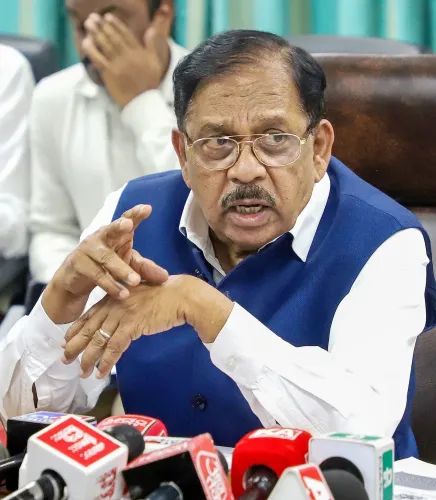
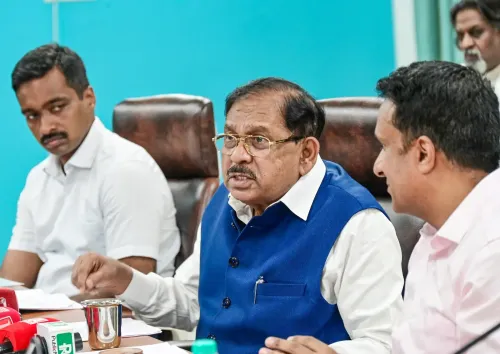
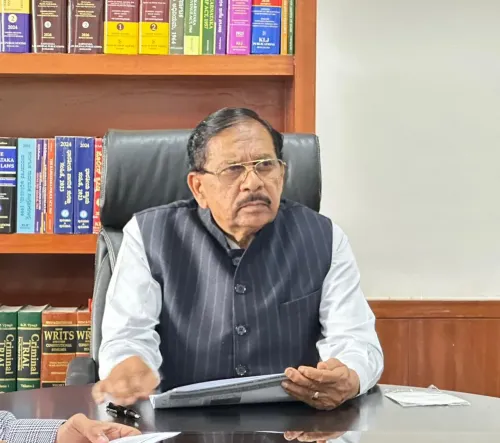
The Karnataka government has decided to declare 101 taluks drought-hit, with 32 additional taluks that qualified under the first drought trigger currently under reassessment, Deputy Chief Minister and Revenue Minister G. Parameshwara announced on Thursday, 27 August. Speaking at a press conference at Vidhana Soudha in Bengaluru, Parameshwara described the situation as an unprecedented drought-like crisis, with the state committing ₹635 crore toward drought management.
Scale of the Rainfall Deficit
Against an expected 666 mm of rainfall between 1 June and 26 August, Karnataka received only 465 mm — a shortfall of 30 per cent. As many as 29 districts and 190 taluks are currently experiencing deficient to large-deficient rainfall, while 12 taluks are facing a severe deficit. By 26 August, 134 taluks had recorded a dry spell exceeding three consecutive weeks, making them eligible for assessment under Trigger-1 of the Centre's Drought Manual-2020.
Assessment Process and Declaration Criteria
Following ground-truthing based on prescribed drought assessment parameters, 101 taluks were found eligible for a drought declaration. The remaining 32 taluks that qualified under Trigger-1 are being reassessed. Once the 101 taluks are formally declared drought-hit, the situation will be reviewed every 15 days. Ground-truthing has also been conducted at the hobli level, with data currently being analysed.
Parameshwara explained that Trigger-1 covers dry spells of three or more consecutive weeks, while Trigger-2 factors in sowing levels, crop conditions, soil moisture, groundwater levels, and water availability in tanks and reservoirs. He alleged that certain limitations in the existing assessment criteria have made it difficult to declare some areas drought-hit, and that the state has repeatedly urged the Centre to revise the norms — without success so far.
Impact on Agriculture and Soil Moisture
As of 21 August, only 71 per cent of the targeted sowing area had been covered. Against a target of 84.10 lakh hectares, sowing had taken place in just 60 lakh hectares. Of Karnataka's 240 taluks, 104 recorded less than 75 per cent sowing, and 42 taluks recorded less than 25 per cent.
Horticultural crops have also been hit hard — against a target of 4.36 lakh hectares, sowing was completed in only 3.04 lakh hectares (69 per cent) as of 25 August. Even sown crops are not developing as expected due to inadequate moisture. The government has advised farmers to shift to short-duration, low-rainfall crop varieties and has distributed seeds accordingly.
The Moisture Adequacy Index (MAI) as of 26 August showed that 178 taluks — or 74 per cent of the state — were facing severe soil moisture deficiency. Of these, 86 taluks were under very severe deficiency and 92 under moderate deficiency. Groundwater levels have declined in 132 taluks compared with the previous decade's average, raising concerns about further deterioration in the months ahead.
Drinking Water and Livestock Situation
As of 22 August, drinking water was being supplied via 149 tankers to 758 villages across the state, with 714 private borewells hired to supplement supply. In urban areas, 48 tankers are serving 114 wards under 18 local bodies, with an additional 18 private borewells engaged.
The government has projected that drinking water shortages could affect 2,059 gram panchayats during the coming summer if conditions worsen, and has begun preparations. Reservoir storage stands at 684.09 TMC as of 26 August, compared with 815.70 TMC during the same period last year — a significant drop.
On the livestock front, the state holds approximately 151 lakh tonnes of fodder, sufficient for roughly 33 weeks overall. However, fodder stocks in 49 taluks will last only 25 weeks, and in 18 taluks, less than 20 weeks. The government has released ₹25 crore for fodder seed kit distribution, with the Karnataka Milk Federation (KMF) also participating in the effort.
Government's Financial Commitment and Next Steps
'We do not have any shortage of funds,' Parameshwara stated, underlining that the ₹635 crore drought management outlay is aimed at ensuring neither people nor livestock face hardship. With the formal drought declaration for 101 taluks imminent and hobli-level data still being processed, the situation in the remaining 32 taluks is expected to be resolved in the next review cycle. All eyes are now on whether the Centre will respond to Karnataka's repeated call to ease drought assessment norms before the crisis deepens further.
Point of View
But the more consequential story is the state's unresolved standoff with the Centre over assessment norms. When a state government publicly alleges that federal criteria are preventing timely drought declarations, it points to a structural flaw in India's disaster-relief architecture — one that delays aid to the most vulnerable farmers. The hobli-level data being gathered is a positive step, but the 32 taluks still under review signal that the current framework leaves too much room for ambiguity. With groundwater declining in 132 taluks and the summer months still ahead, the window to act before a water emergency compounds the agrarian crisis is narrowing fast.
NationPress
27 Aug 2026
Frequently Asked Questions
How many taluks is Karnataka declaring drought-hit?
Karnataka is set to declare 101 taluks drought-hit following ground-truthing assessments. An additional 32 taluks that qualified under Trigger-1 of the Centre's Drought Manual-2020 are currently being reassessed.
What is the scale of Karnataka's rainfall deficit in 2025?
Karnataka received only 465 mm of rainfall between 1 June and 26 August against an expected 666 mm, resulting in a 30 per cent deficit. As many as 29 districts and 190 taluks are experiencing deficient to large-deficient rainfall.
How much is the Karnataka government spending on drought relief?
The Karnataka government has committed ₹635 crore toward drought management to ensure people and livestock are not adversely affected. Deputy CM G. Parameshwara stated that the state has no shortage of funds for this purpose.
How severe is the soil moisture and groundwater situation?
As of 26 August, 178 taluks — 74 per cent of the state — were facing severe soil moisture deficiency according to the Moisture Adequacy Index. Groundwater levels have also declined in 132 taluks compared with the previous decade's average.
What is the drinking water and fodder situation across Karnataka?
Drinking water is being supplied by 149 tankers to 758 villages, with 714 private borewells hired for additional supply. Fodder stocks of roughly 151 lakh tonnes are available statewide, but 18 taluks have less than 20 weeks of supply remaining.