What Record Low Temperature Did Kashmir Experience Recently?
Synopsis
Srinagar has recorded the coldest night of the season at -1.6°C, with Pahalgam dropping to -3.8°C. As winter sets in, residents adapt to severe weather, and health professionals advise caution for vulnerable groups. Discover how locals are coping and the expected impact of the Chillai Kalan period.
Key Takeaways
Srinagar recorded its coldest night at -1.6°C .
Pahalgam saw temperatures drop to -3.8°C .
The traditional Pheran and Kangri are essential for warmth.
Health professionals urge caution for vulnerable groups.
The Chillai Kalan period significantly affects daily life.
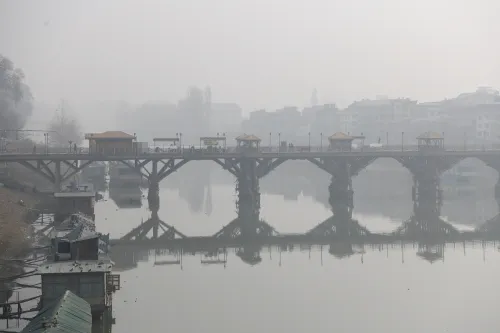
Srinagar, Nov 12 (NationPress) The city of Srinagar in Jammu and Kashmir experienced its coldest night of the season on Wednesday, with the temperature plummeting to -1.6 degrees Celsius. Meanwhile, the hill station of Pahalgam recorded an even lower temperature of -3.8 degrees.
Officials from the Meteorological (MeT) Department reported that the minimum temperature in Srinagar reached -1.6 degrees Celsius on Wednesday, marking this season's lowest so far.
“As anticipated, the temperature has dipped to -1.6 degrees Celsius in Srinagar today, which is the coldest recorded this season. The night temperatures are expected to decrease further in the coming days. Pahalgam noted -3.8 degrees, while Gulmarg registered -1 today,” stated the MeT officials.
In other areas, Jammu city registered 10 degrees, Katra town recorded 9, Batote saw 4.5, and Bhaderwah reached 1.2 degrees as the minimum temperature.
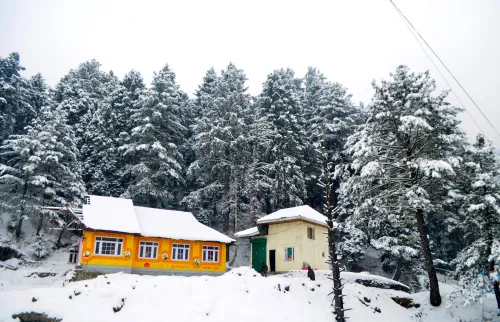
As the cold wave grips the Valley, residents have begun wearing warm clothing, including the traditional Pheran, a woollen overgarment. To keep warm, they use a traditional earthen pot known as a Kangri, filled with hot charcoal, which is placed under the Pheran during the winter months.
Local medical professionals have advised individuals with a history of chest conditions, as well as the elderly and children, to limit their exposure to the cold, as inhaling cold air can exacerbate respiratory issues.
The harsh winter period known as Chillai Kalan lasts for 40 days, starting from December 21 to January 30. During this phase, many water bodies in the Valley may freeze over, depending on the intensity of the cold.
During Chillai Kalan, drinking water taps are prone to freezing, prompting locals to light small fires around them to prevent ice formation. Roads become treacherous, requiring pedestrians and drivers to navigate carefully to avoid accidents.
During extreme winter conditions, even daytime temperatures in the Valley seldom exceed 7 degrees Celsius.
Point of View
It is essential to highlight the resilience of the residents of Jammu and Kashmir amid the severe cold wave. This weather phenomenon not only challenges daily life but also highlights the cultural adaptability of the people. Our coverage aims to keep the public informed and safe during this harsh winter period.
NationPress
19 Sept 2026
Frequently Asked Questions
What is the coldest temperature recorded in Srinagar recently?
The coldest temperature recorded in Srinagar recently was -1.6 degrees Celsius.
How does the cold wave affect daily life in Kashmir?
The cold wave impacts daily life by causing people to wear traditional warm clothing, and it also affects water supply and road safety.
What is Chillai Kalan?
Chillai Kalan is a 40-day period of severe winter cold in Kashmir, starting on December 21 and ending on January 30.
How can residents stay warm during the winter in Kashmir?
Residents often wear the traditional Pheran and use a Kangri, an earthen pot filled with hot charcoal, to stay warm.
What health precautions should be taken during cold weather?
Individuals with a history of chest problems, along with the elderly and children, should limit their exposure to the cold to prevent respiratory issues.