Kavitha urges PM Modi to rescue 60 lakh drought-hit Telangana farmers
Synopsis
TRS chief K. Kavitha has gone directly to PM Modi over Telangana's drought, alleging that the state's Congress government is blocking central relief by refusing to declare drought-affected areas — leaving 60 lakh farmers without help. Her demand for 24-hour free power as a life-or-death measure puts both the Centre and the state government on notice.
Key Takeaways
Kavitha appealed to PM Narendra Modi on 4 October to intervene for 60 lakh drought-hit farmers in Telangana .
She alleged the Telangana Congress government refused to formally declare drought-affected areas, blocking access to Union Government relief funds.
Kavitha demanded free power for 24 hours , calling it a 'matter of life and death' for farmers.
She also claimed Telangana has not received a single rupee from the Centre since the state's formation.
On exam paper leaks, Kavitha argued individual resignations — including that of a Union Minister — are insufficient without structural reform of the NTA .
She also called for systemic electoral fixes, suggesting a paper ballot system as a credible alternative.
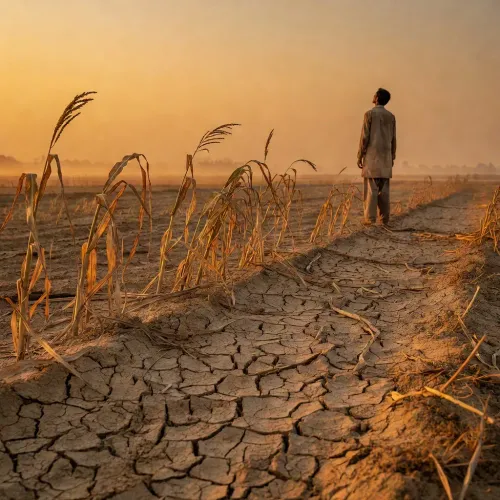
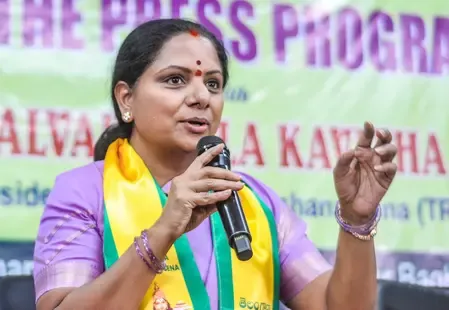
Telangana Rakshana Sena (TRS) chief K. Kavitha on Sunday, 4 October directly appealed to Prime Minister Narendra Modi to intervene on behalf of 60 lakh farmers in Telangana reeling under a severe drought, while also accusing the state's Congress government of 'utter inefficiency and neglect' in responding to the agrarian crisis. The appeal, made in Hyderabad, comes as drought conditions — linked by Kavitha to the impact of a Super El-Niño — continue to intensify across southern India.
The Core Appeal to the Centre
Kavitha argued that the Telangana state government's refusal to formally declare drought-affected areas has effectively blocked access to Union Government relief, a pathway that states like Maharashtra and Karnataka have reportedly already utilised. She accused the state administration of abdicating responsibility and 'resorting only to private rituals while farmers suffer.'
'Our CM has given up... I request the PM, kindly help us out,' Kavitha said, in a direct appeal to Prime Minister Modi. She added that Telangana urgently needs free power to keep farming operations alive. 'Only 24 hours of free power can save farmers of Telangana. This is a matter of life and death,' she stated.
Allegations Against the State Government
Kavitha further alleged that since the formation of Telangana, the state has not received a single rupee from the Centre, a claim that adds political weight to her demand for direct federal intervention. She called on the Union Government to look at the broader drought situation across the southern states — specifically naming Telangana, Andhra Pradesh, Karnataka, and Maharashtra — and redirect surplus power from better-off states. 'If you do not support us during this time of distress, people of Telangana and farmers of Telangana will never forgive you,' she warned.
Wider Remarks on Systemic Reform
Kavitha also used the occasion to weigh in on the nationwide youth protests over recurring exam paper leaks. While acknowledging the protesters, she argued that individual resignations — such as that of a Union Minister over the controversy — do not amount to systemic change. 'They got the resignation of the Union Minister that they wanted, but does that today assure that no further paper leaks will take place?' she asked, pointing out that the National Testing Agency (NTA) remains structurally unchanged and lacks independence.
Extending the same logic to election administration, she called for structural fixes over symbolic exits, suggesting that a paper ballot system could offer a more credible path to electoral accountability. 'Even if the CEC resigns, what is the use? The whole system has to change. Accountability has to be fixed in the system,' she said.
Context and What Is at Stake
The drought crisis in Telangana is unfolding against a broader backdrop of erratic monsoon distribution this year, with some regions of India recording surplus rainfall even as southern states face acute deficits. The TRS, now in opposition in Telangana following the Congress's state election victory, has increasingly positioned itself as a watchdog on agrarian issues. Kavitha's appeal marks one of the most direct inter-governmental escalations of the drought issue so far, and the Centre's response — or silence — is likely to define the political narrative around the crisis in the weeks ahead.
Point of View
And the Centre cannot easily hide behind procedural excuses if that barrier is now public. The TRS has found a potent opposition wedge: frame the Congress state government as both negligent and as the entity standing between farmers and federal relief. What the mainstream coverage underplays is the power demand angle — free electricity for agriculture is a live electoral promise in almost every southern state, and Kavitha is weaponising it in a moment of genuine scarcity. Whether Modi responds or stays silent will signal the Centre's appetite for intervention in a Congress-ruled state ahead of the next electoral cycle.
NationPress
4 Oct 2026
Frequently Asked Questions
Why is K. Kavitha appealing to PM Modi over Telangana's drought?
Kavitha is appealing to PM Modi because she alleges the Telangana state government has refused to formally declare drought-affected areas, which would unlock Union Government relief. She argues that without this declaration, 60 lakh farmers are being denied federal support they urgently need.
What specific demand has Kavitha made to the Centre?
Kavitha has demanded that the Centre provide free power to Telangana for 24 hours to help farmers cope with the drought. She described this as a 'matter of life and death' and also urged the Centre to redirect surplus power from states with excess rainfall.
How does Telangana's situation compare to other southern states?
According to Kavitha, states like Maharashtra and Karnataka have already declared drought-hit areas, enabling them to access central government relief. Telangana, she alleges, has not taken this step, leaving its farmers without equivalent support despite facing similarly severe conditions.
What did Kavitha say about the exam paper leak controversy?
Kavitha argued that the resignation of a Union Minister over paper leaks does not address the systemic problem, as the National Testing Agency (NTA) remains structurally unchanged. She said accountability must be built into the system rather than resolved through individual exits.
What is TRS's political position in Telangana currently?
The Telangana Rakshana Sena (TRS) is currently in opposition in Telangana, following the Congress party's victory in the state elections. Kavitha's public appeal to the Centre is part of a broader opposition campaign holding the Congress state government accountable for drought management.