Kaziranga raptor and stork survey 2026: 30 species, 217 birds recorded
Synopsis
Kaziranga isn't just India's rhino fortress — it's quietly become a world-class raptor and stork stronghold. The 2026 survey's most striking finding: the park holds more known Pallas's Fish Eagle breeding nests than anywhere else on Earth, with a tagged Mongolian eagle returning annually to prove it. That transboundary data point alone reshapes how conservationists should think about Kaziranga's global ecological role.
Key Takeaways
Kaziranga National Park and Tiger Reserve recorded 30 raptor species with 217 individual birds and 6 stork species with 266 individual birds in a survey conducted in February–March 2026 .
The survey was released on World Environment Day, 6 June 2025 , conducted by 10 expert enumerators in collaboration with Assam university researchers.
The Himalayan Griffon Vulture was the most sighted raptor ( 69 records ); the Asian Openbill was the most abundant stork ( 92 records ).
Kaziranga holds the world's highest number of known Pallas's Fish Eagle breeding sites — 10 active nests as of a January 2020 Wildlife Institute of India survey.
All 8 stork species found in India are present in the Kaziranga landscape; nearly 50 of India's 112 raptor species are found there.
Most recorded species are protected under Schedule I of the Wildlife (Protection) Act, 1972 .
A comprehensive bird survey at Kaziranga National Park and Tiger Reserve (KNPTR) in Assam has recorded 30 species of raptors with 217 individual birds and six species of storks with 266 individual birds, reinforcing the park's status as one of India's most critical avian habitats. The findings were released on World Environment Day, 6 June 2025, and were announced by park officials on Saturday.
Survey Scope and Methodology
KNPTR Director Sonali Ghosh, a senior Indian Forest Service (IFS) officer, said the survey was conducted in collaboration with research scholars from multiple universities across Assam. A team of 10 expert enumerators carried out the rapid survey between the last week of February and the first week of March 2026, covering all administrative ranges under the Eastern Assam Wildlife Division of KNPTR. Nesting locations identified during the current year were also factored into the overall analysis.
Key Findings Across Divisions
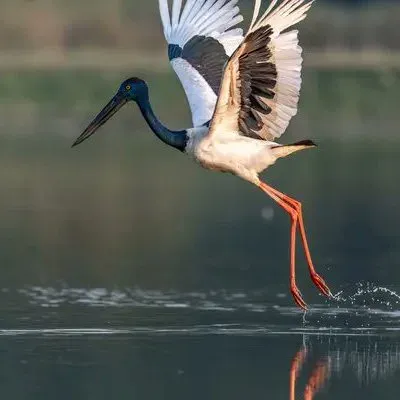
Kaziranga National Park recorded the highest diversity, with 21 species of raptors and five species of storks. Biswanath Wildlife Division followed with 20 raptor species and six stork species, while Nagaon Wildlife Division recorded 14 raptor species and five stork species.
Among storks, the Asian Openbill was the most abundant, with 92 individual records across all divisions. The Greater Adjutant was the rarest, with only three individual sightings. Among raptors, the Himalayan Griffon Vulture led with 69 individual records, while the Booted Eagle and White-tailed Eagle were each sighted only once.
Kaziranga's Global Significance for Threatened Species
The park supports a wide variety of diurnal and nocturnal raptors — including eagles, falcons, vultures, buzzards, and owls. Of the 112 raptor species recorded in India, nearly 50 species are found in Kaziranga and its adjoining landscape. Globally, there are 20 stork species, of which eight are found in India — and all eight have been recorded in the Kaziranga landscape, according to Ghosh.
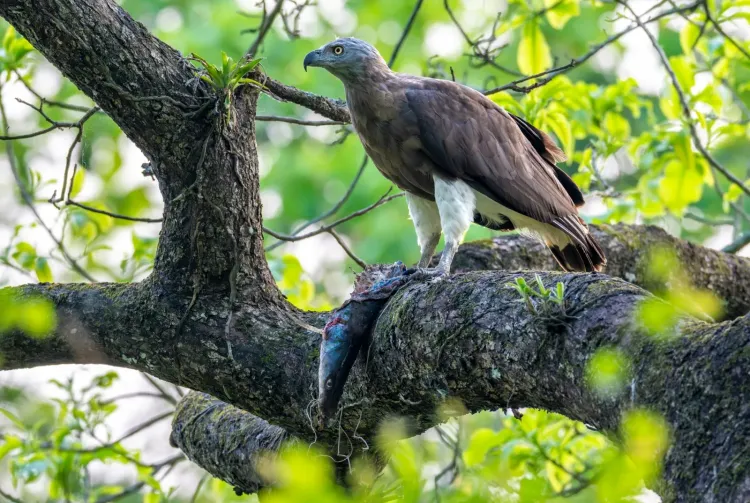
Kaziranga also serves as a critical stronghold for the globally threatened Pallas's Fish Eagle (Haliaeetus leucoryphus). A survey by the Wildlife Institute of India (WII) in January 2020 reported 10 active nests of the species within the park — the highest number of known breeding sites for the species anywhere in the world.
A Migratory Eagle's Remarkable Annual Journey
In a notable example of international wildlife research, the Wildlife Science and Conservation Centre of Mongolia confirmed that a male Pallas's Fish Eagle named 'Ider' was tagged at Buuntsagaan Lake in central-western Mongolia on 21 August 2020. Since then, the bird has returned to Kaziranga every year for breeding, changing its nesting location only once. During the non-breeding season — from June to September — 'Ider' consistently returns to Buuntsagaan Lake, offering rare transboundary data on raptor migration.
Conservation Implications and Legal Protections
Ghosh noted that the findings would contribute to ongoing efforts to protect threatened raptor and stork species across the park's diverse habitats. Most of the recorded species are listed under Schedule I of the Wildlife (Protection) Act, 1972, which affords them the highest degree of legal protection in India. Priority conservation actions identified include protection of nesting and floodplain habitats, mitigation of powerline electrocution, continued telemetry monitoring, and strengthened international collaboration.
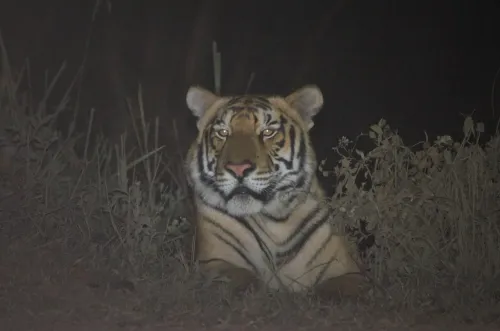
Kaziranga National Park and Tiger Reserve, India's seventh UNESCO World Heritage Site, is also home to the 'Big Five' wildlife species — sheltering 2,613 greater one-horned rhinoceroses (2022 census), 104 Bengal tigers (2022), 1,228 Asian elephants (2024), 2,565 wild water buffaloes (2022), and 1,129 eastern swamp deer (2022). The reserve spans several districts including Golaghat, Nagaon, Sonitpur, and Biswanath. The latest survey data is expected to directly inform future habitat management plans across all three administrative divisions.
Point of View
But the Pallas's Fish Eagle data is the real story — a park in Assam holding more breeding sites for a globally threatened raptor than anywhere else on the planet is a conservation fact that deserves far more international attention than it receives. The annual return of a Mongolia-tagged eagle also quietly makes the case for transboundary wildlife diplomacy, an area where India's engagement has been inconsistent. With powerline electrocution flagged as a key threat, the urgency gap between scientific documentation and on-ground infrastructure fixes remains a persistent blind spot in India's wildlife management. Kaziranga's UNESCO status and 'Big Five' fame tend to overshadow its avian significance — a framing problem that underfunds bird-specific conservation within the reserve.
NationPress
25 Sept 2026
Frequently Asked Questions
What did the 2026 Kaziranga raptor and stork survey find?
The survey recorded 30 species of raptors with 217 individual birds and six species of storks with 266 individual birds across all administrative divisions of Kaziranga National Park and Tiger Reserve. It was conducted between the last week of February and the first week of March 2026 by a team of 10 expert enumerators.
Why is Kaziranga significant for Pallas's Fish Eagle conservation?
Kaziranga holds the highest number of known Pallas's Fish Eagle breeding sites in the world, with 10 active nests recorded by the Wildlife Institute of India in January 2020. The species is globally threatened, and the park's floodplain habitats are critical to its annual breeding cycle.
Which raptor and stork species were most commonly sighted in Kaziranga?
The Himalayan Griffon Vulture was the most commonly sighted raptor, with 69 individual records, while the Asian Openbill was the most abundant stork species, with 92 individual records across all divisions. The Booted Eagle, White-tailed Eagle, and Greater Adjutant were among the rarest, with only one to three sightings each.
How many of India's raptor species are found in Kaziranga?
Of the 112 raptor species recorded across India, nearly 50 are found in Kaziranga National Park and its adjoining landscape, making it one of the country's most diverse raptor habitats. Assam's wetlands and Himalayan foothills provide critical feeding and nesting grounds for these birds.
What conservation actions have been recommended following the survey?
KNPTR Director Sonali Ghosh identified several priority actions, including protection of nesting and floodplain habitats, mitigation of powerline electrocution risks, continued telemetry monitoring, and strengthened international collaboration — particularly given the transboundary migration patterns of species like the Pallas's Fish Eagle.