Kejriwal Accuses BJP Leader of Ram Mandir Donation Fraud

Synopsis
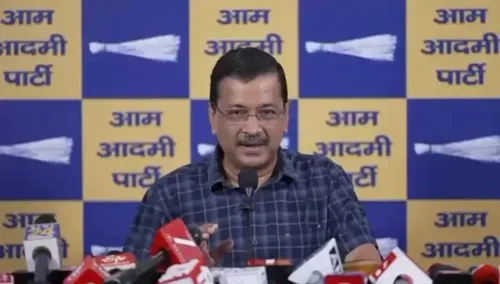
AAP convenor Arvind Kejriwal on 17 July 2026 accused an unnamed senior BJP leader of stealing Ram Mandir donations, mocking him for delivering a speech on honesty during a Punjab visit. The jab targets both the rival leader's credibility and BJP's core voter base.
Key Takeaways
AAP convenor Arvind Kejriwal posted on 17 July 2026 accusing an unnamed senior leader of stealing Shri Ram Mandir donations.
The post was timed to a Punjab visit by the unnamed leader, who Kejriwal said delivered a 'speech on honesty' before leaving.
Kejriwal did not name the accused individual, leaving the specific allegation unsubstantiated in the public domain.
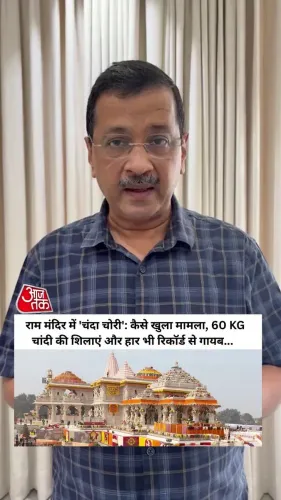
The Ram Mandir in Ayodhya was built via public donations managed by the Shri Ram Janmabhoomi Teerth Kshetra Trust , inaugurated in January 2024 .
AAP has governed Punjab since 2022 and regularly uses social media to counter rival parties' presence in the state.
The exchange signals continued high-decibel political competition in Punjab ahead of future electoral cycles.
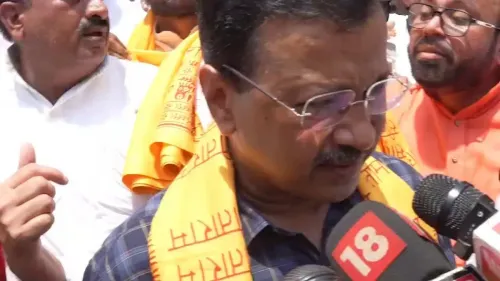
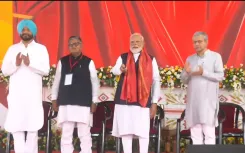
AAP convenor Arvind Kejriwal on Friday, 17 July 2026, launched a sharp attack on a senior Bharatiya Janata Party leader, accusing him of stealing donations meant for the Shri Ram Mandir in Ayodhya, hours after the leader concluded a visit to Punjab during which he delivered what Kejriwal described as a lecture on honesty.
Posting on X, Kejriwal wrote in Hindi: 'Shri Ram Mandir ka chanda chori karne walon ke sabse bade neta aaj Punjab aakar imaandaari ka bhashan dekar gaye hain' — translated: 'The biggest leader among those who stole donations for the Shri Ram Mandir came to Punjab today, delivered a speech on honesty, and left.'
Context
The post was timed to coincide with a high-profile visit by an unspecified senior national leader to Punjab, a state where AAP has held power since its landslide victory in the February 2022 assembly elections. Kejriwal did not name the individual, but the framing — a national leader visiting Punjab to speak on governance — points to a rival-party figure making political inroads in AAP's prized state.
The allegation of misappropriating temple donations is among the most politically charged charges one can level in India's current climate, where the Ram Mandir carries deep religious and electoral significance across the Hindi heartland and beyond.
Policy Backdrop
The Shri Ram Mandir in Ayodhya was inaugurated in January 2024 after decades of legal proceedings. Its construction was funded largely through a massive public donation drive managed by the Shri Ram Janmabhoomi Teerth Kshetra Trust, a body constituted under central government oversight. Crores of ordinary citizens contributed, making the fund's integrity a matter of public trust.
AAP was founded in 2012 explicitly on an anti-corruption platform, and its social media strategy has consistently involved using allegations of financial impropriety to contrast its governance record with that of established national parties. Targeting a rival's credibility immediately after a Punjab visit is a well-worn tactic in the party's political playbook.
Stakeholders and Impact
The primary audience for this post is Punjab's electorate, where AAP must defend its government's record while simultaneously countering the national opposition's growing presence. For ordinary temple donors across India, the allegation — if substantiated — would represent a serious breach of religious and financial trust.
The post also speaks to BJP's core voter base, for whom the Ram Mandir is a symbol of civilisational achievement. Framing a BJP leader as a 'thief of Ram Mandir donations' is a deliberate attempt to create a wedge between the party and its most devoted supporters.
What's Next
The targeted leader or party is expected to respond, likely demanding that Kejriwal name the individual and produce evidence. Any escalation could trigger demands for a formal probe into the Shri Ram Janmabhoomi Teerth Kshetra Trust's accounts, a politically explosive prospect for all parties involved.
With Punjab remaining a critical battleground ahead of future electoral cycles, this exchange signals that the state will continue to be a theatre for high-decibel national-level political combat between AAP and its rivals.
Point of View
Punchy sentence designed to go viral without the burden of named evidence. By invoking Ram Mandir donations — a subject with deep emotional resonance for crores of Hindus — he attempts to turn BJP's most potent cultural symbol into a liability. The timing, immediately after a rival's Punjab visit, suggests a deliberate effort to neutralise any political momentum the opponent may have gained on the ground. Until the accused leader is named and specifics are provided, the allegation remains a political salvo rather than an actionable charge.
NationPress
17 Jul 2026
Frequently Asked Questions
What did Arvind Kejriwal say about the Ram Mandir donations?
Kejriwal alleged that the biggest leader among those who stole donations meant for the Shri Ram Mandir visited Punjab on 17 July 2026 and delivered a speech on honesty before leaving.
Who is Kejriwal accusing of stealing Ram Mandir donations?
Kejriwal did not name the individual in his post. He referred only to 'the biggest leader' among those allegedly involved, making the specific identity unverified.
What is the Shri Ram Mandir trust and how was it funded?
The Shri Ram Janmabhoomi Teerth Kshetra Trust was constituted under central government oversight to manage construction and donations for the Ayodhya temple, which was inaugurated in January 2024 after a massive public donation drive.
Why is Kejriwal targeting Punjab for this political attack?
AAP has governed Punjab since its 2022 assembly election victory, making the state a key political battleground. Responding to rival leaders' visits there is part of AAP's strategy to defend its turf.
What could happen next after Kejriwal's Ram Mandir allegation?
The targeted party is likely to demand that Kejriwal name the individual and provide evidence. The exchange could escalate into calls for a formal probe into the Ram Mandir trust's accounts.