Kejriwal urges tree planting on World Environment Day

Synopsis
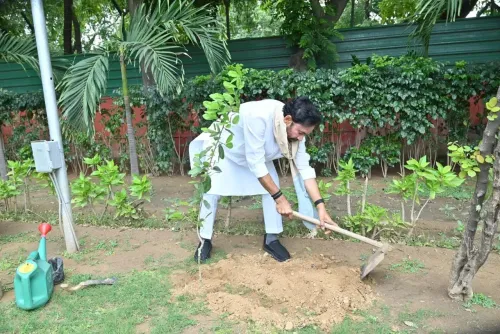
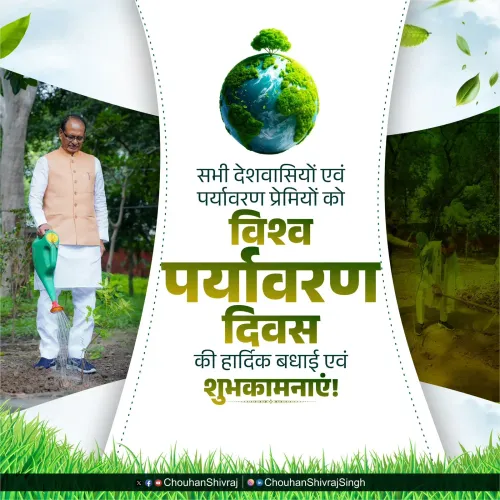
AAP convenor Arvind Kejriwal marked World Environment Day on 5 June 2026 by calling on citizens to plant saplings, water them responsibly, and protect neighbourhood trees, describing a greener Earth as the only path to a liveable future.
Key Takeaways
Arvind Kejriwal issued a public appeal on World Environment Day, 5 June 2026 , urging individual environmental action.
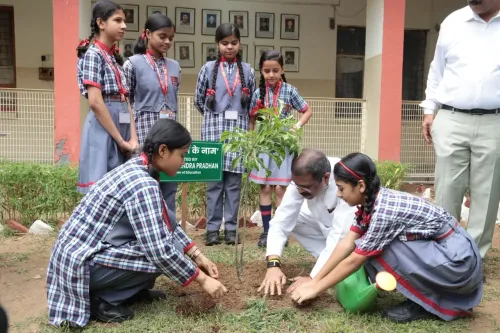
He called on citizens to plant new saplings, water them responsibly, and protect existing trees in their areas.
World Environment Day has been observed annually on 5 June since it was established by the UN General Assembly in 1972 .
The Aam Aadmi Party has previously run tree plantation drives and pollution-control schemes, including the odd-even vehicle scheme first introduced in 2016 .
The appeal reflects a broader national pattern of political leaders linking symbolic observances to India's urban air-quality and afforestation challenges.
AAP convenor Arvind Kejriwal marked World Environment Day on 5 June 2026 with a public appeal urging citizens to plant saplings, water them responsibly, and protect existing trees in their neighbourhoods, framing a greener Earth as 'the only path to a liveable future.'
Context
World Environment Day is observed every year on 5 June, established by the UN General Assembly in 1972 to promote global environmental awareness. Indian political leaders across the spectrum routinely use the occasion to issue calls for individual and collective environmental action, reflecting both symbolic significance and the country's pressing urban air-quality challenges.
Kejriwal's message — 'Trees are our lifeline, and a greener Earth is the only path to a liveable future' — echoes a broader national conversation about urban green cover at a time when Indian cities consistently rank among the world's most polluted.
Policy Backdrop
The Aam Aadmi Party, founded in 2012, governed Delhi with a stated emphasis on public services and pollution mitigation. During its tenure, the Delhi government ran periodic tree plantation drives alongside pollution-control interventions such as the odd-even vehicle scheme, first implemented in 2016.
Kejriwal's appeal to act 'right from our homes' aligns with a pattern of blending symbolic annual observances with longer-term urban sustainability messaging. It also resonates with India's international climate commitments and domestic afforestation programmes aimed at expanding green cover in cities.
Stakeholders and Impact
Urban residents and local communities are the primary audience for this appeal. Household-level planting, while modest in scale, is frequently cited by urban ecologists as a meaningful complement to large government afforestation schemes, particularly in dense cities where green space is scarce.
The call to 'protect the trees in our area' also carries implicit weight in Delhi and other Indian metros, where tree-felling for infrastructure projects has been a recurring flashpoint between civic authorities and environmental activists.
What's Next
Observers will watch whether the appeal is followed by any state-level or party-level afforestation scheme announcements, or by AAP participation in upcoming international climate forums. World Environment Day messaging from political leaders often sets the tone for policy announcements in the weeks that follow, particularly ahead of monsoon plantation seasons when conditions are most favourable for new saplings.
As India advances its national targets for forest and tree cover, citizen-level engagement — amplified by leaders with large public platforms — remains a key variable in whether urban greening goals translate from policy documents into ground-level action.
Point of View
Which built much of its Delhi governance narrative around pollution control and public welfare, such messaging serves a dual purpose: it sustains the party's green identity at a time when it is out of power in Delhi, and it keeps Kejriwal visible on issues that resonate with urban middle-class voters. The emphasis on household-level action is strategically low-risk — it is uncontroversial, universally relatable, and sidesteps the harder questions of industrial emissions and infrastructure-driven deforestation. Whether this translates into a concrete party-led plantation drive will be the real test of intent.
NationPress
20 Oct 2026
Frequently Asked Questions
Why did Arvind Kejriwal post about World Environment Day 2026?
Kejriwal used World Environment Day on 5 June 2026 to urge citizens to plant saplings at home and protect neighbourhood trees, describing environmental protection as essential for a liveable future.
What is World Environment Day and when is it observed?
World Environment Day is a global observance held every year on 5 June , established by the UN General Assembly in 1972 to raise awareness about environmental protection.
What environmental work did AAP do in Delhi?
During its tenure in Delhi , the Aam Aadmi Party ran tree plantation drives and introduced pollution-control measures including the odd-even vehicle scheme, first implemented in 2016 .
What did Kejriwal say on World Environment Day 2026?
Kejriwal said 'Trees are our lifeline, and a greener Earth is the only path to a liveable future,' and called on people to plant new saplings, water them responsibly, and protect trees in their area.
How does India mark World Environment Day?
Indian political leaders, government bodies, and civil society organisations mark World Environment Day with plantation drives, public appeals, and policy announcements, often aligned with the monsoon season when conditions favour new saplings.