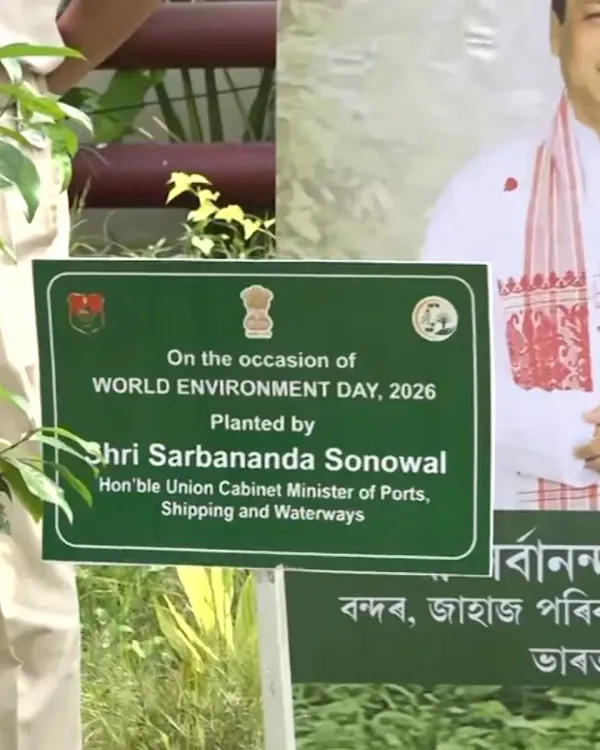
Sonowal plants sapling in Guwahati on World Environment Day
Synopsis
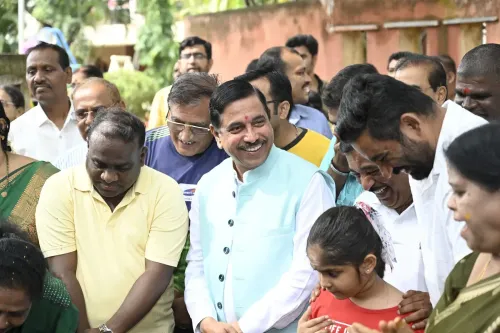
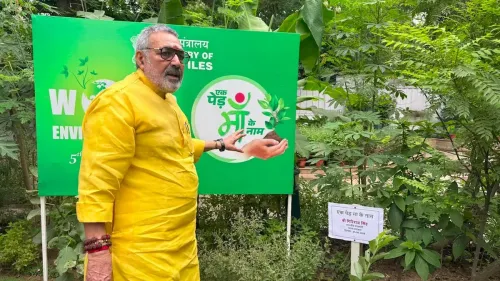
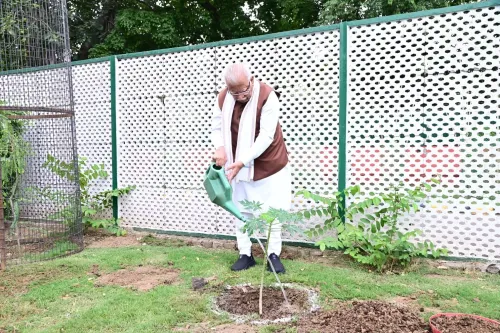
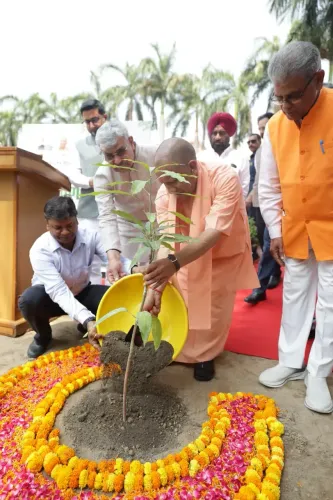
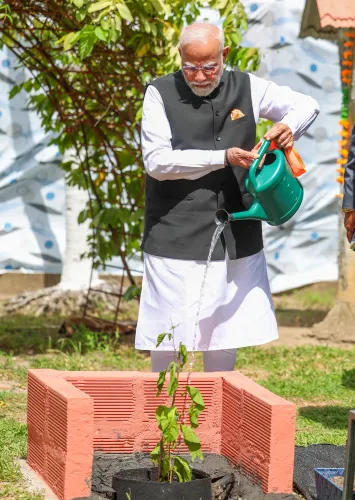
Union Minister Sarbananda Sonowal planted a sapling at Guwahati's Jyoti-Bishnu Antarjatik Kala Mandir on World Environment Day, 5 June 2026, as part of the Ek Ped Maa Ke Naam national campaign linking tree plantation with Nari Shakti and respect for Mother Nature.
Key Takeaways
Sarbananda Sonowal , Union Minister of Ports, Shipping and Waterways, planted a sapling in Guwahati on 5 June 2026 .
The event was held at the Jyoti-Bishnu Antarjatik Kala Mandir , a cultural and performing arts venue in Guwahati.
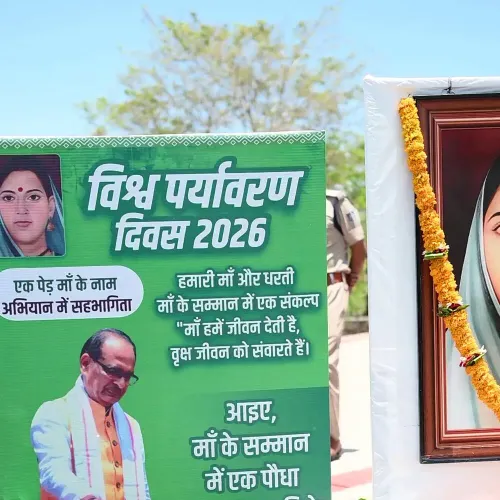
The plantation was part of the Ek Ped Maa Ke Naam campaign, which links afforestation with Nari Shakti and respect for Mother Nature.
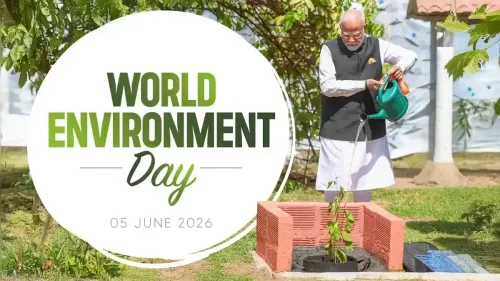
World Environment Day is observed annually on 5 June under the United Nations framework since 1972.
Sonowal described the initiative as a 'mass movement' and his act as 'a small step towards building a greener, sustainable future.' As former Chief Minister of Assam , Sonowal's participation lends regional visibility to the national campaign in Northeast India.
Union Minister of Ports, Shipping and Waterways Sarbananda Sonowal participated in the Ek Ped Maa Ke Naam tree plantation drive on 5 June 2026, planting a sapling at the Jyoti-Bishnu Antarjatik Kala Mandir in Guwahati on the occasion of World Environment Day. The minister described the initiative as a mass movement honouring both Nari Shakti and Mother Nature, calling his act 'a small step towards building a greener, sustainable future.'
Context
World Environment Day, observed every 5 June under the United Nations framework since 1972, serves as the primary global platform for environmental awareness and action. In India, the day is marked by nationwide plantation drives, awareness campaigns, and government-led events that localise broader climate commitments at the state and district level.
Sonowal's participation in Guwahati — the largest city in Assam and a key administrative and cultural hub in Northeast India — underscores the regional dimension of national environmental campaigns. The Jyoti-Bishnu Antarjatik Kala Mandir, a prominent cultural and performing arts venue in the city, served as the backdrop for the event.
Policy Backdrop
The Ek Ped Maa Ke Naam campaign is a national tree plantation initiative that links ecological action with cultural messaging around motherhood and respect for nature. The campaign has drawn participation from ministers, elected representatives, and citizens across the country, framing afforestation as both a civic duty and a tribute to maternal figures — natural and human alike.
Successive Indian governments have promoted large-scale afforestation programmes as part of national climate commitments. In the Northeast, such drives frequently combine ecological goals with community participation and cultural symbolism, making them particularly resonant in states like Assam. Sonowal, a senior BJP leader and former Chief Minister of the state, carries both political and regional credibility in amplifying such campaigns locally.
Stakeholders and Impact
The primary beneficiaries of sustained plantation drives are local communities and environmental groups in Assam, where forest cover and biodiversity are closely tied to livelihoods and ecological balance. Cultural venues like the Jyoti-Bishnu Antarjatik Kala Mandir doubling as sites for green initiatives signal an effort to embed environmental consciousness into civic and cultural life.
The campaign's framing around Nari Shakti — women's empowerment — also positions tree plantation as a gender-inclusive act, broadening its social appeal beyond traditional environmental constituencies. Community participation in such events, especially when led by senior ministers, tends to encourage local replication at the ward and panchayat level.
What's Next
Attention will now turn to follow-up action from both the Assam government and the Ministry of Environment, Forest and Climate Change on plantation survival rates and ground-level monitoring of the Ek Ped Maa Ke Naam drive. Sustained political messaging around the campaign through the monsoon season — when plantation conditions are optimal — is likely, with ministers and party functionaries expected to continue participating in state-level events.
For Guwahati and the wider Northeast, the broader question will be whether high-visibility symbolic acts translate into measurable increases in green cover and long-term ecological gains.
Point of View
Leveraging his identity as a former Assam chief minister to give the Ek Ped Maa Ke Naam drive local credibility. The campaign's dual messaging — ecological action wrapped in Nari Shakti symbolism — reflects a broader pattern of aligning environmental policy with social and cultural narratives that resonate in the Northeast. While the symbolic act of planting a single sapling carries limited direct ecological weight, its political function is to normalise participation in green drives across party networks and civil society. The real test, as with most such campaigns, lies in whether institutional follow-through on plantation survival and monitoring matches the visibility of the launch events.
NationPress
20 Oct 2026
Frequently Asked Questions
What is the Ek Ped Maa Ke Naam campaign?
Ek Ped Maa Ke Naam is a national tree plantation campaign in India that links ecological action with respect for motherhood and nature, encouraging citizens and officials to plant saplings as a tribute to maternal figures.
Why did Sarbananda Sonowal plant a tree in Guwahati on 5 June 2026?
Sonowal planted a sapling at the Jyoti-Bishnu Antarjatik Kala Mandir in Guwahati as part of the Ek Ped Maa Ke Naam initiative on World Environment Day, 5 June 2026, to mark the UN-designated global observance.
What is the Jyoti-Bishnu Antarjatik Kala Mandir in Guwahati?
The Jyoti-Bishnu Antarjatik Kala Mandir is a cultural and performing arts venue in Guwahati, Assam, which hosted the World Environment Day plantation event attended by Union Minister Sonowal.
When is World Environment Day observed?
World Environment Day is observed every year on 5 June. It has been a UN-designated global observance since 1972, focused on environmental awareness and action.
What is Sarbananda Sonowal's role in the central government?
Sarbananda Sonowal is the Union Minister of Ports, Shipping and Waterways. He is a senior BJP leader and former Chief Minister of Assam.