Kejriwal slams govt over women's safety advisories
Synopsis
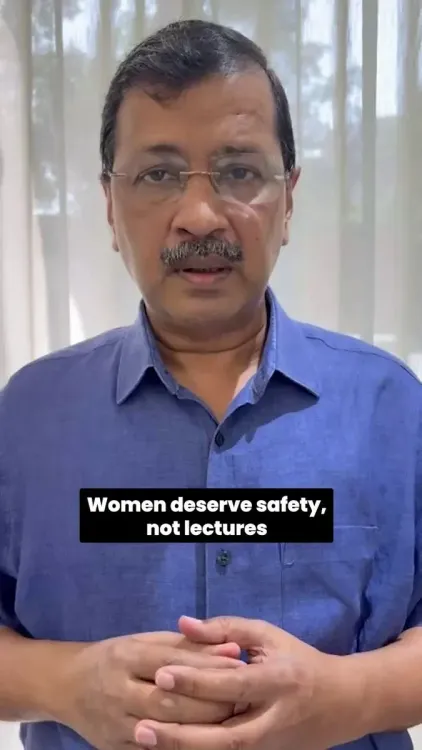
AAP convenor Arvind Kejriwal on 29 September 2026 sharply criticised the government for advising female students to avoid going out after dark, demanding it 'do its job' and build real security infrastructure instead of dispensing behavioural advice.
Key Takeaways
Arvind Kejriwal posted on 29 September 2026 accusing the government of responding to female students' safety fears with advice to stay indoors after dark.
He demanded the government arrange concrete security measures rather than issue behavioural advisories.
The criticism echoes a long-standing debate in India between advisory-based responses and infrastructure-led solutions to women's safety.
The Nirbhaya Fund , created after the 2012 Delhi gang-rape case , was designed to finance safety infrastructure including CCTV, lighting, and fast-track courts .
AAP has consistently positioned itself as the party that builds safety infrastructure, contrasting its Delhi governance record with central government approaches.
No government response to Kejriwal's challenge had been issued at the time of publication.
While female students across India grapple with fears for their personal safety, AAP national convenor Arvind Kejriwal turned his fire on the government on Tuesday, 29 September 2026 — not for failing to deploy better policing, but for its response to that fear: advice to stay indoors after dark.
Posting in Hindi on X, Kejriwal wrote: 'आज सभी female students अपनी सेफ्टी को लेकर चिंतित हैं।' — 'Today all female students are worried about their safety. And what is the government doing? Dispensing wisdom. Don't step out of the house after evening.' He followed it with a direct challenge: 'Hey government! Do your job. Arrange for security.'
Advisory vs infrastructure — the fault line in India's women's safety debate
The tension Kejriwal is pointing to is not new, but it is persistent. Every time a safety incident triggers official comment, the response from authorities tends to split into two camps: those who demand better-lit streets, more patrols, faster courts, and those who counsel behavioural caution for women. Critics argue the second approach places the burden of safety on the potential victim rather than on the state.
The debate has deep roots. After the 2012 Nirbhaya gang-rape case in Delhi, the central government created the Nirbhaya Fund — a dedicated corpus to finance women's safety infrastructure including CCTV networks, street lighting, and fast-track courts. Over a decade later, opposition parties continue to argue that fund utilisation has been uneven and that advisory culture persists alongside infrastructure gaps.
AAP's long-running pitch on urban safety
For Aam Aadmi Party, women's safety has been a recurring political plank — and a point of contrast with rival administrations. During its years governing Delhi, AAP highlighted investments in CCTV coverage and bus-marshal programmes as evidence that security infrastructure, not behavioural advice, is the correct government response. Kejriwal's post fits squarely within that framing: government's job is to build safety, not to restrict movement.
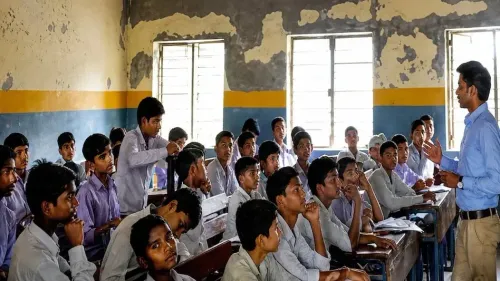
The post also lands at a moment when women's safety in educational institutions — hostels, campuses, commutes — has become a sharper flashpoint in Indian public discourse. Female students, a politically significant demographic, are increasingly vocal about demanding structural solutions rather than curfew-style guidance.
The government has not yet responded publicly to Kejriwal's challenge. Whether this triggers a fresh parliamentary debate on pending women's safety legislation — or a concrete announcement on night patrolling and hostel security — will signal how seriously the pressure lands.
A government that answers a safety crisis with 'stay home' hands the opposition exactly the contrast it is looking for. The question now is whether it answers differently.
Point of View
Attributable government failure — but it also reflects a genuine and unresolved policy fault line in India. The binary between 'restrict women's movement' and 'upgrade security infrastructure' has defined every major women's safety debate since 2012, and no government has fully escaped it. For AAP, now out of power in Delhi, this kind of issue-based attack keeps the party relevant in national discourse without requiring legislative access. The real test is whether the pressure produces a policy response or simply feeds another cycle of partisan point-scoring.
NationPress
29 Sept 2026
Frequently Asked Questions
What did Kejriwal say about women's safety on 29 September 2026?
Kejriwal criticised the government for advising female students not to go out after dark instead of arranging proper security, posting in Hindi on X: 'Hey government! Do your job. Arrange for security.'
What is the Nirbhaya Fund and how does it relate to women's safety?
The Nirbhaya Fund was created by the central government after the 2012 Delhi gang-rape case to finance women's safety projects including CCTV networks, street lighting, and fast-track courts across India.
Why does AAP frequently raise women's safety as a political issue?
AAP has long contrasted its Delhi governance record — citing CCTV rollouts and bus-marshal programmes — with what it describes as the central government's reliance on behavioural advisories rather than concrete security infrastructure.
What government advisory triggered Kejriwal's post?
The specific incident or advisory that prompted the 29 September 2026 post has not been independently verified; Kejriwal's criticism refers broadly to official counsel advising female students to stay indoors after evening hours.
What concrete measures do women's safety advocates demand from the government?
Advocates typically call for expanded night patrolling, better-lit public spaces, upgraded hostel and campus security, faster adjudication of cases through fast-track courts, and full utilisation of the Nirbhaya Fund.