Kejriwal Questions PM Modi on Fast-Track Courts for Paper Leaks
Synopsis
AAP convenor Arvind Kejriwal challenged PM Narendra Modi's announcement of fast-track courts for paper leak cases on 23 July 2026, questioning why Education Minister Dharmendra Pradhan has not been asked to resign and calling the PM's statement that of a 'defeated, directionless but arrogant person.'
Key Takeaways
PM Narendra Modi announced on 23 July 2026 that fast-track courts will be established to handle paper leak cases.
AAP convenor Arvind Kejriwal publicly questioned why Union Education Minister Dharmendra Pradhan has not been asked to resign over recurring exam integrity failures.
Kejriwal described the PM's announcement as the statement of a 'defeated, directionless but arrogant person.' Opposition demands for Pradhan's resignation date back to the 2024 NEET-UG and UGC-NET paper leak scandals.
Crores of students who rely on competitive examinations for professional access remain the primary stakeholders in the ongoing controversy.
No formal government notification or parliamentary bill for fast-track courts has been confirmed yet.
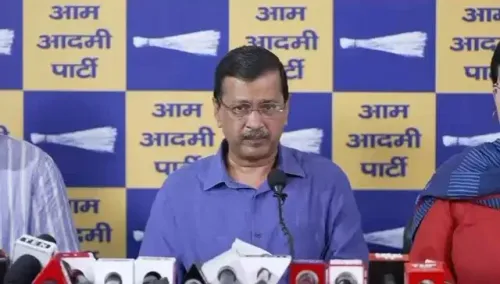
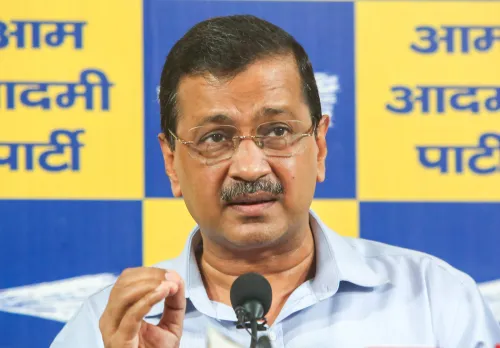
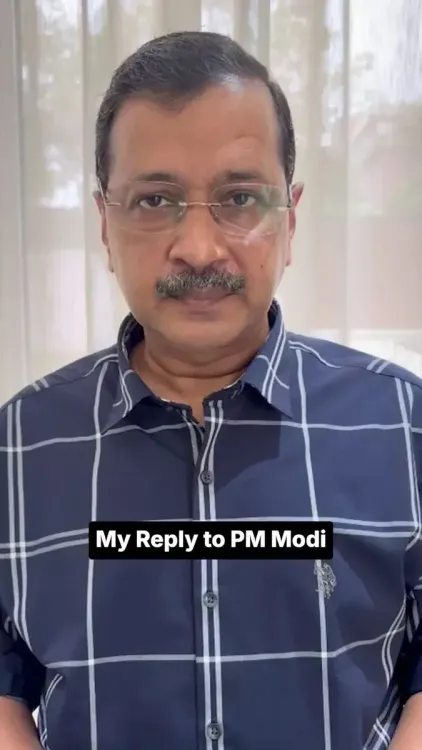
AAP convenor Arvind Kejriwal on Thursday, 23 July 2026, sharply questioned Prime Minister Narendra Modi's announcement of fast-track courts for paper leak cases, demanding to know why Union Education Minister Dharmendra Pradhan has not been asked to resign over the recurring exam integrity failures.
Posting on X, Kejriwal wrote: 'आज सुबह प्रधान मंत्री जी ने ऐलान किया है - पेपर लीक मामलों के लिए फ़ास्ट ट्रैक कोर्ट बनाये जाएँगे।' ('This morning the Prime Minister announced that fast-track courts will be set up for paper leak cases.') He then asked pointedly: 'What happened to the demand for Dharmendra Pradhan's resignation?' Kejriwal described the Prime Minister's statement as that of 'a defeated, directionless but arrogant person.'
Context
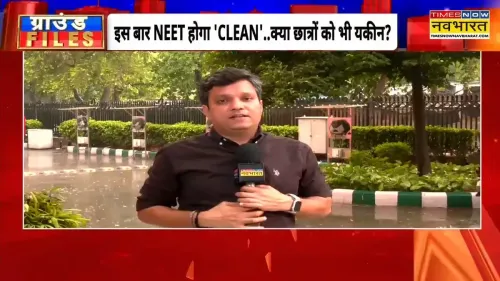
The announcement of fast-track courts follows sustained public and political pressure over a series of high-profile examination paper leaks in India. The controversy gained national momentum after the 2024 NEET-UG and UGC-NET paper leak scandals shook confidence in the country's competitive examination infrastructure, affecting millions of aspirants. Opposition parties, including AAP, had at the time called for an independent probe and accountability at the ministerial level.
Kejriwal has been a consistent voice on education governance failures, frequently framing such incidents as evidence of systemic mismanagement by the central government. His post on 23 July 2026 follows the Prime Minister's fresh announcement, which Kejriwal treats as an admission of failure rather than a corrective measure.
Policy Backdrop
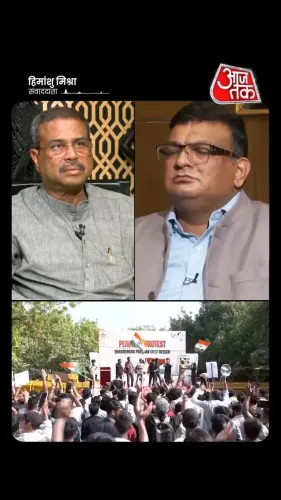
Dharmendra Pradhan has served as Union Minister of Education, holding oversight responsibility for the conduct of national-level examinations including those administered by the National Testing Agency (NTA). Opposition leaders have argued that repeated paper leaks under his watch make a ministerial-level accountability response unavoidable. The demand for his resignation has been a recurring refrain from multiple opposition benches since the 2024 scandals.
Fast-track courts are specialised judicial bodies designed to expedite trials in specific categories of cases. While the government's announcement signals intent to treat exam fraud as a serious criminal matter, critics argue that judicial speed alone does not address the upstream failure — the leaking of papers before examinations are held.
Stakeholders and Impact
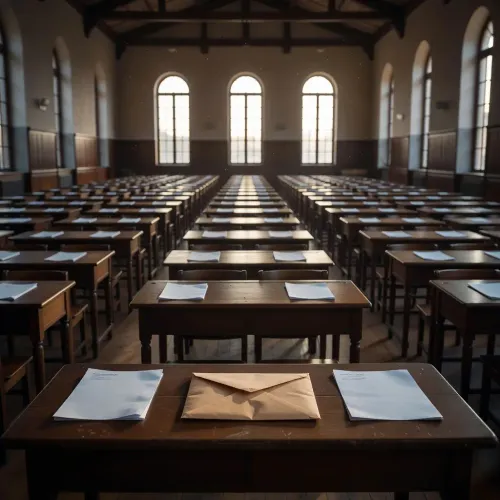
The primary stakeholders are the crores of students who appear for competitive examinations such as NEET, JEE, UGC-NET, and various state-level tests each year. For many aspirants from economically weaker backgrounds, these examinations represent a singular pathway to professional opportunity; a compromised exam can mean a lost year or more of preparation. Student groups and coaching institutes have long demanded structural reform in how question papers are printed, transported, and secured.
Beyond students, the debate touches on the credibility of India's public examination system as a whole — a system that determines access to medical colleges, central government jobs, and university admissions for hundreds of thousands of candidates annually.
What's Next
The political and policy focus will now shift to whether the government issues a formal notification or introduces legislation in Parliament to operationalise the fast-track courts. Separately, the question of personnel accountability — specifically, whether Dharmendra Pradhan faces any consequence — remains open and is likely to be pressed by the opposition in the weeks ahead. Any movement on either front will determine whether the government's announcement translates into substantive reform or remains a political statement.
Point of View
He is attempting to hold the government to a standard of ministerial accountability that the BJP has resisted since the 2024 scandals. The characterisation of the PM as 'defeated and directionless' signals that AAP intends to keep education governance at the centre of its national political messaging. This fits a broader pattern in which opposition parties use recurring institutional failures to question not just policy competence but the moral authority of the ruling dispensation.
NationPress
23 Jul 2026
Frequently Asked Questions
Why is Kejriwal criticising PM Modi's fast-track court announcement for paper leaks?
Kejriwal argues that creating fast-track courts does not address the root cause of paper leaks and that the government has avoided holding Education Minister Dharmendra Pradhan accountable through resignation.
What is the demand for Dharmendra Pradhan's resignation about?
Opposition parties including AAP have demanded Dharmendra Pradhan's resignation as Union Education Minister since the 2024 NEET-UG and UGC-NET paper leak scandals, citing his oversight responsibility for national examination conduct.
What did PM Modi announce about paper leak cases on 23 July 2026?
PM Narendra Modi announced that fast-track courts will be set up specifically to handle paper leak cases, signalling intent to treat exam fraud as a serious criminal matter requiring expedited judicial action.
What are fast-track courts and how do they relate to paper leak cases?
Fast-track courts are specialised judicial bodies designed to deliver quicker verdicts in specific categories of cases. The government's proposal is to use them to speed up trials related to examination paper leak offences.
How have paper leaks affected students in India?
Recurring paper leaks in exams such as NEET-UG and UGC-NET have forced crores of aspirants to lose preparation time, reappear for examinations, and face uncertainty over admissions to medical colleges and government jobs.