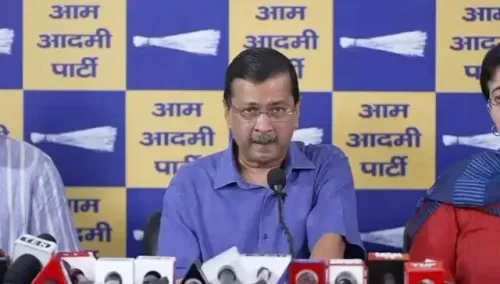
Kejriwal releases helpline for students arrested at Parliament March
Synopsis
AAP convenor Arvind Kejriwal on 21 July 2026 announced a helpline for students arrested during a Parliament March protest in New Delhi, live-streaming the development and continuing the party's pattern of legal support for detained demonstrators.
Key Takeaways
Arvind Kejriwal announced a helpline number for students arrested at a Parliament March protest on 21 July 2026 .
The announcement was made via a live broadcast on social media, signalling urgency.
AAP has previously deployed similar helplines during the 2019-2020 anti-CAA protests.
Delhi Police, which operates under the Union Home Ministry , is the authority handling the arrests.
Court proceedings, including bail hearings, are the immediate next step for detained students.
The move reflects ongoing federal tensions between AAP -governed states and the Union government over protest management.
AAP convenor Arvind Kejriwal on Tuesday, 21 July 2026, announced the release of a helpline number for students arrested during a protest march to Parliament in New Delhi, sharing the development live on social media. The post, which included a live broadcast link, signals the party's active legal and logistical support for the detained demonstrators.
In his post, Kejriwal wrote: 'संसद मार्च के प्रोटेस्ट में गिरफ्तार हुए छात्रों के लिए Helpline नंबर जारी | LIVE' — translated as: 'Helpline number released for students arrested in the Parliament March protest | LIVE.' The message was accompanied by a link to a live broadcast, underscoring the urgency of the outreach.
Context
A student march to Parliament drew police action on 21 July 2026, resulting in the arrest of an unspecified number of student protesters. Such marches to Parliament Street and its environs have a long history in India, typically organised around demands related to education policy, employment, or civil liberties. The specific triggers and the scale of Tuesday's march could not be independently verified at the time of publication.
Kejriwal, as national convenor of the Aam Aadmi Party (AAP), responded swiftly by publicising a helpline designed to assist arrested students and their families in accessing legal aid and information about detention. The move positions AAP as a frontline opposition actor in the episode.
Policy Backdrop
AAP has a documented history of extending support to detained protesters. During the 2019-2020 anti-CAA agitation, the party provided legal assistance and helpline numbers to students and activists taken into custody across several cities. That precedent established a template the party has since repeated in similar situations.
Student protests near Parliament have recurred across different political cycles in India, often becoming flashpoints that highlight tensions between the Union government and opposition-ruled states over protest management and civil liberties. AAP, which governs Delhi and Punjab, occupies a particular position in this dynamic as both a city administration and a national opposition party.
Stakeholders and Impact
The most immediate beneficiaries of the helpline are the arrested students and their families, who gain a direct channel to seek legal guidance and track detention status. Student unions and civil society organisations monitoring the crackdown are also likely to use such a helpline as a coordination point.
For AAP, the intervention reinforces its identity as a party aligned with youth and civil-liberties causes ahead of any future electoral contests. Critics of the party may argue that such moves conflate governance with political mobilisation, while supporters see it as legitimate opposition activity.
What's Next
Attention will turn to court proceedings for the arrested students, including bail hearings and any charges filed by Delhi Police, which operates under the jurisdiction of the Union Home Ministry. Parliamentary debates in the ongoing or next session may also reference the arrests, particularly from opposition benches. The scale of the protest and the government's formal response are expected to shape how the episode unfolds in the coming days.
Point of View
Especially with student constituencies. It also reflects the structural asymmetry in Delhi, where AAP runs the elected government but the police answer to the Centre — a tension the party has consistently weaponised. How the courts and Parliament respond will determine whether this remains a one-day story or becomes a sustained opposition pressure point.
NationPress
21 Jul 2026
Frequently Asked Questions
What is the AAP helpline for students arrested at the Parliament March?
AAP convenor Arvind Kejriwal announced on 21 July 2026 that a helpline number had been released for students arrested during a protest march to Parliament in New Delhi . The specific helpline number was shared via a live broadcast linked in his post.
Why were students arrested at the Parliament March protest?
Students were arrested during a protest march to Parliament on 21 July 2026 . The specific demands of the march and the grounds for arrest had not been independently detailed at the time of publication.
Has AAP provided helplines to protesters before?
Yes. During the 2019-2020 anti-CAA protests, AAP offered legal aid and helpline support to students and activists detained across several cities, establishing a precedent for Tuesday's intervention.
Who controls Delhi Police and why does it matter here?
Delhi Police operates under the Union Home Ministry , not the Delhi government, which means AAP has no direct authority over how the arrests are handled — a long-standing friction point the party frequently highlights.
What happens next for the arrested students?
The arrested students are expected to face bail hearings and formal charges. Parliamentary debates may also reference the arrests, particularly from opposition benches, in the sessions ahead.