Kejriwal Calls for Punishment of Ram Mandir 'Sinners', Holds Rohini Event
Synopsis
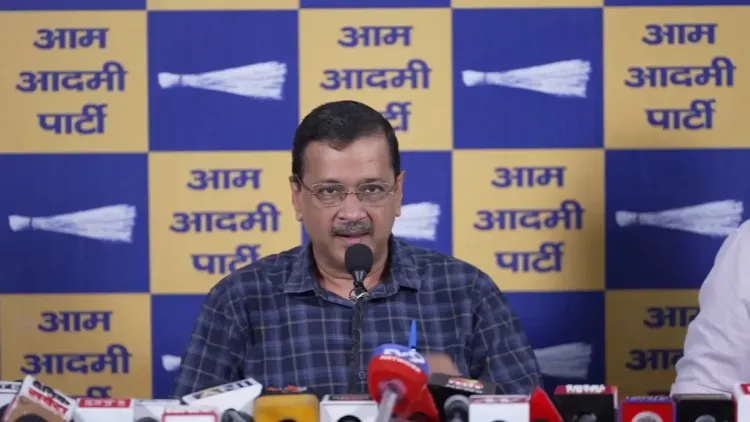
AAP convenor Arvind Kejriwal on 10 July 2026 accused the Modi government of shielding alleged offenders at the Ram Mandir and called on Hindus to seek justice, announcing a Sunderkand Path in Rohini, Delhi on 12 July 2026.
Key Takeaways
Kejriwal posted on 10 July 2026 alleging the Modi government is protecting individuals who allegedly committed offences at the Ram Mandir in Ayodhya .
He described the accused as mahapapi (great sinners) and said they deserved capital punishment.
He invoked religious duty, calling on 'every Sanatan Hindu' to work toward ensuring punishment for the accused.
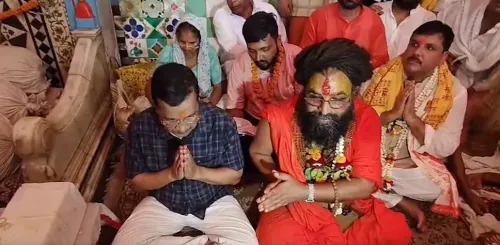
A Sunderkand Path has been announced at JMD Tent, Japanese Park, Sector 10, Rohini on 12 July 2026 at 11:30 AM .
A post-prayer discussion on 'next steps' for delivering justice is planned at the same venue.
The specific allegations of dacoity at the Ram Mandir refer to events that have not been independently verified by NationPress.
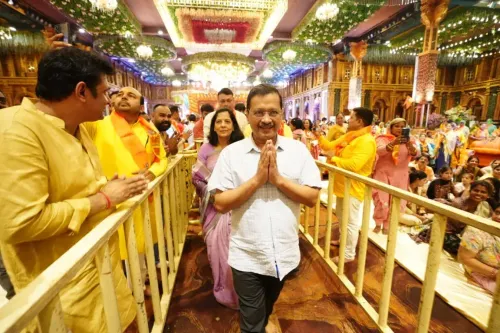
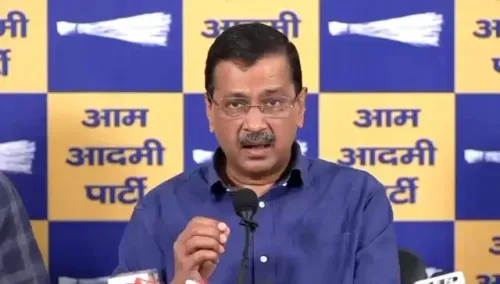
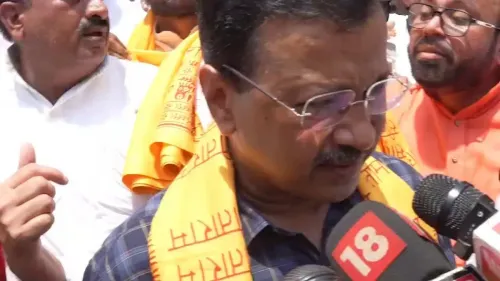
AAP convenor Arvind Kejriwal on Friday, 10 July 2026, posted a charged message on X alleging that the Modi government is shielding individuals he described as having committed grave offences at the Ram Mandir in Ayodhya, and announced a Sunderkand Path gathering in Rohini, Delhi on 12 July 2026 to mobilise Hindu devotees around the issue.
Context
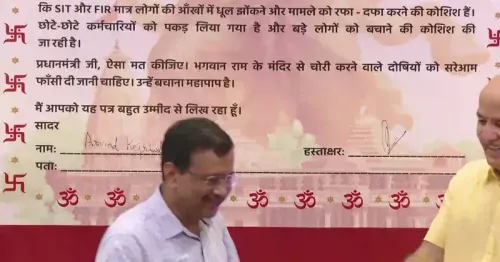
In his post, Kejriwal wrote — translated from Hindi — that 'events of the past few weeks show that the Modi government is busy protecting the great sinners who committed dacoity at the Ram Mandir.' He added that 'these offenders against Sanatan should have been hanged,' and called on 'every Sanatan Hindu' to dedicate themselves to ensuring punishment for those he termed mahapapi (great sinners). He also said that Lord Ram would bless those who work toward delivering justice.
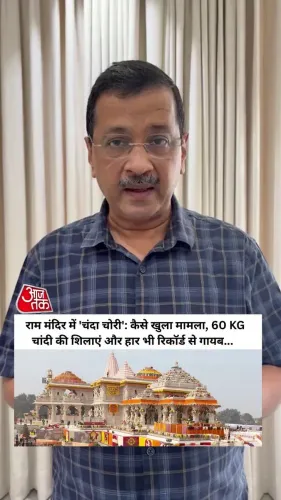
The post includes a video — details of which could not be independently confirmed — and urges followers to share it widely. It closes with an invitation to a Sunderkand Path at JMD Tent, Japanese Park, Sector 10, Rohini on 12 July 2026 at 11:30 AM, with a post-prayer discussion on next steps.
Policy Backdrop
The Ram Mandir in Ayodhya was inaugurated by Prime Minister Narendra Modi on 22 January 2024, marking the culmination of a decades-long legal and political movement. The temple is administered by the Shri Ram Janmabhoomi Teerth Kshetra Trust, a body set up by the central government following the Supreme Court's 2019 verdict awarding the disputed site to the Hindu side.
Opposition figures have periodically raised questions about the financial management and administration of major religious sites linked to government-appointed trusts. The Aam Aadmi Party, currently in opposition at the national level, has in recent years sought to position itself on issues of Hindu faith and governance, particularly ahead of electoral cycles in Delhi and other states.
Stakeholders and Impact
Kejriwal's framing — invoking Sanatan dharma (the eternal order of Hindu faith) and calling it the religious duty of every Hindu to seek punishment — is directed squarely at Hindu devotees and residents of Delhi's Rohini constituency, a densely populated area with significant electoral weight. The language of religious obligation combined with a specific mobilisation event signals an attempt to convert sentiment into organised action.
The BJP, which has long positioned itself as the primary custodian of the Ram Mandir cause, is likely to contest Kejriwal's framing sharply. Any follow-up legal notices or counter-statements from BJP leaders or the temple trust would define the next phase of this controversy.
What's Next
All eyes will be on attendance at the Rohini Sunderkand Path on 12 July 2026 and the nature of the post-prayer discussion Kejriwal has promised. If the event draws large crowds, AAP may use it as a launchpad for a sustained campaign framing the Ram Mandir allegations as a governance and accountability issue. The Modi government and the temple trust's response — or silence — will be equally telling in shaping public perception around one of India's most politically sensitive religious institutions.
Point of View
Using the Ram Mandir — a symbol the BJP built its political identity around — as a cudgel against the ruling party. By framing the issue as a matter of religious duty rather than partisan politics, he attempts to bypass AAP's outsider status on Hindutva terrain and speak directly to devout voters. The announcement of a physical mobilisation event in Rohini, a key Delhi constituency, suggests this is not merely online posturing but a ground-level political operation. Whether AAP can sustain credibility on this issue without verifiable specifics will determine if the gambit gains traction or backfires.
NationPress
9 Oct 2026
Frequently Asked Questions
What did Kejriwal say about the Ram Mandir on 10 July 2026?
Kejriwal alleged that the Modi government is protecting individuals he called 'great sinners' who he claimed committed dacoity at the Ram Mandir in Ayodhya, and called on every Sanatan Hindu to work toward their punishment.
What is the Sunderkand Path event Kejriwal announced?
Kejriwal announced a Sunderkand Path recitation at JMD Tent, Japanese Park, Sector 10, Rohini, Delhi on 12 July 2026 at 11:30 AM, to be followed by a discussion on next steps regarding the Ram Mandir allegations.
Has there been a confirmed theft or dacoity at the Ram Mandir in Ayodhya?
The specific allegations of dacoity or theft at the Ram Mandir referenced in Kejriwal's post have not been independently verified by NationPress; they relate to events that remain unconfirmed at the time of publication.
Why is Kejriwal raising the Ram Mandir issue?
Political analysts see Kejriwal's move as an effort by AAP to contest the BJP's dominance over Hindu religious sentiment, using the Ram Mandir — a politically charged symbol — to challenge the ruling party on its own ground ahead of future elections.
Where is the Rohini Sunderkand Path event being held?
The event is being held at JMD Tent, Japanese Park, Sector 10, Rohini, Delhi on Sunday, 12 July 2026, starting at 11:30 AM.