Kejriwal pays tribute to Nehru on death anniversary

Synopsis
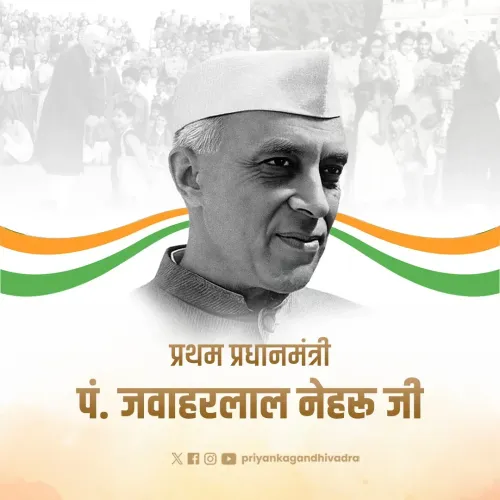
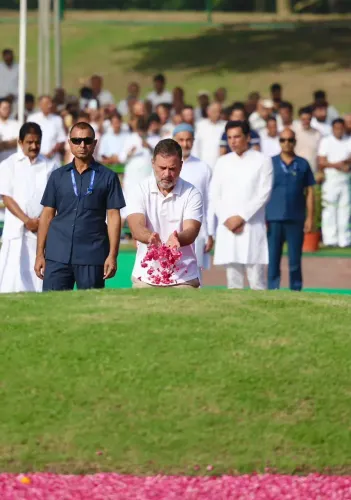
AAP convenor Arvind Kejriwal on May 27, 2026, paid tribute to India's first Prime Minister Pandit Jawaharlal Nehru on his death anniversary, honouring him as the leader who laid the foundation of a strong India.
Key Takeaways
AAP convenor Arvind Kejriwal posted a tribute to Pandit Jawaharlal Nehru on May 27, 2026 , his death anniversary.
Kejriwal described Nehru as the leader who 'laid the foundation of a strong India.' Nehru served as India's first Prime Minister from 1947 to 1964 , a tenure of nearly 17 years .
Nehru's key institutional contributions include the Planning Commission (1950) and India's non-aligned foreign policy .
The tribute reflects a cross-party pattern of acknowledging Nehru's foundational role, even as his legacy remains contested between Congress and BJP.
AAP, founded in 2012 , positions itself as distinct from both Congress and BJP on governance and anti-corruption issues.
AAP convenor Arvind Kejriwal on Wednesday, May 27, 2026, paid homage to India's first Prime Minister Pandit Jawaharlal Nehru on his death anniversary, calling him the architect who laid the foundation of a strong India.
Context
Kejriwal posted in Hindi on X, offering what he described as a 'vinamra shraddhanjali' (humble tribute) to Nehru, referring to him as 'desh ke pratham Pradhanmantri' — the country's first Prime Minister. The post acknowledged Nehru's role in laying the groundwork for a strong India.
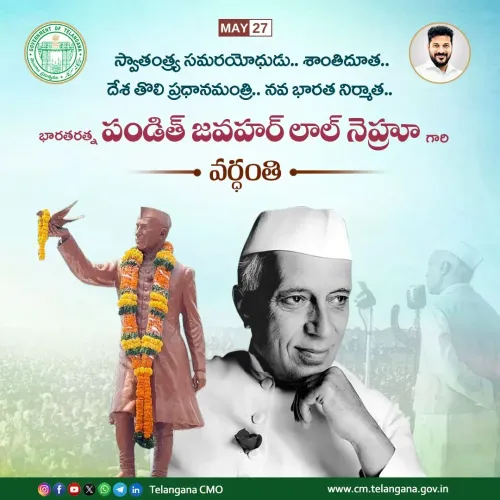
Pandit Jawaharlal Nehru passed away on May 27, 1964, after serving as India's Prime Minister from independence in 1947 until his death — a tenure of nearly 17 years. Every year, political leaders across party lines mark the day with remembrances.
Policy Backdrop
Nehru's legacy is anchored in the institutional architecture he oversaw during the formative years of the Indian republic. He established the Planning Commission in 1950, steering India toward a mixed-economy development model that blended state-led investment with private enterprise.
His foreign policy doctrine of non-alignment positioned India as a leader among newly decolonised nations, while his domestic agenda prioritised scientific institutions, higher education, and large-scale infrastructure. These choices continue to shape policy debates in India decades later.
Stakeholders and Impact
The tribute from Aam Aadmi Party (AAP) — a party that positions itself as distinct from both Congress and BJP — is notable in a political climate where Nehru's legacy remains contested. Congress traditionally champions his contributions, while sections of the ruling BJP have been critical of aspects of his economic and foreign policy record.
AAP's acknowledgment reflects a cross-party pattern of recognising pre-independence and early post-independence nation-builders. For the general public, particularly in Delhi and Punjab where AAP governs or has governed, such statements signal the party's alignment with a broad democratic and institutional inheritance.
What's Next
Commemorative events, parliamentary references, and public tributes typically mark May 27 each year across India's political spectrum. Observers will watch whether AAP uses the occasion to draw any broader policy parallels — particularly around governance, public institutions, or welfare — ahead of future electoral cycles.
The anniversary serves as an annual marker for reflecting on India's founding democratic values and the institutional legacy that continues to define the country's constitutional framework.
Point of View
Which carved its identity in opposition to the Congress establishment, nonetheless finds common ground with the Nehruvian tradition of institutional nation-building. In a political environment where Nehru's legacy is a live fault line between Congress and BJP, AAP's acknowledgment positions the party as ideologically eclectic rather than aligned with either camp's revisionism. The tribute also subtly reinforces AAP's governance brand: a party that invokes foundational democratic and welfare values. As AAP navigates its national ambitions, such statements help it occupy a centrist, institution-respecting space in the public imagination.
NationPress
10 Oct 2026
Frequently Asked Questions
Why is May 27 significant in Indian politics?
May 27 marks the death anniversary of Pandit Jawaharlal Nehru , India's first Prime Minister, who passed away on this date in 1964 . Political leaders across parties pay tribute on this day each year.
What did Kejriwal say about Nehru on his death anniversary?
Kejriwal posted a tribute in Hindi calling Nehru the leader who 'laid the foundation of a strong India,' offering what he termed a humble homage on the occasion of his death anniversary.
What is Jawaharlal Nehru's legacy in India?
Nehru shaped India's early democratic institutions, established the Planning Commission in 1950 , and championed a non-aligned foreign policy. He served as Prime Minister from 1947 to 1964 .
Why does AAP pay tribute to Nehru despite not being a Congress party?
AAP's tribute reflects a broader cross-party acknowledgment of India's founding leaders. The party positions itself as aligned with democratic and institutional values, which it associates with the nation-building era Nehru represented.
What is Arvind Kejriwal's current political role?
Arvind Kejriwal is the national convenor of the Aam Aadmi Party (AAP) and a former Chief Minister of Delhi . AAP was founded in 2012 and currently governs in Punjab.