Is the Parole Controversy in Kerala Assembly Justified?
Synopsis
The recent uproar in the Kerala Assembly over parole grants to convicted criminals has led to significant political drama. With the opposition accusing the government of bias, the issue raises critical questions about justice and accountability. Dive into the details of this unfolding political saga.
Key Takeaways
Shamseer denied an adjournment motion in the Kerala Assembly.
The opposition accused the government of bias in parole grants .
Rema highlighted the impact on victims' families .
Rajesh claimed no urgent need for the motion.
Political leaders are calling for greater transparency in the justice system.
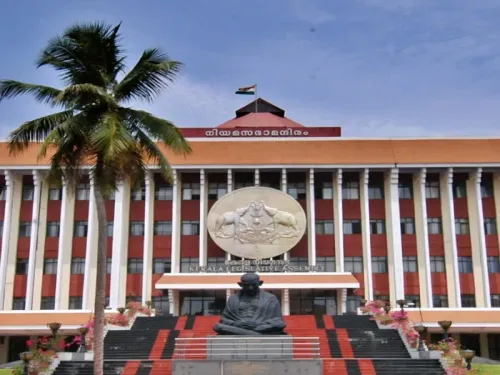
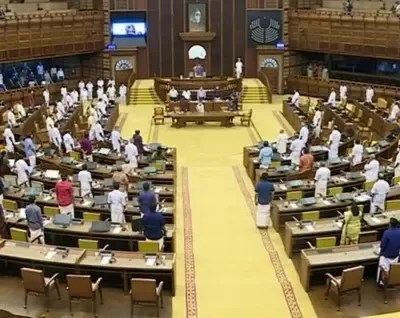
Thiruvananthapuram, Feb 2 (NationPress) The Kerala Assembly experienced a significant uproar on Monday when Speaker A.N. Shamseer rejected a request for an adjournment motion aimed at discussing the purportedly generous granting of parole to convicted offenders associated with the CPI(M). This decision incited protests from the Congress-led United Democratic Front (UDF), leading to a boycott of the day's activities spearheaded by the Leader of Opposition (LoP) V.D. Satheesan.
The adjournment motion was presented by K.K. Rema, an MLA and the widow of the murdered CPI(M) dissident leader T.P. Chandrasekharan. Rema sought to initiate a debate on what the opposition labeled as the government's biased and arbitrary application of parole regulations, especially concerning convicts affiliated with the ruling party.
The Speaker dismissed the request, asserting that the issue did not justify an adjournment discussion.
State Parliamentary Affairs Minister M.B. Rajesh intervened, stating that there was no pressing need for an adjournment motion, and that the matter could be raised as a submission.
In response to the denial, opposition members shouted slogans within the House, accusing the government of providing cover for criminals.
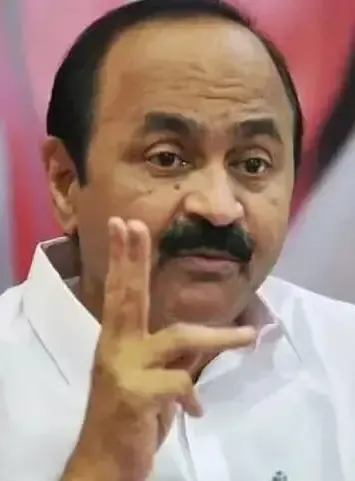
As the commotion escalated, Satheesan rose to voice the opposition's strong disapproval, claiming that the government was suppressing discourse on a matter of public significance.
He then led the UDF members out of the House in protest.
Outside the Assembly, K.K. Rema informed reporters that the convicts in the T.P. Chandrasekharan murder case had collectively availed themselves of over 1,000 days of parole to date.
She asserted that the recurring granting of parole had undermined justice and caused significant distress to the victim’s family.
“Those found guilty of a vicious political murder are being afforded extraordinary leniency,” she stated.
Satheesan accused the Pinarayi Vijayan administration of being “exceptionally lenient” in granting parole to Chandrasekharan's killers.
He claimed that the Chief Minister was too “afraid of those elements” to curtail this practice, a claim that was vigorously denied by the ruling party.
Nonetheless, the government maintained that parole was granted in strict accordance with existing regulations.
Point of View
It's crucial to recognize that the situation in Kerala reflects a broader trend in political accountability and justice. While the opposition's concerns highlight the need for transparency, the government's stance on parole regulations also calls for a thorough examination of our justice system's integrity. Our commitment remains with the nation, fostering informed debate on such pivotal issues.
NationPress
2 Oct 2026
Frequently Asked Questions
What sparked the uproar in the Kerala Assembly?
The uproar was triggered by Speaker A.N. Shamseer's refusal to allow an adjournment motion regarding the alleged liberal granting of parole to convicted criminals associated with CPI(M).
Who led the protests in the Assembly?
The protests were led by the Leader of Opposition, V.D. Satheesan, representing the Congress-led United Democratic Front (UDF).
What was the basis of the adjournment motion?
The motion, proposed by K.K. Rema, sought to address the government's selective use of parole provisions, particularly in cases involving convicts linked to the ruling party.
How did the government respond to the allegations?
The government maintained that parole was granted in accordance with established rules and regulations, disputing claims of bias.
What are the implications of this controversy?
The controversy highlights the ongoing debate about political accountability and justice in Kerala, raising questions about the integrity of parole processes.